Savory Hobo Mole Beef & Black Bean Enchilada Bake

Experience a delightful fusion of flavors with our Savory Hobo Mole Beef & Black Bean Enchilada Bake. This one-dish meal combines hearty ground beef, zesty black beans, and rich dark chocolate, all enveloped in crispy tortilla chips and gooey Monterey Jack cheese. Perfect for busy weeknights, this recipe is incredibly flexible. It can be prepared in the oven, on the grill, or even over a campfire, making it a fantastic option for both indoor and outdoor cooking enthusiasts. The use of Reynolds Wrap Foil ensures that all flavors meld beautifully while minimizing cleanup. Get ready to impress your family and friends with this mouthwatering dish that's as fun to make as it is to enjoy!
N/A
Servings
N/A
Calories
14
Ingredients
Ingredients
Ground Beef
1 lb (Ground)
Onion
1 cup (Chopped)
Chopped Green Chilies
1 (4 1/2 ounce) can (Mild)
Chili Powder
2 teaspoons (None)
Ground Cumin
2 teaspoons (None)
Salt
1 1/2 teaspoons (None)
Dark Chocolate
1/4 cup (Shaved)
Black Beans
1 (15 ounce) can (Drained)
Lemon Juice
2 teaspoons (None)
Enchilada Sauce
1 (15 ounce) can (None)
Monterey Jack Cheese
4 cups (Shredded)
Tortilla Chips
6 cups (None)
Pam Cooking Spray
As needed (For greasing)
Heavy Duty Reynolds Wrap Foil
As needed (For wrapping)
Instructions
1
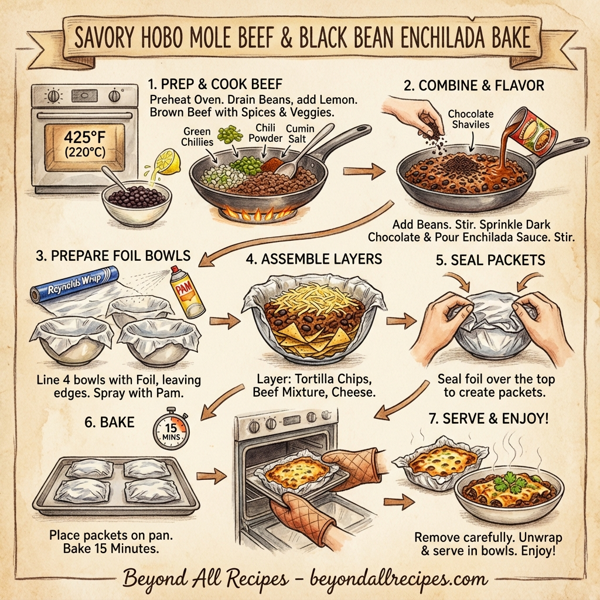
Preheat your oven to 425°F (220°C).
2
Open the can of black beans, drain, and add lemon juice. Gently stir and set aside.
3
In a large frying pan, combine the ground beef, chopped onion, chopped green chilies, chili powder, ground cumin, and salt. Cook over medium heat, stirring frequently, until the beef is browned and no longer pink.
4
Add the black beans to the beef mixture and gently stir to combine.
5
Sprinkle the shaved dark chocolate evenly over the top of the mixture to add a rich depth of flavor.
6
Pour in the enchilada sauce and stir gently to coat all the ingredients.
7
Prepare four regular soup bowls by lining the bottom and sides with heavy-duty Reynolds Wrap Foil, leaving about 6 inches of foil draping over the edges of each bowl.
8
Spray the inside of the foil with Pam cooking spray to prevent sticking.
9
Layer in each bowl: 1 1/2 cups of tortilla chips, then portion out the beef mixture evenly on top, followed by 1 cup of shredded Monterey Jack cheese.
10
Carefully bring the sides of the foil up and over the top of each bowl to create a sealed packet.
11
Gently lift the packets out of the bowls and place them on a flat baking pan.
12
Bake in the preheated oven for 15 minutes.
13
Once baked, use heat mitts to carefully remove the packets from the oven.
14
Unwrap the foil and place the enchilada bake back into the bowls to serve. Enjoy!
Nutrition Information
Frequently Asked Questions
Frequently Asked Questions
What is the Savory Hobo Mole Beef & Black Bean Enchilada Bake?
It is a flavorful one-dish meal that combines ground beef, black beans, and dark chocolate, layered with tortilla chips and Monterey Jack cheese in foil packets.
What are the primary ingredients in this recipe?
The main ingredients include ground beef, black beans, onion, green chilies, dark chocolate, enchilada sauce, Monterey Jack cheese, and tortilla chips.
How long does it take to bake this dish?
The enchilada bake needs to be cooked in a preheated oven for 15 minutes.
What is the recommended oven temperature?
The oven should be preheated to 425°F (220°C).
Why is dark chocolate used in this beef recipe?
The shaved dark chocolate is added to provide a rich depth of flavor, inspired by traditional mole sauces.
Can this recipe be cooked outdoors?
Yes, this dish is very flexible and can be prepared on a grill or over a campfire using foil packets.
What type of foil should I use for the packets?
Heavy-duty Reynolds Wrap Foil is recommended to ensure the packets are durable and seal the flavors effectively.
How do I prevent the food from sticking to the foil?
Spray the inside of the foil with Pam cooking spray before adding the ingredients.
How do I prepare the black beans?
Drain the can of black beans and stir in 2 teaspoons of lemon juice before adding them to the beef mixture.
What spices are used to season the beef?
The beef is seasoned with 2 teaspoons of chili powder, 2 teaspoons of ground cumin, and 1.5 teaspoons of salt.
How much ground beef is required?
You will need 1 pound of ground beef.
What kind of cheese is best for this bake?
The recipe calls for 4 cups of shredded Monterey Jack cheese for a gooey, melted texture.
How many tortilla chips are needed per serving?
Each of the four servings uses approximately 1.5 cups of tortilla chips, totaling 6 cups for the recipe.
Should the green chilies be mild or hot?
The recipe specifies one 4.5-ounce can of mild chopped green chilies.
How do I assemble the individual packets?
Line soup bowls with foil, spray with oil, layer chips, beef mixture, and cheese, then seal the foil over the top.
What size of enchilada sauce can should I use?
One 15-ounce can of enchilada sauce is required for this recipe.
Can I use the soup bowls in the oven?
No, the soup bowls are used only to shape the packets; lift the foil packets out and place them on a flat baking pan for the actual baking.
How do I serve the finished dish?
Carefully unwrap the foil packets and place the bake back into the soup bowls to eat.
How much dark chocolate is needed?
You need 1/4 cup of shaved dark chocolate.
Is the onion cooked before being added to the beans?
Yes, the onion is cooked along with the ground beef until the beef is browned.
What is the purpose of the lemon juice?
It is stirred into the black beans to add a zesty brightness to the flavor profile.
Can I substitute the meat?
While ground beef is standard, you could substitute it with ground turkey or chicken for a different protein option.
Is this recipe good for busy weeknights?
Yes, it is designed for minimal cleanup and easy assembly, making it perfect for quick dinners.
How do I seal the foil packets?
Bring the 6 inches of excess foil hanging over the edges of the bowl up and over the top to create a sealed environment.
Does the recipe require a specific brand of foil?
The recipe recommends Reynolds Wrap Foil for its reliability and strength.
How much onion is used?
The recipe calls for 1 cup of chopped onion.
Is this a spicy dish?
It has mild heat from the green chilies and chili powder, but it is generally savory and family-friendly.
Can I prepare the beef mixture in advance?
Yes, the beef, bean, and sauce mixture can be cooked ahead of time and stored, then assembled with chips just before baking.
What is the serving size for this recipe?
The recipe is designed to create 4 individual foil packets/servings.
What should I do after browning the beef?
After browning the beef with onions and spices, add the black beans, chocolate, and enchilada sauce before assembling the packets.