Savory Herb-Braised Pork Chops in White Wine Sauce
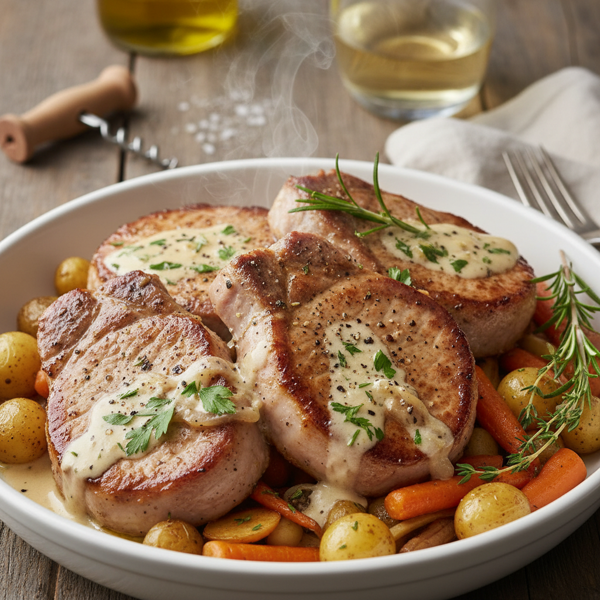
Experience the warmth of home-cooked comfort with these Savory Herb-Braised Pork Chops in White Wine Sauce. Adapted from the timeless American Heart Association Cookbook of 1978, this recipe is a beloved classic that combines the rich flavors of dried sage and rosemary with the fragrant notes of garlic. The chops are seared to a beautiful golden brown, then braised in dry white wine until they're tender and infused with herbal goodness. Served with a delightful syrupy glaze and fresh parsley, these pork chops make for a satisfying meal that brings joy to any dining table.
4
Servings
N/A
Calories
10
Ingredients
Ingredients
Dried sage
1 teaspoon (crumbled)
Dried rosemary leaves
1 teaspoon (crumbled)
Fresh garlic
1 teaspoon (finely chopped)
Salt
1 teaspoon (to taste)
Fresh ground pepper
to taste (freshly cracked)
Pork loin chops
4 (very lean, about 1-inch thick center-cut)
Margarine
2 tablespoons (for cooking)
Olive oil
1 tablespoon (for cooking)
Dry white wine
3/4 cup (separated into two portions)
Fresh parsley
1 tablespoon (finely chopped)
Instructions
1
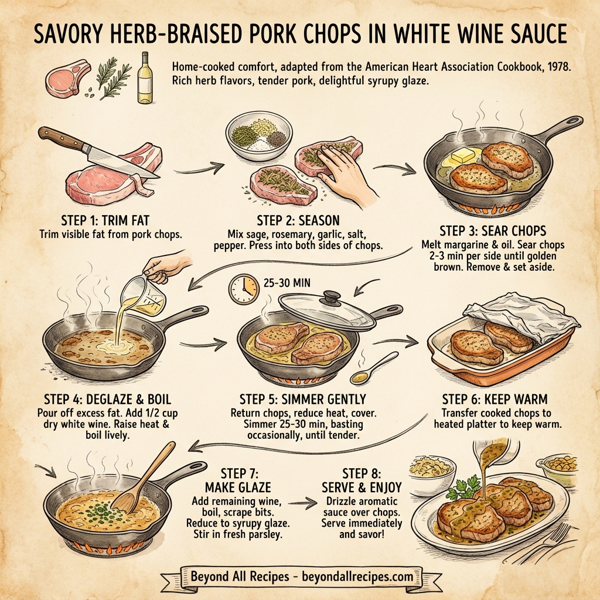
Start by trimming any visible fat from the pork loin chops to ensure they remain lean and healthy.
2
In a small bowl, mix dried sage, dried rosemary, chopped garlic, salt, and a few cracks of fresh ground pepper until well combined. Generously press this herb mixture into both sides of each pork chop.
3
In a large skillet, melt the margarine and olive oil over medium heat. Once hot, carefully add the pork chops to the skillet. Sear the chops for 2 to 3 minutes on each side until they achieve a beautiful golden brown crust. Remove the browned chops from the skillet and set aside.
4
Carefully pour off all but a thin film of fat from the skillet, then pour in 1/2 cup of the dry white wine. Raise the heat and bring the wine to a lively boil.
5
Return the pork chops to the skillet, reduce the heat to the lowest setting, and cover the pan. Allow the chops to simmer gently for 25 to 30 minutes, basting occasionally with the pan juices, until they are tender and cooked through.
6
Once cooked, transfer the pork chops to a heated serving platter to keep warm.
7
Add the remaining wine to the skillet and increase the heat to boil briskly. Scrape the browned bits from the bottom of the pan as the sauce reduces to a few tablespoons of a syrupy glaze.
8
Remove the pan from heat and stir in the chopped fresh parsley.
9
Finally, drizzle the aromatic sauce over the pork chops and serve immediately, savoring the delightful flavors in every bite.
Nutrition Information
Frequently Asked Questions
Frequently Asked Questions
What is the name of this pork dish?
The dish is called Savory Herb-Braised Pork Chops in White Wine Sauce.
What is the main source of inspiration for this recipe?
This recipe is adapted from the American Heart Association Cookbook of 1978.
How many servings does this recipe yield?
This recipe makes 4 servings.
What cut of pork is best for this recipe?
Use very lean, center-cut pork loin chops that are about 1-inch thick.
What dried herbs are used in the seasoning rub?
The rub uses dried crumbled sage and dried crumbled rosemary leaves.
How is the garlic prepared for the herb mixture?
The fresh garlic should be finely chopped before being mixed with the herbs.
What fats are used to sear the pork chops?
The recipe uses a combination of 2 tablespoons of margarine and 1 tablespoon of olive oil.
What is the first step in preparing the meat?
The first step is to trim any visible fat from the pork loin chops.
How do you apply the herb mixture to the pork?
You should generously press the herb and garlic mixture into both sides of each pork chop.
How long should the pork chops be seared?
Sear the chops for 2 to 3 minutes on each side until they are golden brown.
What type of wine is required for the sauce?
A dry white wine is used for the braising liquid and the glaze.
How much total wine is needed for the recipe?
A total of 3/4 cup of dry white wine is required.
How much wine is used for the initial braising step?
You use 1/2 cup of the wine for the initial braising process.
What do you do with the fat in the skillet after searing?
Pour off all but a thin film of fat from the skillet before adding the wine.
What temperature should the pork simmer at?
The pork should simmer on the lowest heat setting.
Should the pan be covered while the pork cooks?
Yes, the pan should be covered while the chops simmer for 25 to 30 minutes.
What is the purpose of basting during the cooking process?
Basting with pan juices helps keep the pork chops tender and infused with flavor.
How is the final syrupy glaze created?
The remaining wine is added to the skillet and boiled briskly to reduce it.
What should you do with the browned bits in the pan?
Scrape the browned bits from the bottom of the pan as the sauce reduces to incorporate them into the glaze.
When is the fresh parsley added?
The finely chopped fresh parsley is stirred in after the pan is removed from the heat.
How should the pork chops be served?
Place the chops on a heated platter and drizzle the aromatic sauce over them immediately.
How much salt is recommended?
The recipe calls for 1 teaspoon of salt, or to taste.
What is the texture of the final sauce?
The sauce should be a thick, syrupy glaze.
Can I use fresh sage and rosemary?
The recipe specifies dried herbs, but fresh can be substituted if the quantities are adjusted appropriately.
Is this recipe considered a healthy option?
Yes, it is based on American Heart Association guidelines focusing on lean meat and heart-healthy oils.
How long is the total simmering time?
The chops should simmer gently for 25 to 30 minutes.
Why is it important to trim the fat from the chops?
Trimming the fat ensures the meal remains lean and aligns with heart-healthy cooking standards.
What does the wine do to the skillet?
The wine deglazes the pan, lifting the flavorful browned bits to create the sauce.
Is the pepper used as a whole or ground?
The recipe calls for freshly cracked or ground pepper.
What is the final step before serving?
The final step is drizzling the reduced wine and herb sauce over the warm pork chops.