Savory Hawaiian-Style Kalua Pork
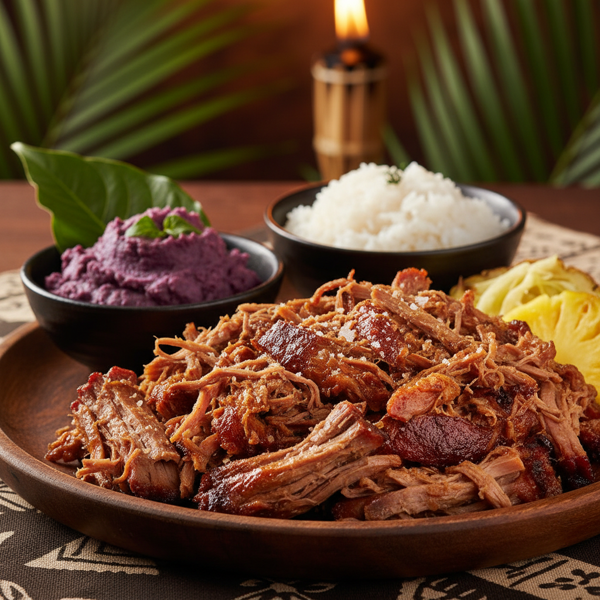
Transport your taste buds to the Hawaiian islands with this Savory Hawaiian-Style Kalua Pork recipe. This dish is an homage to traditional Hawaiian cooking, where pork is slow-cooked in an underground imu, creating a melt-in-your-mouth experience that is incredibly juicy and flavorful. Using a simple oven method with a touch of liquid smoke, this recipe ensures that every bite is infused with authentic smoky goodness. Perfect for gatherings or meal prep, this kalua pork is versatile; enjoy it as a main dish, in tacos, or over a bed of rice. Plus, it freezes beautifully, making it ideal for those busy days ahead. Enjoy the taste of paradise, right at home!
N/A
Servings
N/A
Calories
4
Ingredients
Ingredients
Pork Butt
1-8 lbs (Whole, bone-in or boneless)
Coarse Sea Salt
1-4 tablespoons (For seasoning)
Liquid Smoke
3/4-6 tablespoons (For seasoning)
Banana Leaves
Enough to cover the meat (Used for wrapping (fresh or thawed from frozen))
Instructions
1
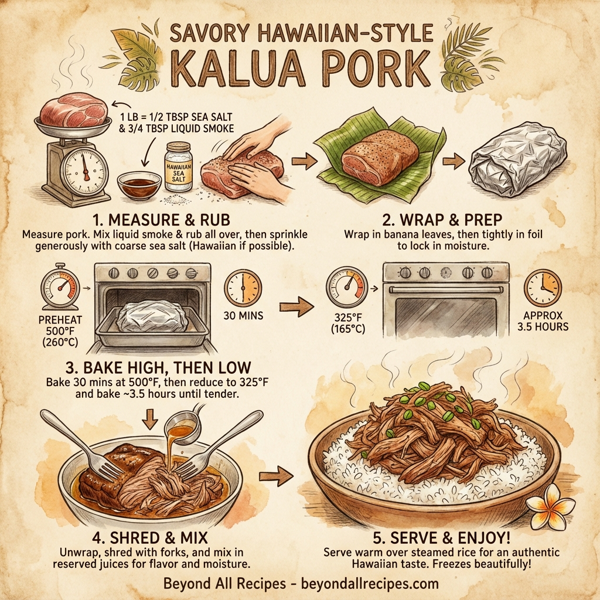
Start by measuring the weight of your pork butt. For every pound of pork, use 1/2 tablespoon of coarse sea salt and 3/4 tablespoon of liquid smoke. If possible, opt for Hawaiian sea salt for an authentic flavor.
2
Preheat your oven to 500°F (260°C).
3
In a bowl, mix the liquid smoke and rub it all over the pork butt, ensuring it is evenly coated.
4
Sprinkle the coarse sea salt generously over the pork, ensuring every surface is seasoned.
5
Wrap the pork butt in banana leaves, then wrap it tightly in heavy-duty aluminum foil to lock in moisture.
6
Place the wrapped pork in a baking pan or dish and cover it tightly with an additional layer of foil.
7
Put the pan in the oven and bake for 30 minutes at 500°F. After 30 minutes, reduce the oven temperature to 325°F (165°C) and continue to bake for about 3.5 hours or until the pork is incredibly tender.
8
Once done, remove the pork from the oven and let it cool slightly before unwrapping. Reserve any juices that may have collected.
9
Shred the meat using two forks or your hands, mixing in the reserved juices to enhance flavor and moisture.
10
Serve the kalua pork warm over a bed of steamed white or brown rice, just as it's enjoyed in Hawaii. Enjoy this culinary journey to the islands!
Nutrition Information
Frequently Asked Questions
Frequently Asked Questions
What is the primary flavor profile of this Hawaiian-Style Kalua Pork?
The pork is incredibly juicy, flavorful, and infused with an authentic smoky goodness reminiscent of traditional Hawaiian cooking.
What cut of meat is recommended for this recipe?
A pork butt, either bone-in or boneless, weighing between 1 and 8 pounds is recommended.
What is the ratio of salt to meat for Kalua Pork?
Use 1/2 tablespoon of coarse sea salt for every pound of pork butt.
How much liquid smoke should I use?
The recipe calls for 3/4 tablespoon of liquid smoke for every pound of pork.
Is there a specific type of salt that works best?
While coarse sea salt works, opting for Hawaiian sea salt will provide a more authentic flavor.
What is the initial oven temperature for this recipe?
Preheat your oven to 500°F (260°C) for the initial stage of cooking.
How long does the pork cook at the high temperature?
The pork should bake at 500°F for exactly 30 minutes before the temperature is reduced.
What is the lower cooking temperature for the slow-cooking phase?
After the first 30 minutes, reduce the oven temperature to 325°F (165°C).
How long does the pork take to cook at 325°F?
Continue baking for about 3.5 hours or until the meat is incredibly tender.
Why are banana leaves used in this recipe?
Banana leaves are used to wrap the meat to impart flavor and lock in moisture, mimicking traditional underground imu cooking.
Can I use frozen banana leaves?
Yes, you can use fresh banana leaves or those that have been thawed from frozen.
What should I wrap the pork in besides banana leaves?
After wrapping in banana leaves, wrap the pork tightly in heavy-duty aluminum foil to ensure no moisture escapes.
Should I cover the baking pan?
Yes, place the wrapped pork in a dish and cover the dish tightly with an additional layer of foil.
How do I prep the meat with liquid smoke?
Rub the liquid smoke all over the pork butt in a bowl, ensuring an even coating on all sides.
When should I apply the salt?
Sprinkle the coarse sea salt generously over the pork after applying the liquid smoke but before wrapping.
How should the pork be handled after it finishes baking?
Remove it from the oven and let it cool slightly before unwrapping to avoid burns from the steam.
Should I save the cooking juices?
Yes, reserve any juices that collected during cooking and mix them back into the shredded meat for extra flavor.
What is the best way to shred the Kalua Pork?
You can easily shred the tender meat using two forks or even your hands once it has cooled enough.
How is Kalua Pork traditionally served in Hawaii?
It is typically served warm over a bed of steamed white or brown rice.
Can I use this pork for other dishes?
Absolutely, this versatile pork is great in tacos, sandwiches, or served as a standalone main dish.
Is this recipe suitable for meal prep?
Yes, it is ideal for meal prep because it is easy to make in large batches and very versatile.
Can I freeze leftovers of Kalua Pork?
Yes, this recipe freezes beautifully, making it perfect for storing and eating on busy days.
How much liquid smoke is needed for an 8-pound pork butt?
For an 8-pound pork butt, you would use approximately 6 tablespoons of liquid smoke.
How much salt is needed for a 4-pound pork butt?
For a 4-pound pork butt, you would use 2 tablespoons of coarse sea salt.
Does this recipe require an underground pit (imu)?
No, this recipe uses a simple oven method to replicate the traditional imu flavor at home.
What category of cuisine does this recipe fall under?
This dish is classified as authentic Hawaiian cooking and ethnic cuisine.
How many ingredients are required for this recipe?
This recipe is very simple and only requires 4 main ingredients: pork, salt, liquid smoke, and banana leaves.
Can I use boneless pork butt?
Yes, the recipe works perfectly with either bone-in or boneless pork butt.
Is the recipe easy for beginners?
Yes, the instructions are straightforward and involve simple seasoning and wrapping techniques.
What does the 'Kalua' in Kalua Pork mean?
Kalua refers to the traditional Hawaiian method of cooking in an underground oven, which this recipe replicates using an oven and banana leaves.