Savory Gluten-Free Brown Gravy
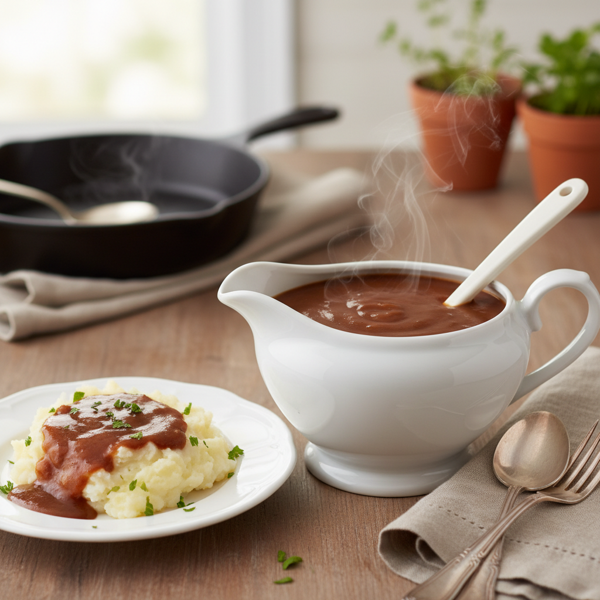
This savory gluten-free brown gravy is a simple yet flavorful addition to any meal. Crafted on the stovetop, this rich, umami-packed gravy features a medley of fresh vegetables and herbs, making it a perfect accompaniment for meats, roasted vegetables, and comfort food classics. After many iterations, this recipe has achieved the ideal balance of taste and texture—it's truly the bomb! For a delicious chicken version, simply swap for gluten-free chicken stock and leave out the soy sauce. Enjoy this versatile gravy that will elevate your dishes and keep your guests coming back for more.
N/A
Servings
N/A
Calories
15
Ingredients
Ingredients
Gluten-free beef stock or vegetable stock
6 cups (none)
Baby carrots
6 (cut into small pieces)
Celery rib (with leaves)
1/2 (chopped)
Chopped onion
1/3 cup (none)
Fresh white mushrooms
4 medium (quartered)
Bay leaves
2 small (none)
Dried parsley
1 teaspoon (none)
Ground thyme
1 pinch (none)
Garlic powder
1/2 teaspoon (none)
Paprika
1/4 teaspoon (none)
Gluten-free soy sauce
1 tablespoon (none)
Salt
to taste (none)
Pepper
to taste (none)
Gluten-free cornstarch
1/4-1/3 cup (none)
Water
1/2-2/3 cup (none)
Instructions
1
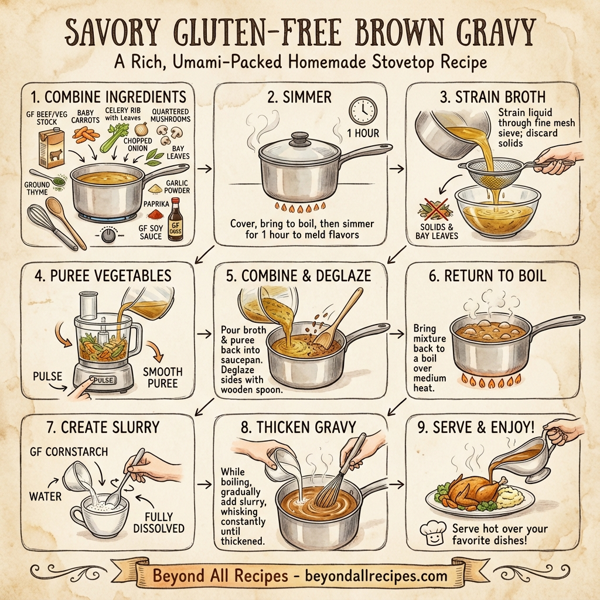
In a large saucepan, combine the gluten-free beef or vegetable stock, baby carrots, celery rib (with leaves), chopped onion, quartered mushrooms, bay leaves, dried parsley, ground thyme, garlic powder, paprika, and gluten-free soy sauce.
2
Cover the saucepan and bring the mixture to a boil. Once boiling, reduce the heat to a simmer and cook for 1 hour, allowing the flavors to meld while your meal is preparing.
3
After one hour, strain the broth through a fine mesh sieve, discarding the solids and bay leaves.
4
Transfer the remaining vegetables and herbs to a food processor. Add enough of the strained broth to achieve a smooth puree.
5
Pour both the strained broth and the vegetable puree back into the saucepan. Use a wooden spoon to deglaze the sides of the pan, incorporating any browned bits for added flavor.
6
Bring the mixture back to a boil over medium heat.
7
In a separate cup, create a slurry by mixing the gluten-free cornstarch with water until fully dissolved.
8
Once the broth is boiling, gradually add the slurry to the pan while stirring with a whisk to prevent lumps from forming. Continue cooking until the gravy thickens to your desired consistency.
9
Serve hot over your favorite dishes and enjoy!
Nutrition Information
Frequently Asked Questions
Frequently Asked Questions
What is Savory Gluten-Free Brown Gravy?
It is a rich, flavorful stovetop gravy made with gluten-free stock, fresh vegetables, and herbs, perfect for meats and comfort foods.
Is this recipe suitable for vegetarians?
Yes, simply use gluten-free vegetable stock instead of beef stock to make it vegetarian-friendly.
How can I make a chicken version of this gravy?
Swap the beef or vegetable stock for gluten-free chicken stock and omit the soy sauce.
What provides the savory umami flavor?
The combination of fresh mushrooms, gluten-free soy sauce, and slow-simmered vegetables creates a deep umami profile.
What is used to thicken the gravy?
This recipe uses a slurry made from gluten-free cornstarch and water to achieve its thick consistency.
Why are the vegetables pureed?
Pureeing the cooked vegetables and adding them back to the broth enhances the flavor and adds body to the final sauce.
How long should the gravy simmer?
The mixture should simmer for approximately 1 hour to allow the flavors to meld properly while your main meal prepares.
Do I keep the bay leaves in the final sauce?
No, you should discard the bay leaves after straining the broth and before pureeing the remaining vegetables.
How do I prevent lumps from forming in the gravy?
Gradually whisk in the cornstarch slurry while the broth is boiling to ensure a smooth, lump-free texture.
Is this recipe safe for those with Celiac disease?
Yes, as long as you ensure your stock, soy sauce, and cornstarch are certified gluten-free.
Can I use fresh parsley instead of dried?
Yes, although dried parsley is specified, you can substitute fresh parsley, adjusting the amount to your preference.
What type of mushrooms are recommended?
The recipe calls for 4 medium fresh white mushrooms, quartered, to provide a savory base.
What does it mean to deglaze the pan in this recipe?
It involves using a wooden spoon to scrape the sides and bottom of the pan to incorporate any browned bits for extra flavor.
What can I substitute for gluten-free soy sauce?
You can use tamari or coconut aminos as a suitable gluten-free alternative.
Should I include the celery leaves?
Yes, the recipe suggests using the celery rib with its leaves to maximize the herbal flavor profile.
Is this gravy dairy-free?
Yes, this recipe contains no butter, milk, or cream, making it naturally dairy-free.
What is the purpose of adding paprika?
Paprika adds a subtle warmth and helps provide a richer brown color to the gravy.
Can I use a different thickener like arrowroot?
Yes, arrowroot powder can be used as a gluten-free thickener, though the cooking time and temperature may vary slightly.
How much water is needed for the cornstarch slurry?
The recipe recommends mixing the cornstarch with 1/2 to 2/3 cup of water.
What is the best way to strain the broth?
Use a fine mesh sieve to effectively separate the liquid from the vegetable solids.
Can I use onion powder instead of fresh onion?
While fresh chopped onion provides the best depth, onion powder can be used if you are in a pinch.
How much stock is required for this recipe?
The recipe uses 6 cups of gluten-free beef or vegetable stock.
Do I need to peel the carrots?
Since they are simmered and pureed, baby carrots are easiest, but if using whole carrots, they should be cleaned and cut into small pieces.
How should I season the final gravy?
Add salt and pepper to taste at the end of the cooking process to perfectly match your preference.
Is this gravy thick enough for mashed potatoes?
Yes, the cornstarch slurry creates a rich consistency that is ideal for serving over mashed potatoes.
Can I make this gravy ahead of time?
Yes, you can prepare the gravy in advance and reheat it on the stovetop when you are ready to serve.
Does this recipe include garlic?
Yes, it uses 1/2 teaspoon of garlic powder for a balanced savory seasoning.
Can I use beef bouillon cubes?
Yes, as long as the bouillon cubes are certified gluten-free, they can be dissolved in water to make the stock.
Is this recipe beginner-friendly?
Yes, the instructions are straightforward and involve basic stovetop techniques like simmering and whisking.
How should I serve this gravy?
Serve it hot over your favorite dishes, such as roasted meats, vegetables, or gluten-free biscuits.