Savory Garlic-Infused Cube Steaks with Onion Gravy
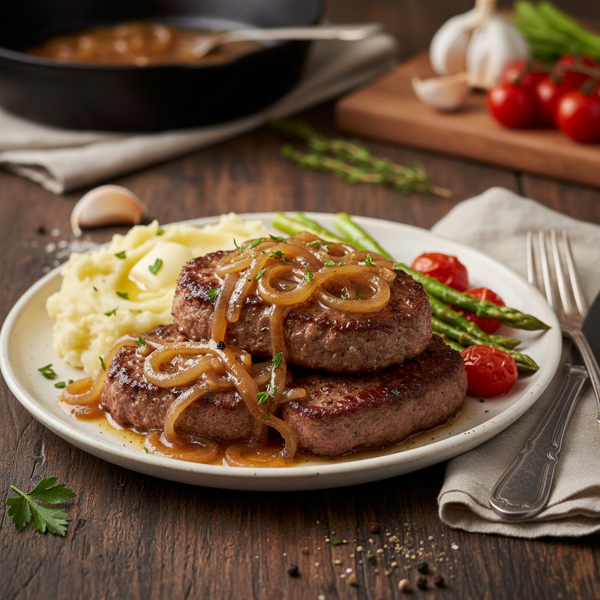
Experience a flavor-packed twist on a classic favorite with this Savory Garlic-Infused Cube Steaks recipe. These tender steak pieces are meticulously coated in a crunchy, herbed cracker crust and simmered in rich beef broth, resulting in a dish that is both effortlessly delicious and gratifying. The slow cooking method ensures that the cube steaks become fork-tender, while the sautéed onions and garlic create an exquisite, aromatic gravy that envelops each bite. Perfectly paired with creamy mashed potatoes, vibrant peas, or the earthy taste of grilled portobello mushrooms, this dish is destined to be a family favorite. Say goodbye to the misconception that cube steaks are always tough; with the right techniques, they can shine in your culinary repertoire. Enjoy a lighter version that contains no processed soups or packaged sauces, allowing the natural flavors of the ingredients to take center stage.
4
Servings
N/A
Calories
14
Ingredients
Ingredients
Cube Steaks
4 (Approximately 1 lb, at room temperature)
Onions
2 large (Cut in half and thinly sliced)
Saltine Crackers
1 cup (Crushed fine)
Garlic Powder
1/2 teaspoon
Minced Garlic
1 teaspoon
Beef Broth
1 1/4 cups (Low-salt preferred)
Eggs
2 extra large (Beaten, approximately 1/2 cup)
Cornstarch
2 1/4 teaspoons
Fresh Parsley
2 tablespoons (Chopped)
Dried Thyme
1/2 teaspoon
Red Pepper Flakes
1 pinch
Olive Oil
2 tablespoons (Additional may be needed for sautéing)
Salt
to taste
Pepper
to taste
Instructions
1
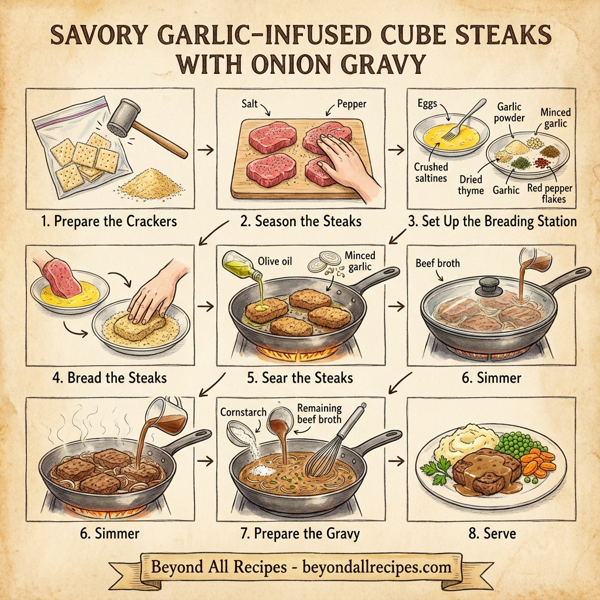
1. Prepare the Crackers: Begin by crushing the saltine crackers finely. You’ll need about 20-25 crackers to yield approximately 1 cup when crushed. A fine crumb coating adheres better to the steaks, so use a zipper bag and a meat mallet or rolling pin to achieve this texture.
2
2. Season the Steaks: Allow the cube steaks to reach room temperature. Generously season both sides with salt and pepper, rubbing the seasoning into the meat for maximum flavor.
3
3. Set Up the Breading Station: In a shallow dish, beat the extra-large eggs until well-combined. In another dish, combine the crushed saltines, garlic powder, minced garlic, dried thyme, and red pepper flakes for the dry coating.
4
4. Bread the Steaks: Dip each seasoned cube steak into the egg mixture, allowing excess to drip off, then coat thoroughly with the cracker mixture, pressing the crumbs to ensure a good coating.
5
5. Sear the Steaks: In a large sauté pan, heat the olive oil over medium-high heat. Once hot, add the breaded cube steaks, ensuring not to overcrowd the pan. Brown the first side until golden, about 3-4 minutes. Flip the steaks, adding more oil if necessary, and sauté for an additional 3-4 minutes before introducing the sliced onions and minced garlic into the pan.
6
6. Simmer: Reduce the heat to low and add 1/4 cup of beef broth to the pan. Cover and let the steaks simmer gently for 30-40 minutes, turning once or twice to ensure even tenderness.
7
7. Prepare the Gravy: After the steaks have cooked, remove them from the pan and cover them with foil. Leave the onions and garlic in the pan. Mix the cornstarch with the remaining beef broth until smooth, then pour it into the pan, stirring to combine with the sautéed mixture. Bring to a boil until thickened, then reduce the heat and let it simmer for 2-3 minutes. Stir in the freshly chopped parsley and adjust seasoning with salt and pepper as needed.
8
8. Serve: Plate each cube steak generously covered with the savory onion gravy. Enjoy your delicious meal alongside mashed potatoes, peas, carrots, or grilled portobello mushrooms.
Nutrition Information
Frequently Asked Questions
Frequently Asked Questions
What are Savory Garlic-Infused Cube Steaks?
They are tender pieces of cube steak coated in an herbed saltine cracker crust, seared, and simmered in a homemade onion and garlic gravy.
How many servings does this recipe yield?
This recipe is designed to serve 4 people.
What is the primary ingredient for the steak portion?
The recipe requires 4 cube steaks, approximately 1 lb in total, at room temperature.
What kind of crackers are used for the breading?
Saltine crackers are used; you will need about 20-25 crackers to make 1 cup of fine crumbs.
How should the onions be prepared for the gravy?
Use 2 large onions, cut them in half, and then slice them thinly.
What is used to make the steaks tender?
The steaks become tender through a slow simmering process in beef broth for 30-40 minutes.
What herbs and spices are in the breading mixture?
The coating includes garlic powder, minced garlic, dried thyme, and a pinch of red pepper flakes mixed with cracker crumbs.
Does this recipe use canned cream soups?
No, this is a lighter version that contains no processed soups or packaged sauces, focusing on natural ingredients.
How do I ensure the breading sticks to the steak?
Crushing the crackers finely and pressing them into the meat after dipping in beaten egg helps the coating adhere properly.
What type of broth is recommended?
Low-salt beef broth is preferred for this recipe to better control the seasoning.
How do you thicken the onion gravy?
The gravy is thickened using a mixture of 2 1/4 teaspoons of cornstarch and beef broth.
What temperature should the meat be before cooking?
The cube steaks should be allowed to reach room temperature before seasoning and cooking.
What is the best way to crush the saltines?
Place the crackers in a zipper bag and use a meat mallet or rolling pin to achieve a fine crumb texture.
How long do you sear the steaks?
Sear them in olive oil over medium-high heat for 3-4 minutes per side until golden brown.
When should I add the onions to the pan?
The sliced onions and minced garlic are added to the pan after the steaks have been flipped and sautéed for a few minutes on the second side.
How much broth is used for the simmer step?
Use 1/4 cup of beef broth for the initial 30-40 minute simmer phase.
What is the final garnish for this dish?
Two tablespoons of freshly chopped parsley are stirred into the gravy at the end.
What side dishes pair well with these steaks?
It pairs perfectly with creamy mashed potatoes, peas, carrots, or grilled portobello mushrooms.
How many eggs are needed for the breading station?
The recipe calls for 2 extra-large eggs, beaten.
Can I use more oil for sautéing?
Yes, if the pan becomes too dry when flipping the steaks, you can add additional olive oil as needed.
What type of heat is used for simmering?
The heat should be reduced to low for the 30-40 minute simmering period.
Do I leave the steaks in the pan while making the gravy?
No, remove the steaks and cover them with foil to keep warm while you thicken the gravy in the pan with the onions.
How long should the gravy boil?
Bring the gravy to a boil until thickened, then reduce heat and let it simmer for 2-3 minutes.
What prevents the cube steaks from being tough?
The combination of breading, searing, and especially the long, low-heat simmer in broth ensures tenderness.
Is there any heat or spice in this recipe?
Yes, a pinch of red pepper flakes is added to the breading for a subtle kick.
Should the pan be covered during simmering?
Yes, cover the pan after adding the 1/4 cup of broth to trap moisture and tenderize the meat.
How much total beef broth is needed for the whole recipe?
A total of 1 1/4 cups of beef broth is used throughout the recipe.
What size should the eggs be?
The recipe specifically recommends using 2 extra-large eggs.
What happens to the onions and garlic when the steaks are removed?
They stay in the pan to serve as the base for the savory gravy.
Can I adjust the salt and pepper at the end?
Yes, after the gravy has thickened and the parsley is added, you should adjust the seasoning to taste.