Savory Garlic Herb Brown Rice Pilaf

This Savory Garlic Herb Brown Rice Pilaf is a delightful dish that transforms ordinary brown rice into a flavor-packed side. The combination of sautéed onions and garlic creates a rich base, while the long grain brown rice absorbs the nutty essence of the chicken or vegetable broth. Perfectly seasoned and cooked to tender perfection, this pilaf pairs wonderfully with a variety of proteins or can stand alone as a wholesome vegetarian option. Enjoy it as a comforting staple or elevate your meal prep with its delicious leftovers, which reheat beautifully.
4
Servings
112
Calories
7
Ingredients
Ingredients
olive oil
1 tablespoon (none)
yellow onion
1 small (chopped)
garlic cloves
3 (minced)
long grain brown rice
1 cup (none)
fat-free low-sodium chicken broth or vegetable broth
2 1/2 cups (none)
salt
to taste (none)
pepper
to taste (none)
Instructions
1
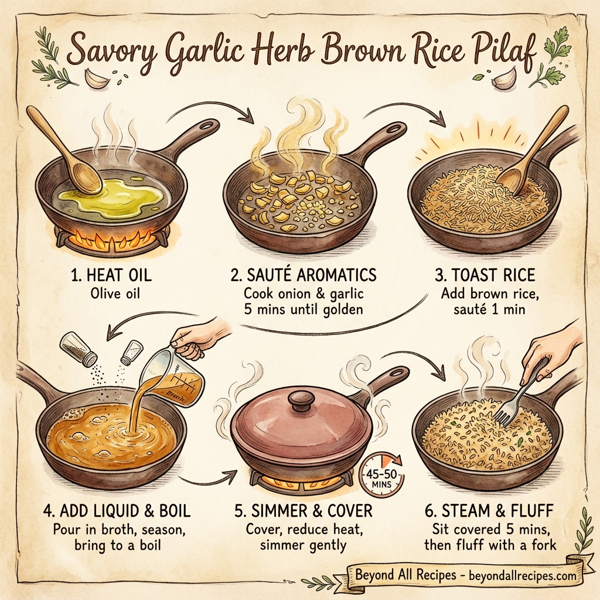
Heat the olive oil in a medium skillet over medium-high heat.
2
Add the chopped onion and minced garlic; cook for around 5 minutes, stirring frequently, until the onion becomes golden and fragrant.
3
Stir in the long grain brown rice and sauté for about 1 minute to toast the rice slightly.
4
Pour in the chicken or vegetable broth, and season with salt and pepper to your liking. Stir to combine and bring to a boil.
5
Once boiling, cover the skillet with a lid and reduce the heat to low. Let it simmer gently for 45-50 minutes, or until the rice is tender and the majority of the liquid is absorbed, checking occasionally. Add a little water if needed during cooking.
6
After cooking, remove the skillet from the heat and let the rice sit, covered, for an additional 5 minutes to finish steaming. Fluff with a fork before serving.
Nutrition Information
21g
Carbs
1.5g
Fiber
Frequently Asked Questions
Frequently Asked Questions
What is Savory Garlic Herb Brown Rice Pilaf?
It is a flavor-packed side dish that transforms ordinary long grain brown rice into a gourmet experience using sautéed onions, garlic, and broth.
What type of rice is best for this recipe?
This recipe specifically calls for long grain brown rice to achieve a nutty essence and tender texture.
How long does it take to cook the rice?
The rice needs to simmer for approximately 45-50 minutes, followed by 5 minutes of steaming off the heat.
Is this recipe vegetarian-friendly?
Yes, if you use vegetable broth instead of chicken broth, this dish is completely vegetarian and vegan.
How many calories are in one serving?
Each serving contains approximately 112 calories.
How many servings does this recipe provide?
This recipe makes 4 servings.
What is the benefit of toasting the rice before simmering?
Sautéing the rice for one minute to toasts it slightly, which helps enhance its natural nutty flavor.
Can I use white rice instead of brown rice?
You can, but the cooking time and liquid ratio will change significantly. White rice typically requires less water and only 15-20 minutes of cooking.
How much garlic is used in this pilaf?
The recipe calls for 3 minced garlic cloves for a savory, aromatic profile.
What should I do if the rice is still crunchy after 50 minutes?
If the rice is still hard, add a small amount of water or broth and continue to simmer for a few more minutes until tender.
Does this dish contain fiber?
Yes, it provides about 1.5 grams of fiber per serving.
Is it necessary to let the rice sit after cooking?
Yes, letting it sit covered for 5 minutes allows the rice to finish steaming, which makes it easier to fluff.
Can I use butter instead of olive oil?
Yes, butter can be used for a richer flavor, though olive oil is used in the original recipe for a healthier profile.
What vegetables are included in the base?
The base consists of one small chopped yellow onion and three minced garlic cloves.
Is this recipe good for meal prep?
Absolutely. It reheats beautifully and can be used as a base for various meals throughout the week.
How much broth do I need for 1 cup of brown rice?
This recipe uses 2.5 cups of broth for every 1 cup of long grain brown rice.
Is this dish gluten-free?
Brown rice is naturally gluten-free. Ensure your broth is certified gluten-free to keep the entire dish safe for those with gluten sensitivities.
Can I add fresh herbs to this pilaf?
Yes, adding fresh parsley, thyme, or rosemary at the end of cooking would enhance the 'herb' profile of the dish.
What proteins pair well with this side dish?
It pairs wonderfully with grilled chicken, roasted salmon, or sautéed tofu.
Should I wash the rice before cooking?
While not explicitly required in the instructions, rinsing brown rice can help remove excess surface starch for more distinct grains.
How much carbohydrates are in a serving?
There are approximately 21 grams of carbohydrates per serving.
Can I use red onion instead of yellow onion?
Yes, red onion will work, though it may slightly change the color and provide a slightly different sweetness.
What temperature should I simmer the rice at?
Once the liquid boils, reduce the heat to low to maintain a gentle simmer.
How should I store leftovers?
Store leftover pilaf in an airtight container in the refrigerator for 3 to 5 days.
Can I make this in a rice cooker?
Yes, you can sauté the onions and garlic first, then transfer everything to a rice cooker using the 'brown rice' setting.
Is the broth supposed to be low-sodium?
The recipe recommends fat-free, low-sodium chicken or vegetable broth to control the salt content.
Can I add nuts to this pilaf?
Toasted slivered almonds or pine nuts would make an excellent addition for extra crunch.
What do I use to fluff the rice?
A fork is the best tool to fluff the rice without mashing the grains.
Is this a healthy side dish?
Yes, it is tagged as a healthy side dish and uses whole grain brown rice and minimal added fats.
How do I prevent the rice from burning on the bottom?
Ensure your heat is set to low and that the skillet has a tight-fitting lid to keep the moisture inside.