Savory Filipino Pork Adobo with Aromatic Herbs

Experience the rich and tangy flavors of Filipino cuisine with this Savory Pork Adobo recipe. A delightful dish, Pork Adobo is celebrated for its perfect balance of sweet, sour, and savory tastes. This dish features tender chunks of boneless pork butt simmered in a fragrant sauce made with rice vinegar, soy sauce, and aromatic herbs like garlic and bay leaves. It's an excellent choice for family gatherings or special occasions. Serve it over a bed of fluffy jasmine rice to soak up the delicious sauce, and make sure to share this cherished recipe with friends and family!
6
Servings
200
Calories
11
Ingredients
Ingredients
boneless pork butt
2 lbs (cut into 3-inch chunks)
rice vinegar or white vinegar
1/2 cup (to taste)
light soy sauce
3/4 cup
asian fish sauce
1/4 cup
low sodium chicken broth or water
2 cups
brown sugar
2 teaspoons (to taste)
fresh ground black pepper
2 teaspoons
bay leaves
4
chopped garlic
5 tablespoons
onions
2 (thinly sliced)
asian hot chili oil
1 teaspoon (to taste)
Instructions
1
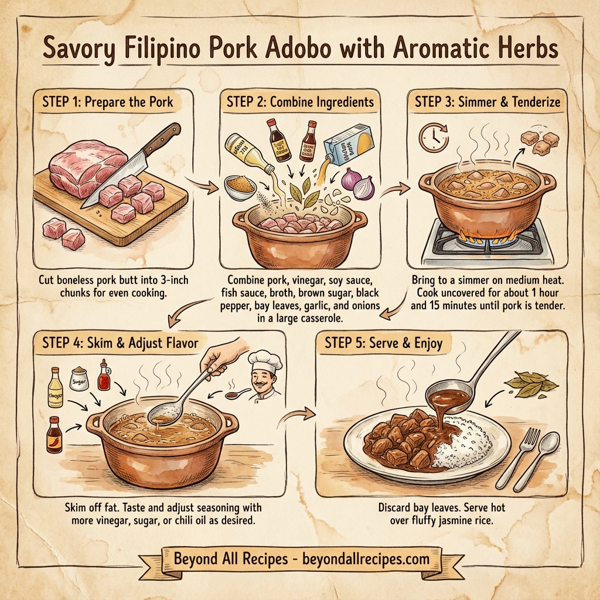
Begin by cutting the boneless pork butt into 3-inch chunks. This will help the meat cook evenly and absorb the flavors.
2
In a large casserole or saucepan, combine the pork with rice or white vinegar, light soy sauce, Asian fish sauce, chicken broth (or water), brown sugar, black pepper, bay leaves, chopped garlic, and sliced onions.
3
Turn the heat to medium and bring the mixture to a gentle simmer. Allow it to cook uncovered for about 1 hour and 15 minutes, or until the pork becomes tender and easily shreds.
4
As the adobo simmers, skim off any fat that rises to the surface to achieve a cleaner broth. Taste the sauce and adjust seasoning by adding more vinegar, sugar, or chili oil to reach your desired flavor balance.
5
Once fully cooked and flavored to your liking, remove from heat. Discard the bay leaves and serve the Pork Adobo hot over fluffy jasmine rice.
Nutrition Information
13g
Fat
8g
Carbs
15g
Protein
Frequently Asked Questions
Frequently Asked Questions
What is the primary flavor profile of the Savory Filipino Pork Adobo?
The dish is celebrated for its perfect balance of sweet, sour, and savory tastes, featuring tangy vinegar and rich soy sauce.
What cut of pork is recommended for this recipe?
The recipe calls for 2 lbs of boneless pork butt.
How should the pork be prepared before cooking?
The boneless pork butt should be cut into 3-inch chunks to ensure it cooks evenly and absorbs the sauce's flavors.
What are the key liquid ingredients in the adobo sauce?
The sauce is made from rice or white vinegar, light soy sauce, Asian fish sauce, and low sodium chicken broth or water.
How much garlic is used in this adobo recipe?
This recipe uses 5 tablespoons of chopped garlic for a rich, aromatic flavor.
How long does it take to cook the pork adobo?
The pork should simmer uncovered for approximately 1 hour and 15 minutes.
Should the pot be covered while the adobo simmers?
No, the instructions specify to allow the mixture to cook uncovered.
How do I know when the pork is done cooking?
The pork is ready when it becomes tender and can be easily shredded.
How can I make the adobo broth cleaner?
As the adobo simmers, you should skim off any fat that rises to the surface.
Can I adjust the seasonings of the sauce?
Yes, you can taste the sauce during cooking and add more vinegar, sugar, or chili oil to reach your desired flavor balance.
What should be done with the bay leaves before serving?
The bay leaves should be discarded once the dish is fully cooked and before serving.
What is the best way to serve Pork Adobo?
It is best served hot over a bed of fluffy jasmine rice, which helps soak up the delicious sauce.
Does this recipe contain any heat or spice?
Yes, it includes 1 teaspoon of Asian hot chili oil, which can be adjusted to your taste preference.
How many servings does this recipe provide?
This recipe yields 6 servings.
What are the nutritional facts for one serving?
Each serving contains approximately 200 calories, 13g of fat, 8g of carbohydrates, and 15g of protein.
Can I use white vinegar if I don't have rice vinegar?
Yes, the recipe allows for the use of either rice vinegar or white vinegar.
What type of soy sauce is required?
The recipe specifically calls for light soy sauce.
Is there sugar in Filipino Pork Adobo?
Yes, 2 teaspoons of brown sugar are used to balance the savory and sour components.
What aromatics are used in this dish?
The aromatics include chopped garlic, bay leaves, and thinly sliced onions.
How many onions are needed?
The recipe requires 2 onions, thinly sliced.
Is fish sauce a necessary ingredient?
Yes, the recipe uses 1/4 cup of Asian fish sauce to add depth and umami to the dish.
What kind of black pepper should I use?
The recipe recommends 2 teaspoons of fresh ground black pepper.
Can I substitute the chicken broth?
Yes, you can use water instead of low sodium chicken broth if preferred.
Is this dish considered a main course?
Yes, it is categorized as a main dish and is considered a staple comfort food in Filipino cuisine.
How many bay leaves are used in the simmering process?
The recipe uses 4 bay leaves.
What is the total number of ingredients in this recipe?
There are 11 ingredients listed for this Savory Filipino Pork Adobo.
What temperature should the stove be set to?
The mixture should be brought to a gentle simmer over medium heat.
What makes this dish a good choice for gatherings?
Its rich, crowd-pleasing flavors and the ability to serve it easily over rice make it excellent for family gatherings or special occasions.
Is the recipe high in protein?
Each serving provides 15g of protein, making it a good protein source.
Can I adjust the amount of sugar used?
Yes, the brown sugar is noted as 'to taste,' allowing you to control the sweetness of the final dish.