Savory Filipino Pork Adobo
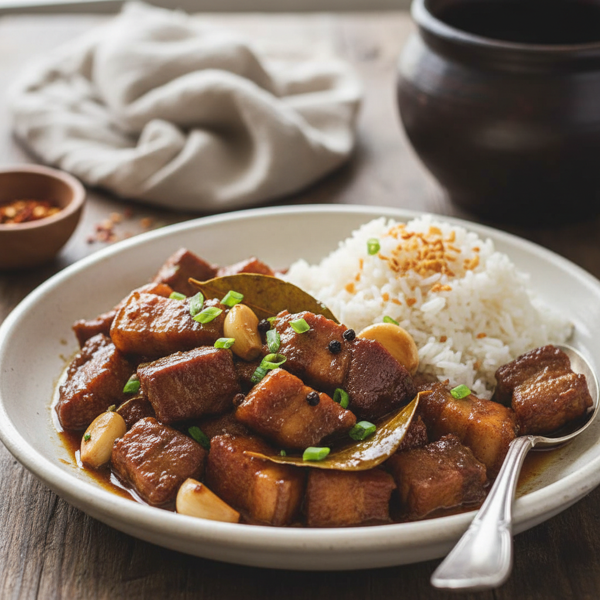
Experience the rich flavors of this Savory Filipino Pork Adobo, a beloved traditional dish known for its mouthwatering combination of pork, vinegar, and soy sauce. This recipe is steeped in culture and warmth, combining tender pork shoulder or butt with aromatic garlic, bay leaf, and a touch of sweetness from sugar. Perfect for a comforting lunch or snack, serve it over steamed rice for a satisfying meal that brings friends and family together. Ideal for meal prep, this dish tastes even better the next day as the flavors meld beautifully.
6
Servings
400
Calories
10
Ingredients
Ingredients
Pork shoulder or butt
1.5 lbs (cut into 1-1/2" cubes)
Vinegar
1/3 cup
Soy sauce
2 tablespoons
Salt
1 teaspoon
Garlic
3 cloves (minced)
Bay leaf
1 small
Pepper
1/4 teaspoon
Sugar
1 tablespoon
Water
1/2 cup
Cooking oil
2 tablespoons
Instructions
1
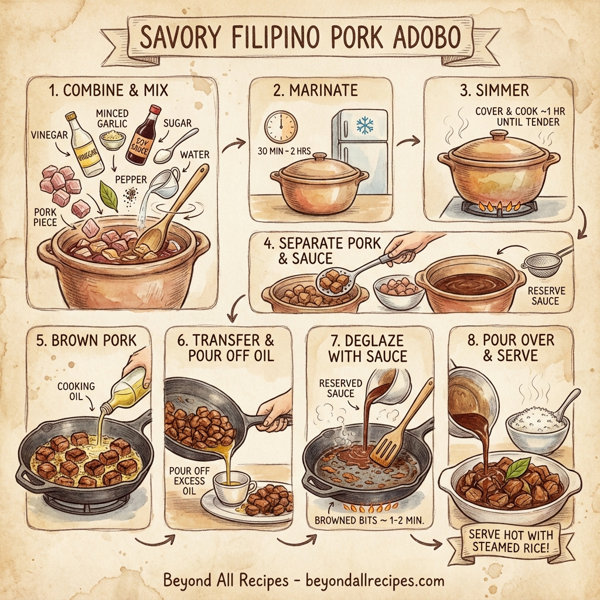
In a large pot, combine the cubed pork, vinegar, soy sauce, salt, minced garlic, bay leaf, pepper, sugar, and water. Mix thoroughly.
2
Allow the mixture to marinate for at least 30 minutes, or preferably, refrigerate for a couple of hours to enhance the flavors.
3
After marinating, bring the pot to a simmer over medium heat. Cover and let it cook for about 1 hour, or until the pork is tender and juicy.
4
Once the meat is tender, remove it from the pot and set aside. Strain and reserve the sauce for later use.
5
In a large skillet, heat the cooking oil over medium-high heat. Add the cooked pork and brown it on all sides, creating a delicious crust.
6
Once browned, transfer the pork to a serving dish and carefully pour off any excess oil from the skillet.
7
Add the reserved sauce to the skillet, scraping any browned bits from the bottom to incorporate all flavors. Cook for 1-2 minutes until heated through.
8
Pour the sauce over the browned pork in the serving dish. Serve hot with steamed white rice.
Nutrition Information
23g
Fat
13g
Carbs
22g
Protein
Frequently Asked Questions
Frequently Asked Questions
What is Savory Filipino Pork Adobo?
It is a traditional Filipino dish featuring pork simmered in a mixture of vinegar, soy sauce, garlic, and spices until tender.
What cut of pork is best for this recipe?
Pork shoulder or pork butt is recommended for its balance of meat and fat, which ensures the dish remains juicy.
How long should I marinate the pork?
You should marinate for at least 30 minutes, though refrigerating for a couple of hours provides a deeper flavor.
How many calories are in one serving?
There are approximately 400 calories per serving in this recipe.
What are the primary flavor components?
The dish is characterized by its savory, tangy, and slightly sweet profile from soy sauce, vinegar, and sugar.
Can I substitute the pork shoulder?
Yes, you can use pork belly for a richer version or chicken if you prefer a leaner meat.
How many servings does this recipe provide?
This recipe is designed to serve 6 people.
Is the sugar necessary?
Sugar helps balance the acidity of the vinegar and the saltiness of the soy sauce, but it can be adjusted to taste.
What should I serve with Pork Adobo?
It is traditionally served over steamed white rice to soak up the flavorful sauce.
How long does it take to cook the pork?
The pork needs to simmer for about 1 hour to reach maximum tenderness.
Why is the pork browned after simmering?
Browning the pork in oil creates a delicious crust and enhances the overall texture of the meat.
Can I store leftovers?
Yes, this dish is ideal for meal prep and actually tastes better the next day as the flavors meld.
What kind of vinegar should I use?
Cane vinegar is traditional, but white distilled vinegar works perfectly well for this recipe.
How much protein is in a serving?
Each serving contains 22g of protein.
What aromatic ingredients are used?
This recipe uses minced garlic and a bay leaf to provide deep aromatic notes.
How much fat is in this dish?
There are 23g of fat per serving.
Can I make this dish ahead of time?
Absolutely, it is a great make-ahead meal as the vinegar helps preserve it and flavors improve over time.
Is this recipe spicy?
No, it is savory and tangy. You can add peppercorns for a mild heat or chili peppers if you want it spicy.
What is the purpose of the bay leaf?
The bay leaf adds a subtle herbal depth that complements the heavy soy and vinegar base.
How much soy sauce is required?
The recipe calls for 2 tablespoons of soy sauce.
Does the recipe use water?
Yes, 1/2 cup of water is used to help create the braising liquid for simmering.
What is the carbohydrate count?
There are 13g of carbohydrates per serving.
How should the pork be prepared?
The pork should be cut into 1-1/2 inch cubes.
Can I use garlic powder instead of fresh garlic?
Fresh minced garlic is preferred for the best flavor, but powder can be used in a pinch.
Is this considered comfort food?
Yes, it is a beloved traditional comfort food in Filipino culture.
What happens to the sauce after simmering?
The sauce is strained, reserved, and then reduced or reheated in the skillet to pour over the browned pork.
Is there salt in the recipe?
Yes, 1 teaspoon of salt is included, but be mindful of the saltiness from the soy sauce.
What temperature should I simmer the pork at?
You should bring it to a simmer over medium heat and then cover the pot.
How much oil is needed for browning?
You will need 2 tablespoons of cooking oil for the browning step.
Can I add other vegetables?
While not in this specific recipe, many people add potatoes or hard-boiled eggs to their Adobo.