Savory Filipino Eggplant Adobo
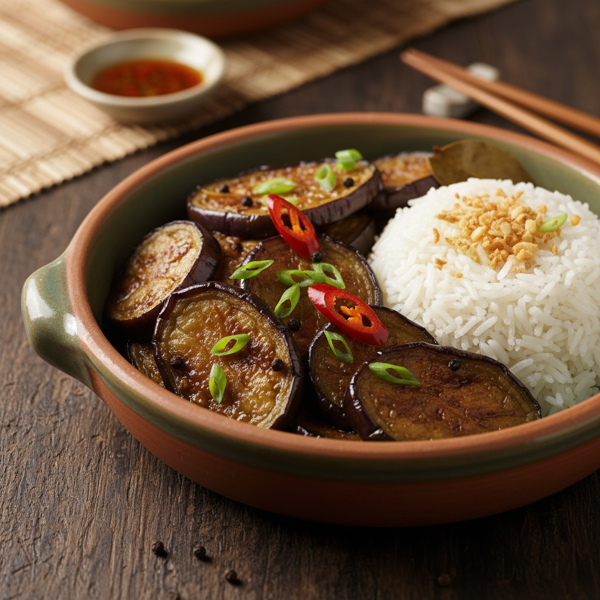
Experience the rich, tangy flavors of this Savory Filipino Eggplant Adobo, a beloved dish that captures the essence of Filipino cuisine. This recipe features tender cubes of eggplant marinated in a vibrant blend of soy sauce and red wine vinegar, infused with aromatic garlic and fresh ground pepper. Perfectly sautéed to golden perfection, this dish is not only a delightful side but can also stand alone as a vegetarian main course. Relish the comforting taste of home-cooked adobo that brings memories of bustling markets and the warmth of family gatherings, all in one plate!
N/A
Servings
N/A
Calories
7
Ingredients
Ingredients
Eggplants
5 cups (diced, cut into 1 1/2-inch cubes)
Salt
1 pinch (optional, for draining eggplants)
Vegetable oil
1/3 cup (for frying)
Soy sauce
1/3 cup (for sauce)
Red wine vinegar
1/4 cup (for sauce)
Garlic cloves
6 cloves (minced)
Fresh ground black pepper
1/2 teaspoon (for sauce)
Instructions
1
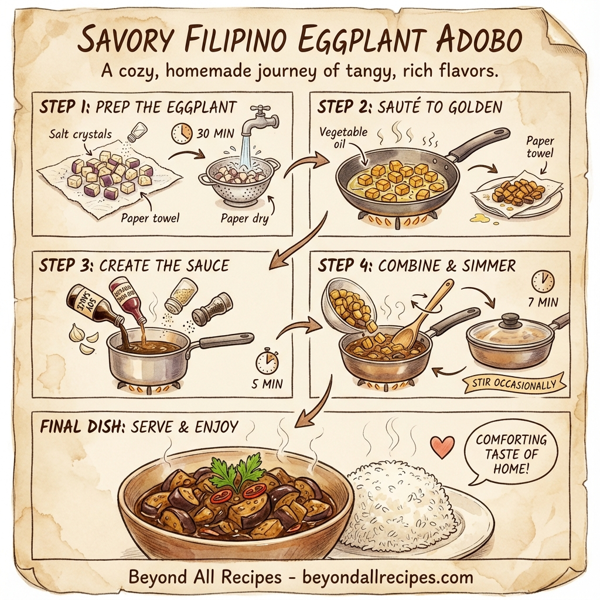
Start by preparing the eggplant: spread the diced eggplants on paper towels and sprinkle with a pinch of salt. Allow them to drain for 30 minutes to remove excess moisture. Afterward, rinse the eggplant cubes under cold water and pat them dry with more paper towels.
2
Heat the vegetable oil in a non-stick skillet over medium heat. Once hot, add the prepared eggplant and sauté until they turn golden brown and slightly crispy, about 5 to 7 minutes. Remove the eggplant from the skillet and set aside on a paper towel to absorb any excess oil.
3
In a small saucepan, combine the soy sauce, red wine vinegar, minced garlic, and black pepper. Bring the mixture to a gentle simmer over low heat, allowing the flavors to meld together for about 5 minutes.
4
Once simmered, add the sautéed eggplant to the saucepan, gently folding the ingredients to coat the eggplant evenly. Cover the skillet and let it cook on low heat for an additional 7 minutes, stirring occasionally until the eggplant is thoroughly infused with the adobo sauce.
5
Remove from heat and serve hot or warm, garnished with fresh herbs if desired. Enjoy with steamed rice or as a standalone dish to savor the full flavors.
Nutrition Information
Frequently Asked Questions
Frequently Asked Questions
What is Savory Filipino Eggplant Adobo?
It is a traditional Filipino dish featuring tender cubes of eggplant marinated in a tangy and savory blend of soy sauce, red wine vinegar, garlic, and black pepper.
Is this eggplant adobo recipe vegetarian?
Yes, this recipe is vegetarian as it uses eggplant as the primary ingredient and contains no meat products.
How do I prepare the eggplant before cooking?
Spread the diced eggplant on paper towels, sprinkle with salt, and let drain for 30 minutes to remove excess moisture before rinsing and patting dry.
Why should I salt the eggplant?
Salting the eggplant helps to draw out excess moisture and bitterness, ensuring a better texture when sauteed.
How long should the eggplant drain?
The eggplant should be allowed to drain for approximately 30 minutes.
What size should I cut the eggplant cubes?
The eggplant should be diced into roughly 1 1/2-inch cubes.
What type of oil is recommended for frying?
The recipe calls for 1/3 cup of vegetable oil for sauteing the eggplant.
How long do I saute the eggplant?
Saute the eggplant for about 5 to 7 minutes until they turn golden brown and slightly crispy.
What ingredients are in the adobo sauce?
The sauce consists of soy sauce, red wine vinegar, minced garlic, and fresh ground black pepper.
What kind of vinegar is used in this recipe?
This specific recipe uses 1/4 cup of red wine vinegar for the sauce.
How many garlic cloves are needed?
The recipe requires 6 minced garlic cloves to provide a rich, aromatic flavor.
How long should the sauce simmer?
The sauce mixture should simmer over low heat for about 5 minutes to allow the flavors to meld.
When do I add the eggplant to the sauce?
Add the sauteed eggplant to the sauce after the sauce has simmered for 5 minutes.
How long does the eggplant cook in the sauce?
Once combined with the sauce, cover and cook on low heat for an additional 7 minutes.
Should I stir the eggplant while it simmers in the sauce?
Yes, you should stir occasionally to ensure the eggplant is thoroughly infused with the adobo sauce.
What is the best way to serve Eggplant Adobo?
It is best served hot or warm, ideally accompanied by steamed rice.
Can this be served as a main course?
Yes, while it makes a great side dish, its hearty nature allows it to stand alone as a vegetarian main course.
What is the total number of ingredients?
There are 7 ingredients in this recipe: eggplant, salt, vegetable oil, soy sauce, red wine vinegar, garlic, and black pepper.
What kind of skillet should I use?
A non-stick skillet is recommended for sauteing the eggplant to prevent sticking.
Can I garnish this dish?
Yes, you can garnish the finished dish with fresh herbs if desired.
Does this recipe contain cholesterol?
Based on the ingredients provided, this plant-based recipe is naturally cholesterol-free.
What is the flavor profile of this dish?
The dish is rich, tangy, and savory, characterized by the classic Filipino adobo profile of vinegar and soy sauce.
How much eggplant do I need?
You will need approximately 5 cups of diced eggplant.
Is it necessary to rinse the eggplant after salting?
Yes, you should rinse the eggplant cubes under cold water to remove the excess salt before patting them dry.
How much soy sauce is used?
The recipe calls for 1/3 cup of soy sauce.
Can I use regular black pepper?
The recipe specifically recommends 1/2 teaspoon of fresh ground black pepper for the best flavor.
Is this a comfort food dish?
Yes, it is described as a comforting taste of home-cooked adobo that evokes family gatherings.
What should I do with the eggplant after frying it?
Remove the eggplant from the skillet and set it aside on a paper towel to absorb any excess oil before adding it to the sauce.
Should the heat be high when simmering the sauce?
No, the sauce should be brought to a gentle simmer over low heat.
Can I eat this cold?
While it can be served warm, it is traditionally enjoyed hot to experience the full depth of the flavors.