Savory Drunken Pork Roast with Creamy Wine Gravy
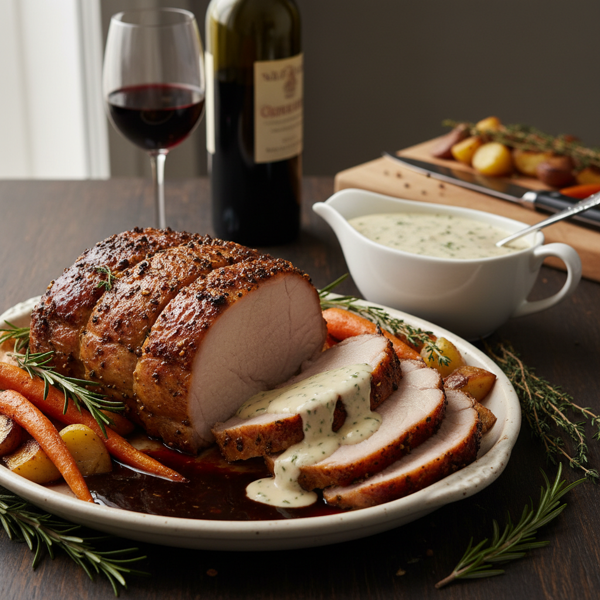
This delectable Savory Drunken Pork Roast is a creation that every meat lover will treasure. The pork loin roast is generously seasoned and seared to perfection, allowing the flavors to meld beautifully with the rich accents of white wine, fresh garlic, and aromatic Italian herbs. Slow-baked until it's incredibly tender, this roast fills your home with an irresistible aroma that beckons for dinner. The accompanying creamy wine gravy transforms this dish into a comforting masterpiece; serve it over open-faced sandwiches for an unforgettable meal that keeps giving, making leftovers an equally delightful experience. Buddha's praise couldn't be more accurate, as this recipe is destined to become a treasured family favorite!
12
Servings
200
Calories
9
Ingredients
Ingredients
Pork loin roast
3-4 lbs (bone-in or boneless)
Italian seasoning
3 tablespoons (to coat the pork roast)
Olive oil
3 tablespoons (for searing)
Bacon grease
2-3 tablespoons (for searing)
Onion
1/2 (chopped)
Garlic cloves
2 (chopped)
White wine
2-3 cups (for baking)
Flour
1/4 cup (for gravy)
Milk
1/2 cup (for gravy)
Instructions
1
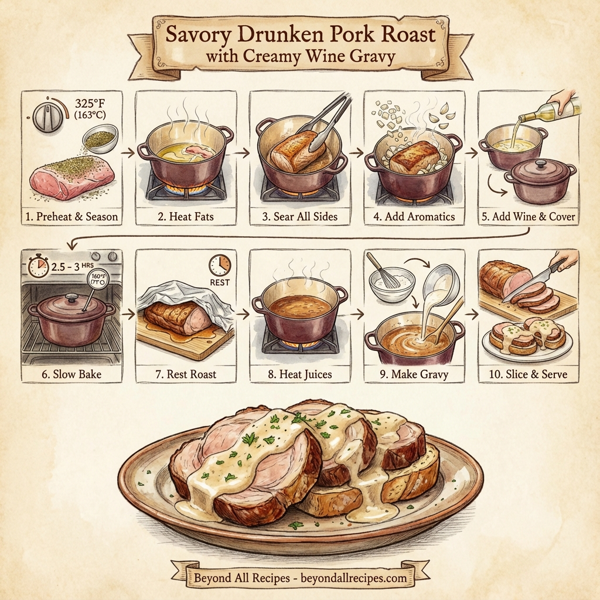
Preheat your oven to 325 degrees Fahrenheit (163 degrees Celsius).
2
Generously rub the Italian seasoning all over the pork loin roast, ensuring even coverage, and set aside to absorb the flavors.
3
In a Dutch oven casserole dish, heat the olive oil and bacon grease over medium-high heat until shimmering.
4
Carefully add the pork roast to the hot oil and sear it on all sides, approximately 1 to 2 minutes per side, until a golden-brown crust forms.
5
In the last minute of searing, add the chopped onion and garlic, stirring them gently to release their fragrant aroma.
6
Remove the roast from heat, pour in the white wine, and cover the Dutch oven with its lid or aluminum foil.
7
Bake in the preheated oven for 2.5 to 3 hours, or until the internal temperature reaches 160 degrees Fahrenheit (71 degrees Celsius) and the meat is fork-tender.
8
Once cooked, take the roast out of the pot and transfer it to a cutting board. Loosely cover it with foil to allow the juices to redistribute.
9
While the roast rests, make the gravy. Place the Dutch oven with the collected juices back onto the stove over medium heat.
10
In a small bowl, whisk together the milk and flour until smooth. Gradually add this mixture to the juices, stirring continuously to avoid lumps.
11
Season the gravy with salt and pepper to taste and keep stirring until it thickens to your desired consistency, about 10 minutes. If the gravy becomes too thick, slowly add more milk, a little at a time, until the desired consistency is reached.
12
Slice the rested pork roast and serve it generously topped with the creamy wine gravy.
Nutrition Information
10g
Fat
12.5g
Carbs
18g
Protein
Frequently Asked Questions
Frequently Asked Questions
What is the main cut of meat used in this recipe?
The recipe calls for a 3-4 lb pork loin roast, which can be either bone-in or boneless.
What is the recommended oven temperature for baking the pork?
The oven should be preheated to 325 degrees Fahrenheit (163 degrees Celsius).
How long does the Savory Drunken Pork Roast need to bake?
The roast typically takes between 2.5 to 3 hours to bake until it is fork-tender.
What internal temperature should the pork reach?
The internal temperature of the pork roast should reach 160 degrees Fahrenheit (71 degrees Celsius).
Why is it called 'Drunken' Pork Roast?
The roast is called 'drunken' because it is slow-baked in 2-3 cups of white wine, which infuses the meat with flavor.
What seasoning is used for the pork?
The recipe uses 3 tablespoons of Italian seasoning rubbed generously over the roast.
What fats are used for searing the meat?
A combination of 3 tablespoons of olive oil and 2-3 tablespoons of bacon grease is used to sear the meat.
Why should I sear the pork before baking?
Searing the pork for 1 to 2 minutes per side creates a golden-brown crust and helps seal in the flavors.
When should I add the onion and garlic?
Add the chopped onion and garlic during the last minute of searing to release their fragrant aroma without burning them.
How do I make the creamy wine gravy?
The gravy is made by whisking milk and flour into the collected juices in the Dutch oven over medium heat until thickened.
What is the ratio of milk to flour for the gravy?
Use 1/2 cup of milk and 1/4 cup of flour, whisked together until smooth before adding to the juices.
How long does it take for the gravy to thicken?
The gravy usually takes about 10 minutes of continuous stirring to reach the desired consistency.
What should I do if the gravy becomes too thick?
If the gravy is too thick, you can slowly add more milk, a little at a time, until it reaches your preferred consistency.
Is it necessary to let the meat rest after cooking?
Yes, covering the roast loosely with foil and letting it rest on a cutting board allows the juices to redistribute for a moister result.
How many servings does this recipe provide?
This recipe yields approximately 12 servings.
What are the nutritional facts per serving?
Each serving contains approximately 200 calories, 10g of fat, 12.5g of carbohydrates, and 18g of protein.
Can I use red wine instead of white wine?
While the recipe specifies white wine for its specific flavor profile, red wine could be used as a variation, though it will change the color and taste of the gravy.
What type of pot is best for this recipe?
A Dutch oven casserole dish is ideal as it can go from the stovetop for searing to the oven for baking.
How is the dish best served?
The sliced pork is best served generously topped with the creamy wine gravy, often over open-faced sandwiches.
Can I substitute the bacon grease?
Yes, if you don't have bacon grease, you can use additional olive oil or butter, though bacon grease adds a smoky depth.
What kind of Italian seasoning is recommended?
Any standard store-bought or homemade blend containing herbs like oregano, basil, and rosemary works well.
Is this recipe suitable for meal prep?
Yes, the description notes that leftovers are a delightful experience, making it great for multiple meals.
How much garlic is required?
The recipe calls for 2 chopped garlic cloves.
Do I need to add salt and pepper?
Salt and pepper should be added to the gravy at the end to suit your personal taste preferences.
What should the consistency of the milk and flour mixture be?
It should be whisked until completely smooth to avoid any lumps in the final gravy.
Can I make this with a smaller roast?
Yes, but you will need to adjust the cooking time and monitor the internal temperature to avoid overcooking.
What if I don't have a lid for my Dutch oven?
You can use a tight seal of aluminum foil to cover the dish during the baking process.
Is the white wine cooked off?
Most of the alcohol in the wine evaporates during the long 2.5 to 3-hour baking process, leaving behind its flavor.
What makes the roast 'fork-tender'?
The slow-baking process in liquid (wine) at a moderate temperature helps break down the connective tissues in the pork.
Is this a family-friendly recipe?
Yes, the description mentions it is destined to become a 'treasured family favorite' due to its comforting nature.