Savory Chinese Oyster and Napa Cabbage Soup
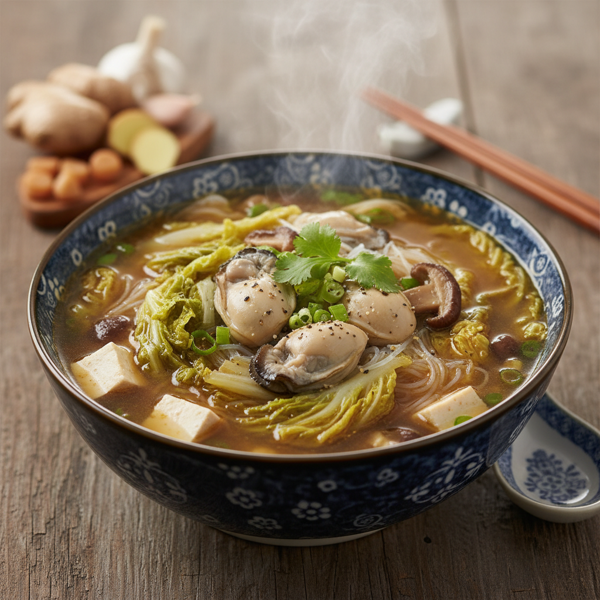
This delicious and wholesome Chinese Oyster Soup blends the umami-rich flavors of fresh oysters with tender napa cabbage and mushrooms. The simple yet fragrant broth, infused with ginger and soy sauce, makes it a comforting dish perfect for any occasion. Ideal for warm gatherings or a cozy night in, this soup is not just tasty, but also packed with nutrients, making it a great addition to your Asian cuisine repertoire.
N/A
Servings
N/A
Calories
10
Ingredients
Ingredients
chicken broth
2 1/2 cups (liquid)
soy sauce
2 tablespoons (liquid)
napa cabbage
2 cups (sliced)
mushrooms
8 ounces (sliced)
bean sprouts
1/2 cup (raw)
green onions
4 (sliced)
minced ginger
1 tablespoon (minced)
fresh oysters
1 pint (shucked, do not drain)
salt
to taste (optional)
pepper
to taste (optional)
Instructions
1
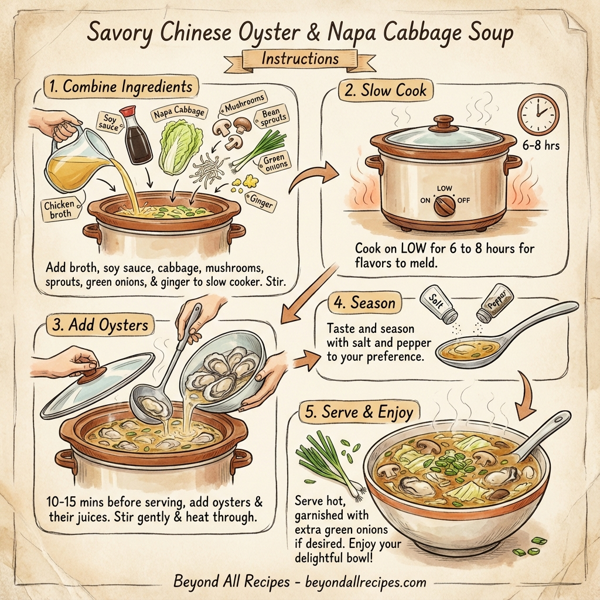
In a slow cooker, combine the chicken broth, soy sauce, sliced napa cabbage, mushrooms, bean sprouts, green onions, and minced ginger. Stir well to combine the ingredients.
2
Set the slow cooker to low and let the mixture cook for 6 to 8 hours, allowing the flavors to meld beautifully.
3
About 10 to 15 minutes before serving, add the fresh oysters along with their natural juices to the slow cooker. Gently stir to incorporate them into the soup and cook until they are just heated through.
4
Taste the soup and season with salt and pepper according to your preference.
5
Serve the soup hot, garnished with extra green onions if desired, and enjoy your delightful bowl of Chinese Oyster Soup.
Nutrition Information
Frequently Asked Questions
Frequently Asked Questions
What is the primary flavor profile of Savory Chinese Oyster and Napa Cabbage Soup?
The soup features a savory, umami-rich profile derived from fresh oysters, soy sauce, and ginger.
What type of cabbage is used in this recipe?
This recipe calls for 2 cups of sliced napa cabbage, which becomes tender and absorbs the broth well.
How long does the soup cook in the slow cooker?
The base of the soup cooks on the low setting for 6 to 8 hours to allow the flavors to meld beautifully.
When should I add the fresh oysters to the soup?
Add the fresh oysters about 10 to 15 minutes before serving so they are just heated through without becoming rubbery.
Should I drain the oysters before adding them?
No, you should not drain them; the oysters should be added along with their natural juices for maximum flavor.
What kind of mushrooms are recommended?
The recipe requires 8 ounces of sliced mushrooms; varieties like white button, cremini, or shiitake work well.
Is ginger a necessary ingredient for this soup?
Yes, one tablespoon of minced ginger provides a fragrant, warming aroma that is essential to the dish's character.
What is the liquid base of the soup?
The liquid base consists of 2 1/2 cups of chicken broth combined with 2 tablespoons of soy sauce.
How do bean sprouts contribute to the recipe?
The 1/2 cup of raw bean sprouts adds a light crunch and additional nutrients to the finished soup.
How many green onions do I need?
You will need 4 green onions, sliced, to be cooked in the soup and used as a garnish.
Can I cook this soup on a high setting?
The recipe specifies the low setting for 6 to 8 hours, but you could potentially cook it on high for 3 to 4 hours.
Is this soup suitable for a cozy night in?
Absolutely, it is described as a comforting dish perfect for warm gatherings or a quiet, cozy evening.
How do I season the soup to my liking?
Taste the soup after the oysters have heated through and add salt and pepper according to your preference.
Can I substitute the chicken broth?
Yes, you can use vegetable broth as a substitute, though it will slightly alter the traditional flavor profile.
What is the preparation for the napa cabbage?
The napa cabbage should be sliced into bite-sized pieces before being added to the slow cooker.
Does this soup contain soy?
Yes, the recipe uses 2 tablespoons of soy sauce for seasoning and color.
How many ingredients are required in total?
The recipe lists 10 ingredients, including common pantry staples like salt and pepper.
Is the ginger sliced or minced?
The ginger should be minced to ensure the flavor is evenly distributed throughout the broth.
Can I use frozen oysters?
Fresh oysters are recommended for the best texture, but you can use frozen ones if they are thawed properly first.
What is the best way to serve the soup?
Serve the soup hot in bowls, garnished with extra sliced green onions if desired.
What category of cuisine does this recipe fall into?
This recipe is a part of Asian cuisine, specifically focusing on Chinese-style flavors.
Is this soup considered healthy?
Yes, it is wholesome and packed with nutrients from fresh vegetables, mushrooms, and seafood.
What happens if I add the oysters too early?
Adding oysters too early can cause them to overcook, resulting in a tough and rubbery texture.
How much soy sauce is used?
The recipe calls for 2 tablespoons of liquid soy sauce.
What does 'shucked' mean for the oysters?
Shucked means the oysters have been removed from their shells and are ready to be cooked.
Can I add extra vegetables?
Yes, you can add other vegetables like carrots or bok choy, though it may change the cooking time and liquid requirements.
Is this a slow cooker only recipe?
While written for a slow cooker, the ingredients can be simmered on a stovetop for a shorter duration.
How do the mushrooms affect the broth?
Mushrooms add an earthy depth and contribute to the overall umami flavor of the soup.
Can I make this soup spicy?
Yes, you can add chili flakes or a dash of hot oil at the end if you prefer a spicy kick.
Is the oyster liquor important?
Yes, the 'liquor' or natural juice of the oyster provides a concentrated seafood flavor that is vital for the broth.