Savory Butternut Squash & Bacon Risotto with Toasted Nuts
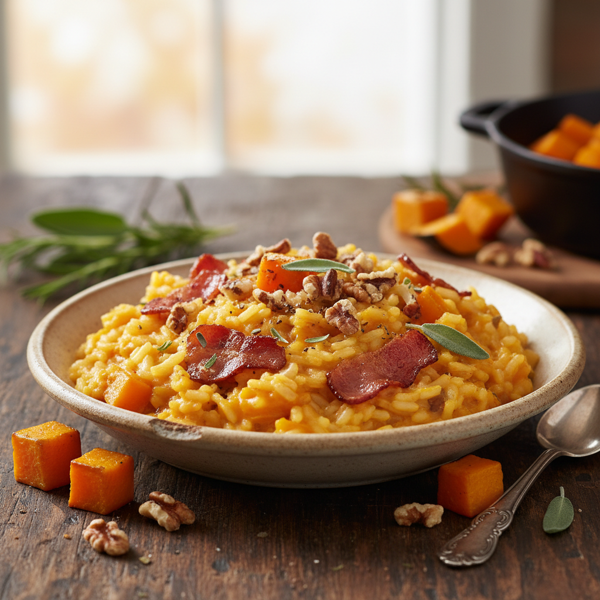
Indulge in this rich and creamy risotto, where the natural sweetness of roasted butternut squash perfectly complements the smokiness of crispy bacon. Enhanced with aromatic herbs like thyme, sage, and rosemary, this dish offers a delightful medley of flavors and textures. The toasted hazelnuts or pecans add a satisfying crunch, making every bite a unique experience. Perfect as a comforting winter meal, feel free to substitute other winter squash varieties like acorn or hubbard for an alternative twist. Serve this risotto warm, garnished with freshly grated Parmesan cheese for an unforgettable dish that will impress your family and friends alike.
6
Servings
717
Calories
14
Ingredients
Ingredients
hazelnuts or pecans
1/3 cup (chopped, toasted)
butternut squash
1 (2-3 lb) (peeled and sliced)
olive oil
4 1/2 tablespoons (divided)
salt
to taste
black pepper
to taste (freshly ground)
chicken stock
4 1/2 cups (heated)
water
4 1/2 cups (heated)
bacon
3 slices (finely chopped)
yellow onion
1 (finely chopped)
fresh thyme
1 1/2 teaspoons (chopped)
fresh sage
1 1/2 teaspoons (chopped)
fresh rosemary
3/4 teaspoon (chopped)
arborio rice
1 3/4 cups
freshly grated Parmesan cheese
1 cup (divided)
Instructions
1
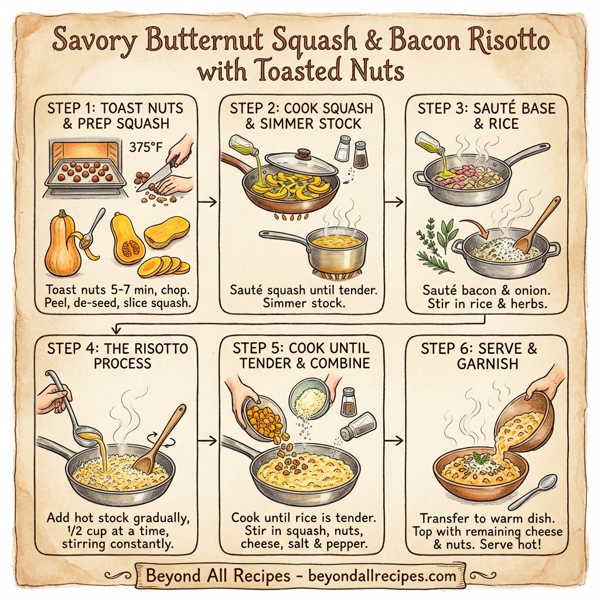
Preheat your oven to 375°F (190°C). Spread the hazelnuts or pecans on a baking sheet and toast them in the oven for about 5 to 7 minutes, or until they are lightly browned and fragrant. Remove from the oven, let them cool, then chop coarsely and set aside.
2
Prepare the butternut squash by peeling it and cutting it lengthwise into 8 wedges. Scoop out the seeds and discard them, then slice the flesh crosswise into thin pieces.
3
In a large frying pan over medium heat, warm 1 1/2 tablespoons of olive oil. Add the prepared squash, covering the pan, and cook until the squash is almost tender, about 7 to 10 minutes. Season with salt and pepper, then set aside.
4
In a medium saucepan, combine the chicken stock and water, bringing it to a gentle simmer over medium heat.
5
In another large saucepan, warm the remaining 3 tablespoons of olive oil over medium heat. Add the finely chopped bacon and onion, sautéing them until the onion is soft and translucent, which should take about 10 minutes.
6
Stir the chopped thyme, sage, rosemary, and arborio rice into the bacon and onion mixture. Cook while stirring constantly until the rice is translucent around the edges, approximately 2 to 3 minutes.
7
Begin adding the hot stock mixture, starting with about 1/2 cup. Stir continuously to scrape any rice from the bottom of the pan. Once the liquid is almost fully absorbed, add another 1/2 cup of liquid, continually stirring.
8
Repeat this process, adding more liquid gradually while stirring nearly constantly, until the rice reaches a firm but tender consistency, and the center of the kernels is no longer chalky. This should take between 20 to 30 minutes.
9
When the risotto is cooked to your liking, stir in another 1/2 cup of the remaining liquid along with the sautéed butternut squash, toasted nuts, and half of the grated Parmesan cheese. Adjust seasoning with additional salt and pepper as needed.
10
Transfer the risotto to a warmed serving dish. Sprinkle the remaining Parmesan cheese on top and serve immediately while hot for the best flavor.
Nutrition Information
105g
Carbs
Frequently Asked Questions
Frequently Asked Questions
What is the main flavor profile of the Savory Butternut Squash & Bacon Risotto?
This recipe features a rich and creamy texture with the natural sweetness of roasted butternut squash, the smokiness of crispy bacon, and a blend of aromatic herbs like thyme, sage, and rosemary.
What type of nuts are recommended for this recipe?
You can use either hazelnuts or pecans, which should be toasted and coarsely chopped for a satisfying crunch.
How should I toast the nuts for the risotto?
Spread the nuts on a baking sheet and toast them in a preheated oven at 375°F (190°C) for about 5 to 7 minutes until they are lightly browned and fragrant.
What is the best way to prepare the butternut squash?
Peel the squash, cut it lengthwise into 8 wedges, remove the seeds, and then slice the flesh crosswise into thin pieces.
How long does it take to sauté the butternut squash?
The squash should be cooked in olive oil for approximately 7 to 10 minutes or until it is almost tender.
What can I substitute for butternut squash in this risotto?
You can use other winter squash varieties such as acorn or hubbard squash for an alternative twist.
What type of rice is used for this recipe?
Arborio rice is used because its high starch content creates the signature creamy consistency of risotto.
Is the stock added cold or hot?
The chicken stock and water mixture should be kept at a gentle simmer and added to the rice while hot.
How much liquid is used in total for the risotto?
The recipe calls for 4 1/2 cups of chicken stock and 4 1/2 cups of water, totaling 9 cups of liquid.
How do I sauté the bacon and onion?
Sauté the finely chopped bacon and onion in olive oil over medium heat for about 10 minutes until the onion is soft and translucent.
Which fresh herbs are included in this risotto?
The recipe uses fresh thyme, fresh sage, and fresh rosemary.
When do I add the herbs and rice to the pan?
Stir the herbs and arborio rice into the bacon and onion mixture once the onions are soft, cooking for 2 to 3 minutes until the rice edges are translucent.
What is the process for adding stock to the rice?
Add the hot stock mixture about 1/2 cup at a time, stirring continuously until the liquid is almost fully absorbed before adding the next portion.
How long does the rice take to cook once you start adding liquid?
It typically takes between 20 to 30 minutes for the rice to reach a firm but tender consistency.
How do I know when the risotto is finished?
The risotto is done when the rice is tender but firm to the bite, and the center of the kernels is no longer chalky.
When do I add the Parmesan cheese?
Half of the Parmesan cheese is stirred into the risotto at the end of cooking, and the remaining half is sprinkled on top before serving.
How many servings does this recipe provide?
This recipe is designed to serve 6 people.
What is the calorie count per serving?
Each serving contains approximately 717 calories.
How many grams of carbohydrates are in a serving?
There are 105 grams of carbohydrates per serving.
Is this recipe suitable for vegetarians?
No, this recipe contains bacon and chicken stock, but it could be modified using vegetable stock and omitting the bacon.
What type of onion should I use?
The recipe specifically calls for one yellow onion, finely chopped.
How much olive oil is required for the entire dish?
A total of 4 1/2 tablespoons of olive oil is used, divided between cooking the squash and sautéing the rice mixture.
Can I use pre-ground pepper?
For the best flavor, the recipe recommends using freshly ground black pepper.
What is the recommended serving temperature?
The risotto should be served immediately while hot in a warmed serving dish.
How many ingredients are in this recipe?
There are 14 ingredients in total, including seasonings and oils.
Should the bacon be chopped before cooking?
Yes, the 3 slices of bacon should be finely chopped before being sautéed with the onion.
What is the purpose of stirring the risotto nearly constantly?
Constant stirring helps release the starch from the rice kernels, which creates the creamy texture of the dish.
What category of food is this recipe?
This recipe is categorized under Rice dishes.
Can I use different types of nuts?
Yes, the recipe suggests either hazelnuts or pecans, but you could experiment with other varieties if desired.
Does the recipe include salt measurements?
Salt is added 'to taste' during the squash preparation and adjusted at the very end of the cooking process.