Savory Burgundy Barley Beef Stew
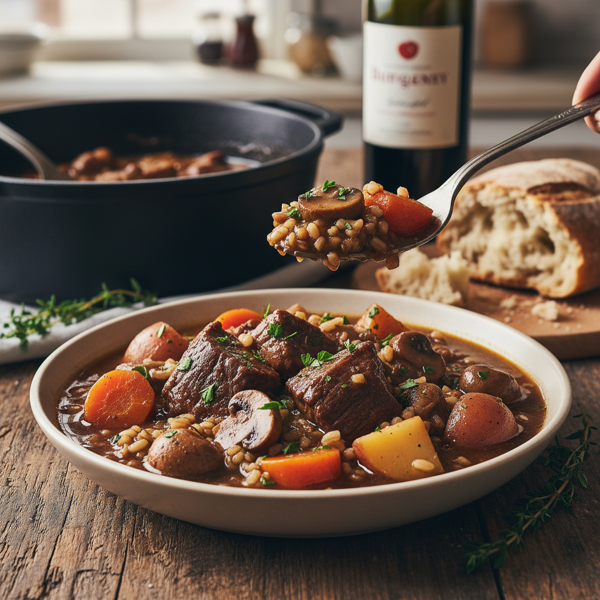
Warm up with this hearty Savory Burgundy Barley Beef Stew, perfect for chilly evenings. This comforting dish combines tender beef stew meat simmered to perfection with a medley of fresh vegetables, wholesome barley, and rich red wine. The result is a flavorful, aromatic stew that boasts a depth of flavor and a satisfying richness. Simple to prepare in your slow cooker, this recipe is ideal for meal prepping and making enough to share with family and friends. Dive into a bowl of this delicious stew for a nourishing experience that brings warmth and joy.
6
Servings
N/A
Calories
18
Ingredients
Ingredients
Flour
2 (teaspoons)
Salt
1/2 (teaspoon)
Pepper
1/4 (teaspoon)
Stew Meat
1 (lb, cut into 1 inch pieces)
Canola Oil
1 (tablespoon)
Onion
1 (small, chopped)
Celery
2 (stalks, chopped)
Garlic
3 (cloves, minced)
Beef Broth
2 (cans (low sodium))
Diced Tomatoes
1 (14 1/2 ounce can, undrained)
Baby Carrots
1/2 (lb (about a cup))
Baby Red Potatoes
4-5 (cut into 1 inch pieces)
Mushrooms
1/2 (cup, sliced)
Barley
1/4 (cup)
Red Wine
1/2 (cup)
Oregano
1/2 (teaspoon)
Thyme
1/2 (teaspoon)
Basil
1/2 (teaspoon)
Instructions
1
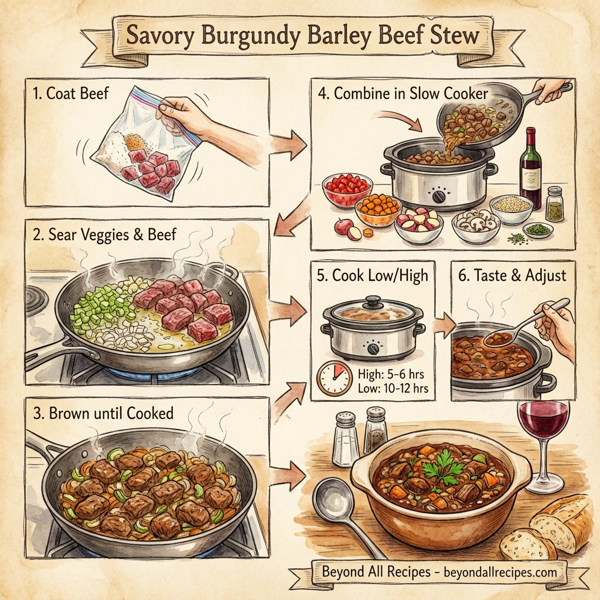
In a large ziplock bag, combine flour, salt, and pepper. Add the stew meat and shake well to coat evenly in the seasoning mixture.
2
Heat the canola oil in a large skillet over medium-high heat. Once hot, add the coated beef, onion, celery, and minced garlic.
3
Sear the mixture for 6-7 minutes, stirring occasionally, until the beef is browned and no longer pink and the vegetables are starting to soften.
4
Transfer the browned beef and vegetable mixture to a slow cooker. Pour in the beef broth, diced tomatoes (with juice), carrots, red potatoes, sliced mushrooms, barley, red wine, oregano, thyme, and basil. Stir gently to combine ingredients.
5
Cover the slow cooker and cook on high for 5-6 hours, or on low for 10-12 hours, until the beef is tender and flavors have melded beautifully.
6
Once cooked, taste and adjust seasonings if necessary. Serve hot and enjoy the rich, savory flavors!
Nutrition Information
Frequently Asked Questions
Frequently Asked Questions
What is the primary flavor profile of Savory Burgundy Barley Beef Stew?
The stew offers a rich, aromatic, and savory flavor profile derived from a combination of red wine, beef broth, and dried herbs like oregano, thyme, and basil.
What type of meat is recommended for this recipe?
The recipe calls for one pound of beef stew meat, cut into 1-inch pieces.
How many people does this beef stew recipe serve?
This recipe is designed to yield approximately 6 servings.
What is the cook time on the high setting in a slow cooker?
When cooking on the high setting, the stew should be ready in 5 to 6 hours.
How long should I cook the stew if I use the low setting?
On the low setting, the stew requires 10 to 12 hours of cooking time until the beef is tender.
Why do I need to coat the beef in flour before cooking?
Coating the beef in a mixture of flour, salt, and pepper helps to brown the meat during searing and acts as a thickening agent for the stew liquid.
What type of wine should be used in this recipe?
The recipe specifies using 1/2 cup of red wine, which adds depth and richness to the burgundy-style sauce.
What kind of potatoes are used in the Savory Burgundy Barley Beef Stew?
The recipe uses 4 to 5 baby red potatoes, cut into 1-inch pieces.
Should I drain the diced tomatoes before adding them to the slow cooker?
No, you should use one 14 1/2 ounce can of undrained diced tomatoes to include the juice in the stew base.
What vegetables are included in this stew?
The vegetable medley consists of onion, celery, garlic, baby carrots, red potatoes, and sliced mushrooms.
How much barley is required for this recipe?
The recipe requires 1/4 cup of barley to add texture and heartiness to the dish.
Do I need to sear the beef before putting it in the slow cooker?
Yes, for the best flavor, sear the floured beef with onion, celery, and garlic in a skillet for 6-7 minutes before transferring to the slow cooker.
What type of oil is recommended for searing the meat?
The recipe recommends using 1 tablespoon of canola oil for browning the beef and vegetables.
Which herbs provide the seasoning for this stew?
The stew is seasoned with 1/2 teaspoon each of dried oregano, thyme, and basil.
How much beef broth is needed?
You will need two cans of low-sodium beef broth.
Can this recipe be used for meal prepping?
Yes, this hearty stew is ideal for meal prepping as it makes a large batch that stores well.
What is the recommended size for the beef pieces?
The stew meat should be cut into approximately 1-inch pieces for even cooking.
How many cloves of garlic are used?
The recipe calls for 3 cloves of garlic, minced.
Are the carrots chopped or whole?
The recipe uses 1/2 pound of baby carrots, which are roughly a cup in volume.
How much onion is used in the base?
One small onion, chopped, is used for the aromatic base of the stew.
What is the best way to combine the meat and flour?
Combine the flour, salt, and pepper in a large ziplock bag, add the meat, and shake well to coat evenly.
How many stalks of celery are in the recipe?
The recipe includes 2 stalks of celery, chopped.
How much flour is used for the coating?
The recipe uses 2 teaspoons of flour for coating the beef.
What type of mushrooms should I use?
The recipe suggests 1/2 cup of sliced mushrooms; you can use white button or cremini mushrooms.
Is salt and pepper included in the seasonings?
Yes, 1/2 teaspoon of salt and 1/4 teaspoon of pepper are used in the flour coating.
Do I need to stir the stew while it's in the slow cooker?
You should stir it gently once all ingredients are added to the slow cooker, but it does not require frequent stirring during the cooking process.
What should I do if the flavors need adjustment after cooking?
Once the cooking time is complete, taste the stew and add more salt, pepper, or herbs if necessary.
What makes this stew 'Burgundy' style?
The addition of red wine and the long simmering process with beef and mushrooms creates the signature Burgundy flavor profile.
Can I substitute the canola oil?
Yes, you can substitute canola oil with another high-smoke point oil like vegetable oil or olive oil for searing.
How should the stew be served?
It should be served hot in bowls, perhaps with a side of crusty bread to soak up the savory broth.