Savory Browned Sage Butter Ravioli with Roasted Pumpkin Filling
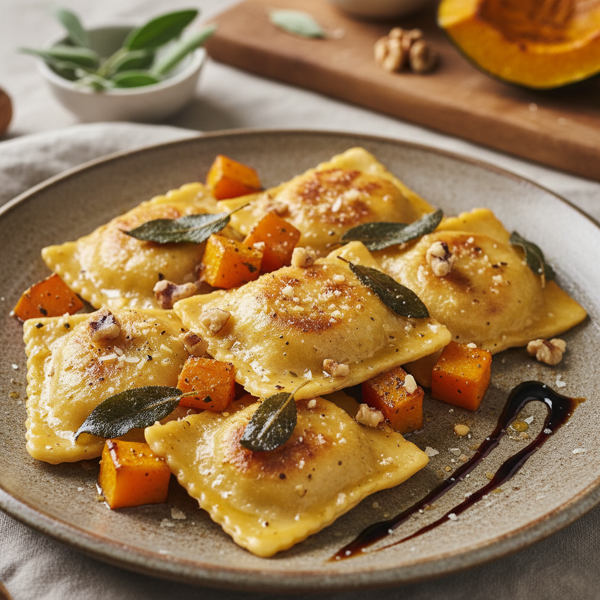
This gourmet dish transforms classic ravioli into a delightful experience by using roasted pumpkin and toasted pine nuts as a savory filling. Inspired by chef Andrew Evan's recipe from the September/October 2007 issue of Baltimore Style Magazine, this dish blends the sweetness of caramelized pumpkin and onion with the aromatic flavors of fresh sage and browned butter, creating a luscious sauce that perfectly complements the homemade ravioli. Ideal for cozy dinners or festive gatherings, this dish is sure to impress family and friends alike.
N/A
Servings
N/A
Calories
12
Ingredients

Ingredients
unsalted butter
9 tablespoons ((1 stick plus 1 tbsp.))
small pumpkin
1 (cut in half and deseeded)
yellow onion
1 (peeled and halved)
kosher salt
to taste
freshly cracked black pepper
to taste
pine nuts
1/2 cup (toasted and divided)
wonton wrapper
as needed
egg
1 (lightly beaten)
all-purpose flour
1/4 cup (for dusting)
roma tomatoes
2 (small dice)
fresh sage leaves
1 tablespoon (sliced)
lemon
1/2 (juiced)
Instructions
1
Preheat your oven to 350°F (175°C).
2
Prepare the pumpkin and onion: Place one tablespoon of unsalted butter into each half of the pumpkin, seasoning with kosher salt and freshly cracked black pepper. Wrap the halved onion in aluminum foil with one tablespoon of butter and season with salt and pepper as well.
3
Roast: Arrange the pumpkin halves cut-side up and the wrapped onion on a baking sheet. Roast them in the preheated oven for about 45 minutes, or until the pumpkin is completely soft and somewhat caramelized.
4
Make the filling: Once roasted, scoop the cooked pumpkin flesh into a food processor. Add the caramelized onion and pulse until smooth. Adjust the seasoning with salt and pepper. Transfer the pumpkin puree into a mixing bowl and fold in half of the toasted pine nuts.
5
Assemble the ravioli: Lay out the wonton wrappers and cover them with a damp cloth to prevent drying. Place a heaping tablespoon of the pumpkin filling in the center of each wonton wrapper. Brush the edges with the beaten egg, then top with another wonton wrapper, pressing firmly around the edges to seal. Arrange the filled raviolis on a floured sheet tray and freeze for at least 15 minutes.
6
Prepare the browned sage butter: In a small saucepan, melt the remaining unsalted butter over medium heat. Cook until the butter bubbles and turns a rich brown color, then remove from heat. Stir in the diced tomatoes, sliced sage, and a squeeze of lemon juice. Season with salt and pepper to taste.
7
Cook the ravioli: Bring a large pot of salted water to a boil. Carefully add the frozen ravioli and cook until they float to the surface, usually about 3-4 minutes. Using a slotted spoon, transfer the ravioli to four warm bowls.
8
Serve: Drizzle the browned sage butter sauce over the cooked ravioli and sprinkle with the remaining toasted pine nuts. Enjoy this savory dish warm!
Nutrition Information
Frequently Asked Questions
Frequently Asked Questions
What is the main filling for this ravioli?
The filling is made from roasted pumpkin, caramelized onion, and toasted pine nuts.
Who inspired this recipe?
This dish is inspired by chef Andrew Evan's recipe from the September/October 2007 issue of Baltimore Style Magazine.
What are the primary flavors of the sauce?
The sauce features aromatic fresh sage, rich browned butter, diced tomatoes, and a squeeze of lemon juice.
What kind of pumpkin is required?
A small pumpkin, cut in half and deseeded, is required for this recipe.
How should the pumpkin be prepared before roasting?
Place one tablespoon of unsalted butter into each pumpkin half and season with kosher salt and freshly cracked black pepper.
How is the onion prepared for roasting?
The yellow onion should be peeled, halved, wrapped in aluminum foil with one tablespoon of butter, and seasoned with salt and pepper.
What is the roasting temperature for the pumpkin and onion?
The pumpkin and onion should be roasted in a preheated oven at 350°F (175°C).
How long should the pumpkin and onion roast?
They should roast for about 45 minutes until the pumpkin is completely soft and caramelized.
How is the pumpkin filling made smooth?
Scoop the cooked pumpkin flesh into a food processor along with the caramelized onion and pulse until smooth.
When are the pine nuts added to the recipe?
Half of the toasted pine nuts are folded into the pumpkin puree filling, and the remaining half are sprinkled over the finished dish.
What is used as a shortcut for the ravioli shells?
Wonton wrappers are used instead of traditional homemade pasta dough to assemble the ravioli.
How do you keep wonton wrappers from drying out?
Lay out the wonton wrappers and cover them with a damp cloth during the assembly process.
How much filling goes into each ravioli?
Place a heaping tablespoon of the pumpkin filling in the center of each wonton wrapper.
How are the ravioli sealed?
Brush the edges with a lightly beaten egg, top with another wrapper, and press firmly around the edges to seal.
Why should the ravioli be frozen before cooking?
Freezing the filled raviolis for at least 15 minutes helps them maintain their shape and seal during the boiling process.
What kind of butter is recommended for the sauce?
Unsalted butter is recommended, specifically 9 tablespoons (one stick plus one tablespoon) for the entire recipe.
How do you prepare the browned sage butter?
Melt butter over medium heat until it bubbles and turns a rich brown color, then stir in tomatoes, sage, and lemon juice.
What type of tomatoes are used in the sauce?
Two roma tomatoes, small diced, are added to the browned butter sauce.
What provides acidity to the browned butter sauce?
The juice of half a lemon is added to the sauce to balance the richness of the butter.
How do you cook the ravioli?
Bring a large pot of salted water to a boil and carefully add the frozen ravioli.
How long do the ravioli take to boil?
The ravioli usually take about 3-4 minutes to cook in the boiling water.
How do you know the ravioli are finished cooking?
The ravioli are done when they float to the surface of the boiling water.
How should the ravioli be served?
Transfer the cooked ravioli to warm bowls, drizzle with the browned sage butter sauce, and sprinkle with pine nuts.
Is this recipe suitable for vegetarians?
Yes, this is a vegetarian dish as it uses pumpkin, vegetables, butter, and pine nuts.
What kind of salt and pepper is used?
The recipe calls for kosher salt and freshly cracked black pepper.
How many pine nuts are needed?
The recipe requires 1/2 cup of pine nuts that have been toasted.
What is used to dust the tray for the ravioli?
1/4 cup of all-purpose flour is used for dusting the sheet tray to prevent the ravioli from sticking.
How many fresh sage leaves are required?
The recipe calls for one tablespoon of sliced fresh sage leaves.
What is the description of the final texture of the pumpkin?
The pumpkin should be completely soft and somewhat caramelized after roasting.
Is this dish considered comfort food?
Yes, the recipe is tagged as comfort food and is described as ideal for cozy dinners or festive gatherings.