Savory Brown Sauce
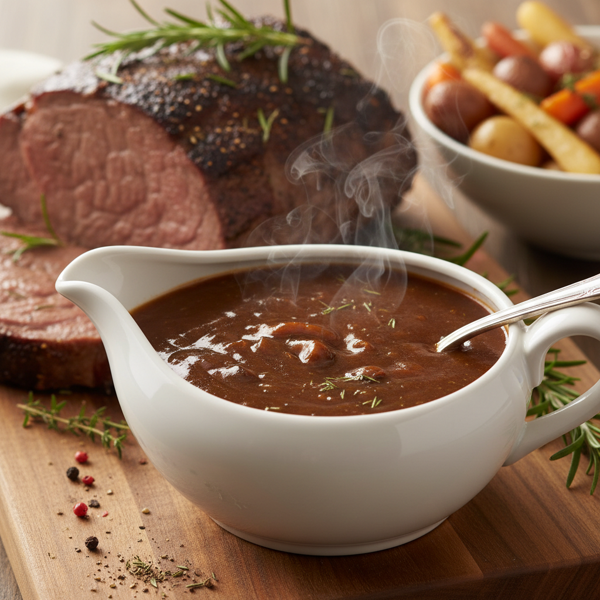
Experience the depth of flavor in this homemade Savory Brown Sauce, perfect for enhancing a variety of dishes. This versatile sauce, while not the traditional Espagnole, serves as an exceptional base for gravies, stews, or as a drizzling sauce for meats and vegetables. The ingredients come together in a balanced mirepoix of aromatic vegetables with the rich essence of beef stock, resulting in a sauce that is both fragrant and delicious. It’s easy to make and can be stored for future use, making it an essential recipe for any home cook looking to elevate their meals.
N/A
Servings
150
Calories
10
Ingredients
Ingredients
Clarified Butter
4 tablespoons (Melted)
Red Onion
1 cup (Chopped)
Celery
1/2 cup (Diced)
Carrot
1/2 cup (Diced)
Chervil
1/2 teaspoon (Dried (or substitute tarragon))
All-Purpose Flour
4 tablespoons (Unbleached)
Beef Stock
4 cups (Cold)
Black Pepper
1/2 teaspoon (Freshly ground (to taste))
Sea Salt
1/4 teaspoon (To taste)
Bay Leaf
1 large (Whole)
Instructions
1
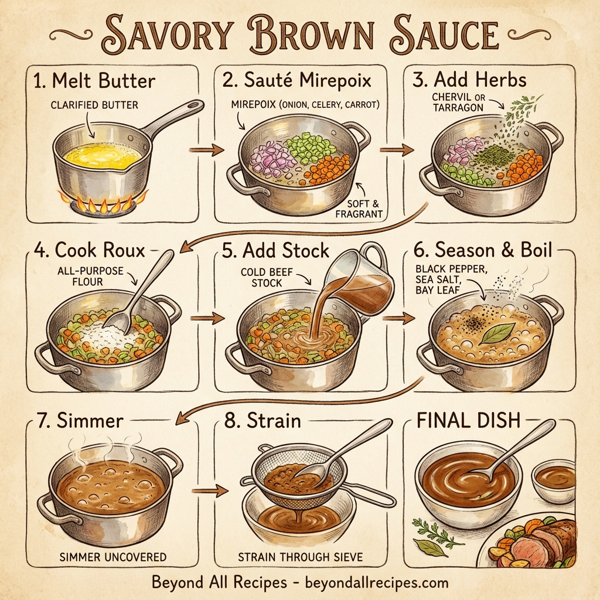
In a medium saucepan, melt the clarified butter over medium heat until it shimmers.
2
Add the chopped red onion, diced celery, and diced carrot to the pan. Sauté the mirepoix for 6-7 minutes, stirring frequently, until the vegetables are soft and fragrant.
3
Sprinkle in the chervil (or tarragon), stirring well to combine. Cook for an additional minute.
4
Add the all-purpose flour to the vegetable mixture, stirring to coat all the ingredients evenly. Cook for 2 minutes to eliminate the raw flour taste, stirring continuously.
5
Gradually pour in the cold beef stock while stirring constantly. Scrape the bottom of the pan to ensure all the flavors are incorporated.
6
Season with freshly ground black pepper, sea salt, and add the bay leaf. Bring the mixture to a boil.
7
Once boiling, reduce the heat to medium and let it simmer uncovered for 30 minutes, stirring occasionally, until the sauce thickens and flavors develop.
8
After simmering, strain the sauce through a fine sieve into a bowl, using a spatula or the back of a spoon to press out the liquid. Discard the solids.
9
Your Savory Brown Sauce is now ready to use! Serve it immediately or return it to the pot for further preparation of gravies or other sauces.
Nutrition Information
10g
Fat
8g
Carbs
2.5g
Protein
Frequently Asked Questions
Frequently Asked Questions
What is Savory Brown Sauce?
It is a versatile, homemade sauce made from beef stock and a mirepoix of vegetables, serving as a base for gravies or a topping for meats.
Is this a traditional Espagnole sauce?
No, while it is a brown sauce, it is a simplified savory version rather than the traditional French Espagnole.
What are the primary uses for this sauce?
It can be used as a base for stews and gravies or drizzled directly over meats and vegetables.
What vegetables are in the mirepoix?
The mirepoix includes chopped red onion, diced celery, and diced carrots.
Can I use regular butter instead of clarified butter?
Clarified butter is preferred for its high smoke point, but regular butter can be substituted if you monitor the heat closely.
How long should I sauté the vegetables?
Sauté the onion, celery, and carrot for about 6-7 minutes until they are soft and fragrant.
What is a good substitute for chervil?
Dried tarragon is an excellent substitute for chervil in this recipe.
Why do I need to cook the flour with the vegetables?
Cooking the flour for 2 minutes helps eliminate the raw flour taste before adding any liquid.
Should the beef stock be hot or cold when added?
The recipe recommends adding cold beef stock gradually while stirring constantly.
How long does the sauce need to simmer?
The sauce should simmer uncovered for 30 minutes to develop its flavor and thicken.
Do I need to cover the pot while simmering?
No, simmer the sauce uncovered to allow it to reduce and thicken properly.
Why must the sauce be strained?
Straining through a fine sieve removes the vegetable solids and bay leaf, resulting in a smooth texture.
Is Savory Brown Sauce suitable for freezing?
Yes, it can be stored for future use, making it a convenient make-ahead recipe.
What is the calorie count per serving?
Each serving contains approximately 150 calories.
How much fat is in this sauce?
This sauce contains 10 grams of fat per serving.
Is this sauce high in protein?
No, it is considered a low protein sauce with only 2.5 grams of protein per serving.
What type of flour is recommended?
The recipe calls for unbleached all-purpose flour.
How many grams of carbohydrates are in a serving?
There are 8 grams of carbohydrates per serving.
What kind of onion should I use?
The recipe specifies using 1 cup of chopped red onion.
Can I use table salt instead of sea salt?
Yes, though sea salt is recommended, you can use table salt and adjust the amount to your taste.
What is the purpose of the bay leaf?
The bay leaf adds a subtle herbal depth and aroma to the sauce during the simmering process.
How much beef stock is required?
You will need 4 cups of cold beef stock for this recipe.
Can I make a gravy from this sauce?
Yes, it serves as an exceptional base for creating rich and flavorful gravies.
How many ingredients are in the recipe?
There are 10 ingredients including the vegetables, stock, and seasonings.
How often should I stir the sauce while it simmers?
You should stir the sauce occasionally over the 30-minute simmering period.
Can I use a different type of stock?
While beef stock is traditional for brown sauce, you could use veal or mushroom stock for different flavor profiles.
Is it necessary to use a fine sieve?
A fine sieve is best for ensuring all small vegetable bits are removed for a silky smooth finish.
What should the consistency of the sauce be?
After simmering for 30 minutes, the sauce should be thickened enough to coat the back of a spoon.
Can I add extra seasoning?
Yes, you can adjust the sea salt and freshly ground black pepper to suit your personal taste.
How do I incorporate the stock without lumps?
Pour the cold stock in gradually while stirring constantly and scraping the bottom of the pan.