Savory Basque-Style Beans
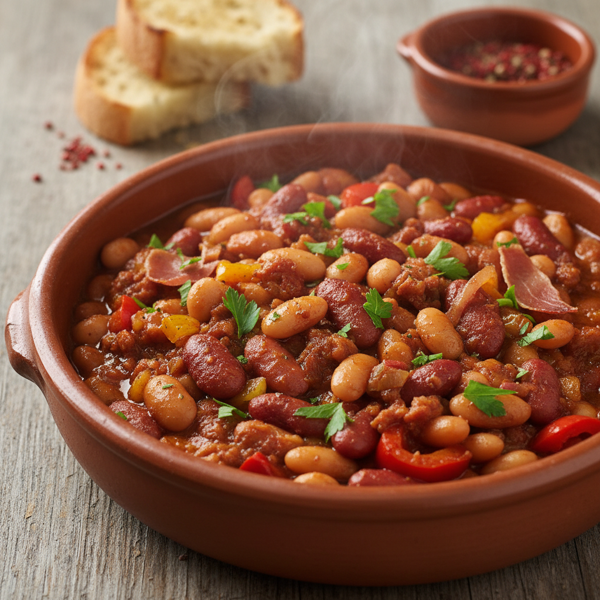
These Savory Basque-Style Beans are a hearty and traditional dish inspired by recipes in my cherished Basque cookbook, The Basque Table. Perfect for large gatherings, this dish triumphs as a crowd-pleasing side or a satisfying main course, with the option to add meats like bacon or chorizo for richness. I've adapted this recipe over the years, ensuring it retains its authentic flavor while providing an easy-to-follow approach. The double cooking method for the beans reduces gas while enhancing their texture, making these beans a delightful choice for everyone. Packed with aromatic vegetables and a hint of spice, these beans bring the warmth of Basque cuisine right into your home.
6
Servings
200
Calories
10
Ingredients
Ingredients
dried beans
2 cups (washed and picked over)
onions
2 large (chopped)
garlic cloves
5 large (minced)
celery
1 stalk (chopped)
carrot
1 (chopped)
parsley
2 sprigs (fresh)
tomato sauce
1 (8 ounce) can
salt
to taste
black pepper
to taste
cayenne pepper
to taste
Instructions
1
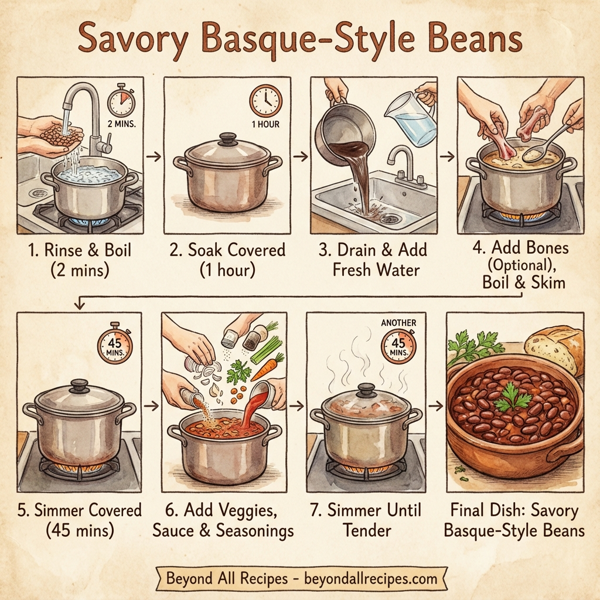
Rinse and sort the dried beans, discarding any debris or stones. Place the beans in a large pot and cover them with at least three times their volume of boiling water. Boil without a lid for 2 minutes.
2
Remove the pot from heat, cover it, and let the beans soak for 1 hour. This soaking technique helps to reduce gas production during digestion.
3
After the soaking period, discard the soaking water and add fresh cold water to cover the beans by about 2 inches. Place the beans back on the stove.
4
If using, add the soup bones or ham hocks, bringing the pot to a boil. Skim off any foam that forms on the surface.
5
Once boiling, lower the heat to a simmer and cover the pot. Cook the beans for approximately 45 minutes, or until they start to soften.
6
Add the prepared onions, garlic, celery, carrot, parsley, and tomato sauce to the beans. Season with salt, pepper, and cayenne pepper as desired. Note that adding salt or onions too early can cause the beans to toughen.
7
Continue cooking for another 45 minutes, or until the beans are wonderfully tender and the flavors have melded beautifully. Adjust seasoning to taste before serving.
Nutrition Information
3.3g
Fat
33g
Carbs
10g
Protein
Frequently Asked Questions
Frequently Asked Questions
What are Savory Basque-Style Beans?
Savory Basque-Style Beans are a hearty and traditional dish inspired by classic Basque cuisine, often served as a side or a satisfying main course.
What inspired this recipe?
The recipe is inspired by the traditional methods found in the cookbook titled 'The Basque Table'.
Can I add meat to this bean recipe?
Yes, you can add meats like bacon, chorizo, soup bones, or ham hocks to enhance the richness and flavor of the dish.
Why is a double cooking method used for the beans?
The double cooking method involves a short boil and a long soak which helps reduce gas production while significantly enhancing the final texture of the beans.
How long should I soak the dried beans?
After boiling the beans for 2 minutes, you should remove them from the heat and let them soak, covered, for 1 hour.
Should I reuse the soaking water?
No, you should discard the soaking water and add fresh cold water before starting the simmering process.
When should I add salt to the beans?
Salt should be added later in the cooking process, specifically after the beans have simmered for about 45 minutes, to prevent them from becoming tough.
Why are onions added later in the recipe?
Similar to salt, adding onions too early in the cooking process can cause the beans to toughen rather than soften.
What vegetables are needed for Basque-style beans?
The recipe requires chopped onions, minced garlic, chopped celery, and a chopped carrot.
How many garlic cloves are used in this dish?
The recipe calls for 5 large minced garlic cloves to provide a robust aromatic base.
Is this recipe considered vegetarian?
The base recipe is vegetarian, but it can be modified with meats like ham hocks or chorizo if desired.
How many servings does this recipe provide?
This recipe makes approximately 6 servings.
How many calories are in one serving of Basque-style beans?
Each serving contains approximately 200 calories.
What is the protein content per serving?
There are 10 grams of protein in each serving of these beans.
What is the fat content for this dish?
The fat content is relatively low at 3.3 grams per serving.
How many carbohydrates are in a serving?
There are 33 grams of carbohydrates per serving.
What type of beans should I use?
You should use 2 cups of dried beans that have been washed and picked over for debris.
Do I need to skim the water while boiling?
Yes, if you are using soup bones or ham hocks, you should skim off any foam that forms on the surface once the pot reaches a boil.
What size tomato sauce can is required?
The recipe uses one 8-ounce can of tomato sauce.
What herbs are used for seasoning?
Two sprigs of fresh parsley are used to flavor the bean stew.
Is this dish spicy?
The recipe includes cayenne pepper to taste, so the heat level can be adjusted based on your preference.
How long is the total simmering time?
The total simmering time is approximately 90 minutes—45 minutes for the initial soften and another 45 minutes after adding the vegetables.
How much water should I add for the main cook?
You should add enough fresh cold water to cover the soaked beans by about 2 inches.
Can I serve this for a large gathering?
Yes, it is described as a crowd-pleasing side or main course that is perfect for large gatherings.
Is this recipe family-friendly?
Yes, it is tagged as a family-friendly dish suitable for all ages.
What should I do if I find stones in my dried beans?
You should always sort through the dried beans before cooking and discard any stones or debris found.
What is the texture of the finished beans?
When finished, the beans should be wonderfully tender with melded flavors from the vegetables and spices.
What category of food does this fall into?
It is categorized as comfort food, and can be served as a soup, main course, or side dish.
Should the pot be covered while simmering?
Yes, once the heat is lowered to a simmer, you should cover the pot for the cooking duration.
How can I tell when the beans are done?
The beans are done when they are tender and the flavors of the aromatics and sauce have fully combined.