Savory Balsamic-Glazed Flat Iron Steak
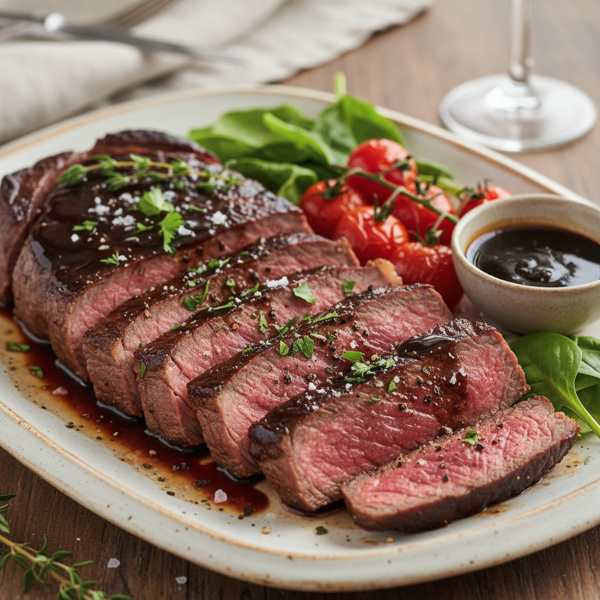
This Savory Balsamic-Glazed Flat Iron Steak is an elevated dish that combines the rich flavors of perfectly cooked flat iron steak with a luscious balsamic reduction. Adapted from KMommyZ's recipe, this dish provides an enticing blend of savory and tangy that complements the steak beautifully. The addition of sautéed onions and mushrooms adds depth to the dish, making it a delightful centerpiece for any family meal or dinner party. You can serve the balsamic sauce on the side in dipping cups for guests who prefer to control the intensity, giving them the freedom to enjoy it as they like. This sauce also pairs wonderfully with baked potatoes and vegetables, making it a versatile addition to your culinary repertoire.
N/A
Servings
N/A
Calories
10
Ingredients
Ingredients
Flat Iron Steaks
3 lbs (Bring to room temperature)
Extra Virgin Olive Oil
2 tablespoons (For brushing)
Fresh Coarse Ground Black Pepper
2 tablespoons (For seasoning)
Kosher Salt
1 1/2 teaspoons (For seasoning)
Butter
1 tablespoon (For cooking)
Onion
1/2 (Sliced thin)
Mushroom
1/4 lb (Sliced thin)
Garlic Clove
1 (Minced)
Balsamic Vinegar
1 cup (For reduction)
Fresh Parsley
1/4 cup (Chopped for garnish)
Instructions
1
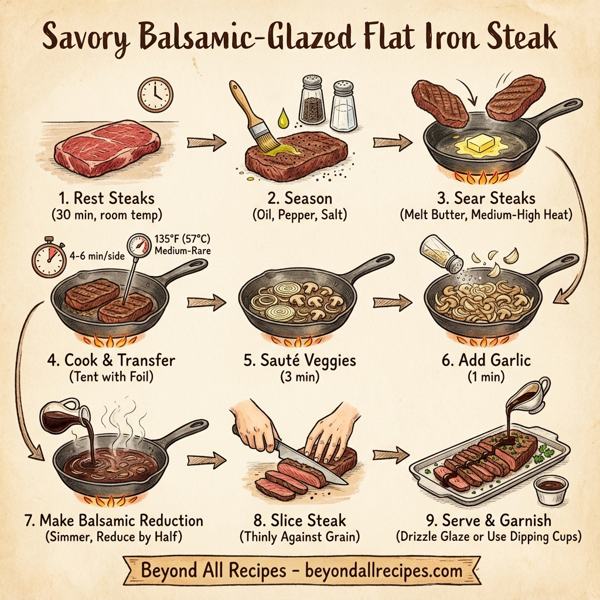
1. Begin by bringing the flat iron steaks to room temperature for about 30 minutes prior to cooking. This ensures more even cooking.
2
2. Brush the steak generously with extra virgin olive oil, then evenly coat the surface with fresh coarse ground black pepper and sprinkle with kosher salt. Set the seasoned steaks aside.
3
3. In a large skillet, melt the butter over medium-high heat. Once the butter is bubbling, add the seasoned steaks to the skillet.
4
4. Cook the steaks for about 4-6 minutes on each side, or until they reach your preferred level of doneness (medium-rare is recommended). Use a meat thermometer for accuracy: 135°F (57°C) for medium-rare. Remove the steaks from the skillet and transfer them to a plate, tenting with aluminum foil to keep them warm.
5
5. In the same skillet, add the sliced onions and mushrooms. Sauté them until the onions are soft and translucent, about 3 minutes.
6
6. Stir in the minced garlic and sauté for another minute until fragrant and slightly golden.
7
7. Pour the balsamic vinegar into the skillet, scraping up any flavorful bits stuck to the bottom. Increase the heat to medium-high and let the vinegar simmer until it has reduced by half, about 10-15 minutes. Stir occasionally to prevent burning.
8
8. Once the steaks have rested, thinly slice them against the grain and arrange them on a serving platter.
9
9. Drizzle the balsamic reduction over the sliced steak or serve in small dipping cups on the side. Garnish with chopped fresh parsley before serving.
Nutrition Information
Frequently Asked Questions
Frequently Asked Questions
What is a Flat Iron Steak?
A flat iron steak is a flavorful and tender cut of beef taken from the shoulder of the cow, known for its marbled texture.
How much steak do I need for this recipe?
This recipe calls for 3 lbs of flat iron steaks.
Why should I bring the steak to room temperature before cooking?
Bringing the steak to room temperature for about 30 minutes ensures it cooks more evenly from the outside to the center.
What type of oil is used to brush the steak?
Extra virgin olive oil is used to coat the steaks before seasoning.
What seasonings are used for the crust?
The steak is seasoned with fresh coarse ground black pepper and kosher salt.
How long should I cook the flat iron steak?
Cook the steaks for approximately 4-6 minutes on each side depending on your preferred level of doneness.
What is the recommended internal temperature for medium-rare?
A meat thermometer should read 135°F (57°C) for a perfect medium-rare steak.
Why is butter used in the skillet?
Butter is used to sear the steaks, adding a rich flavor and helping to develop a golden-brown crust.
What should I do after the steaks are finished cooking?
Transfer the steaks to a plate and tent them with aluminum foil to keep them warm while they rest.
What vegetables are included in the glaze?
The recipe uses sliced onions and mushrooms to add depth and texture to the balsamic glaze.
How should the onions and mushrooms be prepared?
Both the onion (1/2) and the mushrooms (1/4 lb) should be sliced thin.
How long do the vegetables need to sauté?
Sauté the onions and mushrooms for about 3 minutes until the onions are soft and translucent.
When should I add the garlic to the pan?
Add the minced garlic after the onions and mushrooms have softened, and sauté for one minute until fragrant.
What is the base of the reduction sauce?
The reduction is made using 1 cup of balsamic vinegar.
How long does it take to reduce the balsamic vinegar?
It takes about 10-15 minutes for the vinegar to simmer and reduce by half.
What does 'scraping up the flavorful bits' mean?
This refers to deglazing the pan, where the liquid helps loosen the browned bits of meat and seasoning stuck to the bottom of the skillet.
How do I know when the balsamic reduction is ready?
The sauce is ready when the volume has decreased by half and it has thickened into a syrup-like consistency.
How should I slice the flat iron steak?
Thinly slice the steak against the grain to ensure the meat is tender and easy to chew.
What garnish is recommended for this dish?
The dish is garnished with 1/4 cup of chopped fresh parsley.
Can I serve the balsamic sauce separately?
Yes, you can serve the reduction in small dipping cups on the side so guests can control the intensity of the flavor.
What side dishes pair well with balsamic-glazed steak?
This dish pairs wonderfully with baked potatoes and various roasted or steamed vegetables.
Can I use a different cut of meat?
While flat iron is recommended, you can use flank or skirt steak, though cooking times may vary.
How many garlic cloves are needed?
This recipe requires 1 minced garlic clove.
Is it necessary to use a meat thermometer?
Using a thermometer is recommended for accuracy to ensure the steak reaches your desired doneness without overcooking.
What does 'tenting with foil' do?
Tenting traps heat to keep the meat warm while allowing steam to escape, preventing the crust from getting soggy.
How many ingredients are in this recipe?
There are 10 main ingredients used in this recipe.
Why is fresh coarse ground black pepper preferred?
Coarse pepper provides a more robust flavor and a better texture for the steak's crust compared to fine pepper.
Should the skillet be hot before adding the steak?
Yes, the butter should be bubbling over medium-high heat before adding the steak to ensure a good sear.
Can the balsamic reduction be used for other foods?
Absolutely; it is a versatile sauce that works well on vegetables, salads, or even chicken.
How should the steak be arranged for serving?
Arrange the thin slices on a serving platter and drizzle the reduction over the top before adding the garnish.