Savor the Richness: Puerto Rican Mondongo Stew

Step into the heart of Puerto Rican cuisine with this hearty Mondongo Stew, a true celebration of flavors and textures. This traditional dish combines tender beef tripe and succulent calf foot with a colorful medley of vegetables, including sweet pumpkin, jicama, and yautia, creating a stew that is both comforting and nourishing. Infused with zesty lime juice and aromatic herbs, this stew is perfect for family gatherings or sharing with friends. Enjoy the rustic charm of this Puerto Rican classic, served alongside warm rice or crusty bread for a meal that warms both the heart and the soul.
N/A
Servings
N/A
Calories
17
Ingredients
Ingredients
beef tripe
4.5 lbs (trimmed)
calf foot
1 lb (cut up)
limes
6 (halved)
lean cured ham
1/4 lb (washed and cut into 1/2 inch pieces)
pumpkin or squash
1 lb (peeled and diced)
onions
2 medium (peeled and coarsely chopped)
green peppers
2 (seeded and coarsely chopped)
garlic cloves
4 (peeled and coarsely chopped)
fresh cilantro
6 leaves (coarsely chopped)
salt
2 tablespoons
water
10 cups
garbanzo beans (chick-peas)
1 lb (1 can) (boiled in water with salt)
jicama or potato
1 lb (peeled and cut into 1.5 inch pieces)
yautia
1 lb (peeled and cut into 1.5 inch pieces)
additional pumpkin or squash
1 lb (peeled and cut into 1.5 inch cubes)
tomato sauce
8 ounces (canned)
salt
2 teaspoons
Instructions
1
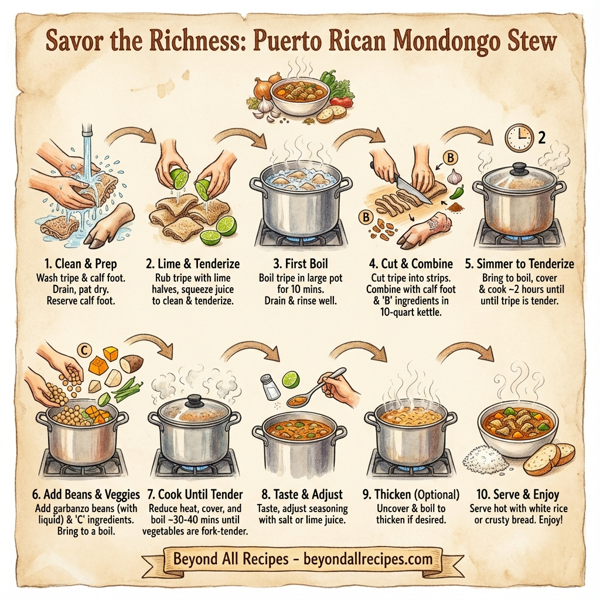
Begin by thoroughly washing the beef tripe and calf foot under running water. Drain and pat dry. Reserve the calf foot for later use.
2
Rub the trimmed tripe with the halved limes, squeezing the juice over the surface. This step helps to clean and tenderize the tripe.
3
Place the tripe in a large pot and add enough water to cover it by 2 inches. Bring to a rapid boil over high heat.
4
Reduce the heat to moderate and boil the tripe, uncovered, for 10 minutes. Drain and rinse the tripe well under cold running water.
5
Cut the tripe into strips measuring approximately 1.5 inches by 1 inch. In a large 10-quart kettle, combine the cut tripe, reserved calf foot, and the remaining ingredients listed under section 'B'.
6
Bring this mixture to a rapid boil, then lower the heat to moderate. Cover and cook for about 2 hours, or until the tripe becomes tender.
7
Once the tripe is tender, add the boiled garbanzo beans (chick-peas), including their liquid, and the ingredients listed under section 'C'. Bring the stew to a boil over high heat.
8
Reduce the heat to moderate, cover the stew, and continue boiling until the vegetables are fork-tender, approximately 30-40 minutes.
9
Taste the stew and adjust seasoning, adding more salt or lime juice if desired.
10
If you prefer a thicker stew, uncover and continue to boil over moderate heat until it reaches your desired consistency. Serve hot, enjoying it with white rice or crusty bread.
Nutrition Information
Frequently Asked Questions
Frequently Asked Questions
What is Puerto Rican Mondongo Stew?
Mondongo is a traditional Puerto Rican stew featuring tender beef tripe, calf foot, and a variety of tropical vegetables like yautia and pumpkin.
How much beef tripe is needed for this recipe?
The recipe requires 4.5 lbs of trimmed beef tripe.
What is the purpose of using limes in the preparation?
Six halved limes are used to rub the tripe and the juice is squeezed over it to help clean and tenderize the meat before cooking.
How long should the tripe be boiled initially?
The tripe is first boiled for 10 minutes uncovered to clean it, then drained and rinsed before the main cooking process begins.
How long does it take for the tripe to become tender?
After the initial cleaning boil, the tripe and calf foot are simmered for approximately 2 hours until tender.
What size should the tripe be cut into?
The tripe should be cut into strips measuring approximately 1.5 inches by 1 inch.
What vegetables are included in Mondongo?
This stew includes pumpkin or squash, onions, green peppers, garlic, cilantro, jicama (or potato), and yautia.
Can I substitute jicama in this recipe?
Yes, if you cannot find jicama, you can use 1 lb of potato as a substitute.
When are the garbanzo beans added?
The garbanzo beans, along with their liquid, are added after the tripe has become tender, just before adding the final vegetables.
How much water is used to make the stew base?
The recipe calls for 10 cups of water to be combined with the tripe, calf foot, and initial seasonings.
What type of meat besides tripe is used?
The recipe uses 1 lb of cut-up calf foot and 1/4 lb of lean cured ham for added richness and flavor.
Is tomato sauce used in Puerto Rican Mondongo?
Yes, 8 ounces of canned tomato sauce are added toward the end of the cooking process.
How long do the vegetables need to cook?
The vegetables, including the yautia and jicama, should boil for about 30 to 40 minutes until they are fork-tender.
How can I make the Mondongo stew thicker?
If you prefer a thicker consistency, uncover the pot and continue to boil over moderate heat until the liquid reaches your desired thickness.
What should I serve with Mondongo?
This hearty stew is traditionally served hot with a side of white rice or crusty bread.
How much pumpkin is used in total?
A total of 2 lbs of pumpkin or squash is used; 1 lb is diced and added early, and another 1 lb is cubed and added with the root vegetables.
What aromatics are used in the stew?
The aromatics include 2 medium onions, 2 green peppers, 4 garlic cloves, and 6 leaves of fresh cilantro.
Is the calf foot kept in the final dish?
Yes, the calf foot is boiled with the tripe and remains in the stew to contribute to its gelatinous and rich texture.
What is yautia?
Yautia is a starchy root vegetable common in Caribbean cuisine, used here to add texture and heartiness to the stew.
How do you prepare the cured ham?
The 1/4 lb of lean cured ham should be washed and cut into 1/2 inch pieces before being added to the pot.
Should the tripe be covered while cooking?
The tripe should be covered during its long 2-hour simmer and while the vegetables are boiling to ensure everything cooks evenly.
Do you need to peel the vegetables?
Yes, the pumpkin, onions, garlic, jicama (or potato), and yautia should all be peeled before being chopped or diced.
Can I use canned chickpeas?
Yes, the recipe suggests 1 lb or 1 can of garbanzo beans, previously boiled in salted water.
What size should the root vegetables be cut into?
The jicama, yautia, and additional pumpkin should be cut into approximately 1.5 inch pieces or cubes.
How much salt is added to the recipe?
The recipe calls for 2 tablespoons of salt in the initial boil and an additional 2 teaspoons added with the final vegetables.
Is the tripe rinsed after the 10-minute boil?
Yes, it is essential to drain the tripe and rinse it well under cold running water after the first 10 minutes of boiling.
What kind of green peppers are used?
The recipe specifies 2 green peppers, which should be seeded and coarsely chopped.
Is Mondongo considered a comfort food?
Yes, it is described as a rustic, nourishing, and heart-warming classic of Puerto Rican cuisine.
Can I adjust the seasoning at the end?
Yes, once the stew is finished, you should taste it and adjust the salt or lime juice according to your preference.
What equipment is best for cooking this recipe?
A large 10-quart kettle or heavy pot is recommended to accommodate the large volume of tripe, water, and vegetables.