Sautéed Japanese Eggplant with Garlic and Ginger Sauce
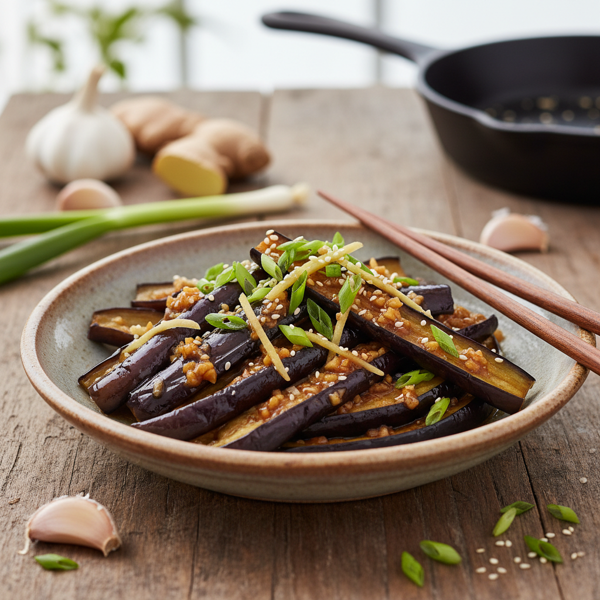
Discover the rich, savory flavors of Japanese eggplant in this beautifully sautéed dish that highlights the vegetable's natural sweetness. This easy recipe draws inspiration from traditional Japanese cooking, combining the umami of soy sauce and the aromatic qualities of garlic and ginger. Perfect as a vibrant side or a hearty main dish with the addition of your favorite protein, like tofu, chicken, or seafood. Experience a colorful plate that brings together the unique texture of tender eggplants and a flavorful sauce, making it an unforgettable one-dish meal.
N/A
Servings
N/A
Calories
5
Ingredients
Ingredients
Japanese eggplants
5 (sliced thinly the short way)
garlic clove
1 (crushed)
fresh ginger
1 slice (used whole)
soy sauce (or tamari)
1/4 cup (n/a)
mirin
2 teaspoons (n/a)
Instructions
1
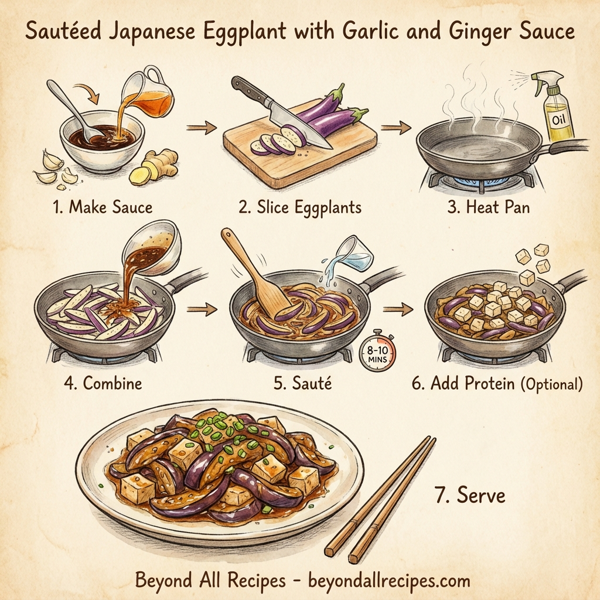
In a small bowl, combine soy sauce, mirin, crushed garlic, and the slice of ginger. Mix well to create the sauce and set aside.
2
Prepare the eggplants by slicing them thinly across their length for optimal tenderness.
3
In a large skillet or frying pan, heat a non-stick spray oil over medium heat.
4
Add the sliced eggplant to the pan and pour the sauce mixture over the top. Stir to coat all the eggplant pieces evenly.
5
Sauté the mixture over medium heat, stirring occasionally, for about 8-10 minutes, or until the eggplant is very tender and has absorbed the flavors of the sauce. If the mixture looks too dry, add a splash of water to keep the vegetables moist.
6
For a heartier option, add diced medium firm tofu or your preferred protein halfway through the cooking time and sauté until heated through.
7
Serve warm alongside grilled fish or chicken, or enjoy it as a standalone dish.
Nutrition Information
Frequently Asked Questions
Frequently Asked Questions
What is Sautéed Japanese Eggplant with Garlic and Ginger Sauce?
It is a savory and slightly sweet dish that highlights the natural flavors of Japanese eggplant using a traditional Japanese-inspired sauce of soy sauce, mirin, garlic, and ginger.
How many Japanese eggplants do I need for this recipe?
You will need 5 Japanese eggplants.
How should the eggplant be sliced?
The eggplants should be sliced thinly across their length (the short way) to ensure they become tender quickly.
What are the main ingredients for the sauce?
The sauce consists of soy sauce (or tamari), mirin, crushed garlic, and a slice of fresh ginger.
Can I make this recipe gluten-free?
Yes, you can make this recipe gluten-free by using tamari instead of regular soy sauce.
What is the purpose of mirin in this recipe?
Mirin adds a subtle sweetness and depth of flavor that complements the savory soy sauce and aromatics.
How much mirin is used?
The recipe calls for 2 teaspoons of mirin.
How much soy sauce is required?
You will need 1/4 cup of soy sauce or tamari.
Should the ginger be grated or sliced?
The recipe specifies using one whole slice of fresh ginger to infuse the sauce.
How much garlic is included?
One crushed garlic clove is used to flavor the dish.
What kind of oil should I use for sautéing?
A non-stick spray oil is recommended to keep the dish light and prevent sticking.
How long does it take to cook the eggplant?
The eggplant typically takes about 8 to 10 minutes to sauté until it is very tender.
At what temperature should I cook the eggplant?
The dish should be cooked over medium heat.
What should I do if the pan looks too dry during cooking?
If the mixture becomes too dry, you can add a splash of water to keep the vegetables moist while they finish cooking.
Can I add protein to this dish?
Yes, you can add tofu, chicken, or seafood to make it a heartier meal.
What type of tofu is recommended?
Medium firm tofu is suggested for this recipe.
When should I add the protein to the pan?
Add your preferred protein halfway through the eggplant's cooking time and sauté until heated through.
Is this recipe vegetarian-friendly?
Yes, this is a vegetarian recipe, and it can be vegan if you ensure your soy sauce and mirin are vegan-certified.
Is this a low-calorie meal?
Yes, the recipe is categorized as low calorie and healthy.
How do I know when the eggplant is finished cooking?
The eggplant is done when it is very tender and has fully absorbed the flavors of the sauce.
Can I serve this as a main course?
Absolutely; it works well as a standalone one-dish meal, especially when protein is added.
What are some serving suggestions for this dish?
It can be served warm alongside grilled fish or chicken, or enjoyed on its own.
Is this recipe considered easy to make?
Yes, it is tagged as an easy recipe and a quick meal suitable for weeknight dinners.
What is the flavor profile of this dish?
The dish is rich and savory with umami notes from the soy sauce and aromatics from the garlic and ginger.
Why use Japanese eggplant specifically?
Japanese eggplants have a thinner skin and a sweeter, more delicate flavor compared to larger varieties, making them ideal for quick sautéing.
Can I use a different type of eggplant?
While Japanese eggplant is preferred for its texture, you could use Chinese eggplant as a substitute.
Does the recipe require any special equipment?
Only a small bowl for mixing the sauce and a large skillet or frying pan for sautéing.
Is the ginger intended to be eaten?
Since it is a whole slice, it is primarily for infusion; you can remove it before serving if desired.
Can this dish be prepped in advance?
You can slice the eggplant and mix the sauce ingredients ahead of time to speed up the cooking process.
Is this an authentic Japanese dish?
It draws heavy inspiration from traditional Japanese cooking techniques and flavor profiles.