Sautéed Fiddlehead Ferns with Herb-Infused Garlic Butter
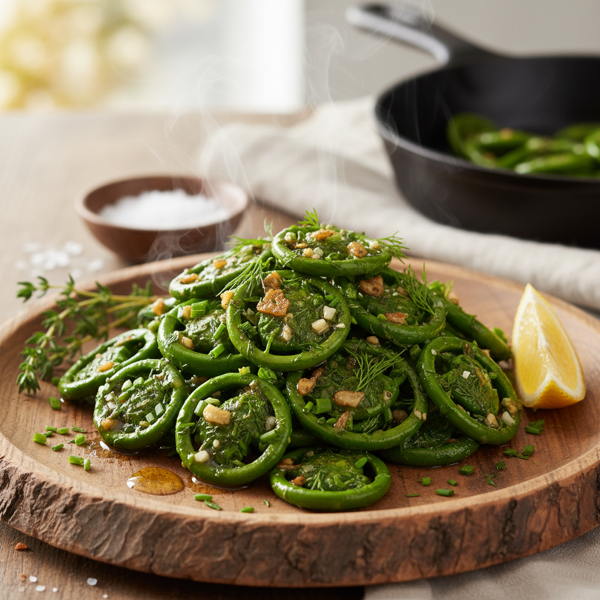
Springtime brings a delightful bounty of fiddlehead ferns, and this recipe showcases their unique flavor and texture beautifully. Sautéed to perfection in a rich garlic herb butter, these ferns are both crunchy and tender, making them an excellent side dish or snack. Perfect for warm weather gatherings, this dish brings a gourmet touch to any lunch or light meal. The herb-infused butter not only complements the fiddleheads but enhances their earthy flavor, creating a delicious culinary experience you won't forget.
N/A
Servings
88
Calories
9
Ingredients

Ingredients
Fiddlehead ferns
1 lb (washed, trimmed, and blanched)
Salt
to taste
Unsalted butter
3 tablespoons (at room temperature)
Garlic clove
1 (minced)
Shallot
1 tablespoon (minced)
Parsley
3 tablespoons (minced)
Fresh lemon juice
3 drops
Pepper
to taste
Cayenne pepper
to taste
Instructions
1
Begin by thoroughly washing the fiddlehead ferns under cold running water to remove any dirt. Trim off any brown ends and remove the papery skin from the ferns.
2
Bring a large pot of salted water to a rapid boil. Add the fiddleheads to the boiling water and blanch them for about 20 seconds. Quickly transfer them to a bowl of ice water to stop the cooking process. Once cooled, drain and set them aside.
3
In a mixing bowl, combine the softened unsalted butter, minced garlic, minced shallot, minced parsley, and fresh lemon juice. Whisk these ingredients together until well incorporated. Adjust the seasoning with salt, pepper, and cayenne pepper to your taste. You can prepare this herb-infused butter ahead of time and store it in the refrigerator.
4
When ready to serve, heat a large frying pan over high heat. Add the prepared herb butter and let it melt, allowing the garlic and shallot to become fragrant, about 1 minute.
5
Add the blanched fiddlehead ferns to the pan and sauté them for 1 to 2 minutes, or until they are heated through and slightly tender but still maintain a crunchy texture. Serve warm, garnished with additional parsley if desired.
Nutrition Information
7.5g
Fat
4g
Carbs
1.25g
Protein
Frequently Asked Questions
Frequently Asked Questions
What are fiddlehead ferns?
Fiddlehead ferns are the coiled, young fronds of a fern, harvested early in the spring before they unfurl into full leaves.
How do I properly clean fiddlehead ferns?
Thoroughly wash the fiddlehead ferns under cold running water to remove dirt, trim any brown ends, and peel away the papery skin.
Why is it necessary to blanch fiddlehead ferns?
Blanching helps ensure the ferns are safe to eat, partially cooks them, and helps maintain their vibrant green color.
How long should I blanch the ferns?
Blanch the ferns in a large pot of boiling salted water for approximately 20 seconds.
What is the purpose of the ice bath in this recipe?
The ice bath immediately stops the cooking process after blanching, which preserves the ferns' crunchy texture.
Can I use salted butter instead of unsalted butter?
Yes, you can use salted butter, but you should adjust the amount of added salt later in the recipe to avoid over-seasoning.
Can I prepare the herb-infused garlic butter in advance?
Absolutely. You can prepare the butter ahead of time and store it in the refrigerator until you are ready to sauté the ferns.
How long do I sauté the fiddlehead ferns?
Sauté them for 1 to 2 minutes over high heat until they are heated through but still maintain a crunchy texture.
What should the texture of the cooked ferns be?
The ferns should be slightly tender yet still crunchy, providing a unique and delightful mouthfeel.
Is this recipe suitable for vegetarians?
Yes, this dish is completely vegetarian as it contains no meat products.
Can I make this recipe vegan?
Yes, you can make it vegan by substituting the unsalted butter with a high-quality plant-based butter alternative.
How many calories are in a serving of these sautéed ferns?
There are approximately 88 calories per serving for this recipe.
What is the fat content per serving?
Each serving contains approximately 7.5g of fat.
What kind of herbs are used in the butter?
This recipe uses fresh minced parsley, but it can be customized with other spring herbs if desired.
Can I substitute the shallot with another onion?
Yes, a finely minced red onion or the white part of a green onion can be used as a substitute for the shallot.
Why do I need to remove the papery skin from the ferns?
Removing the papery skin improves the overall texture and presentation of the dish, as the skin can be bitter and unappealing.
Where can I find fiddlehead ferns?
Fiddleheads are a seasonal item often found at farmers' markets or specialty grocery stores during early spring.
Is this recipe gluten-free?
Yes, all the ingredients listed in this recipe are naturally gluten-free.
How much protein is in this dish?
This dish provides about 1.25g of protein per serving.
Can I add more lemon juice to the recipe?
Yes, while 3 drops are suggested, you can add more if you prefer a more pronounced citrus brightness.
What does the cayenne pepper add to the flavor profile?
The cayenne pepper provides a very subtle heat that complements the earthy flavor of the ferns and the richness of the butter.
Can I use dried parsley instead of fresh?
Fresh parsley is recommended for the best flavor, but if you must use dried, reduce the amount to 1 tablespoon.
How should I store leftovers?
Store any leftovers in an airtight container in the refrigerator for up to 2 days.
Can I freeze sautéed fiddlehead ferns?
Freezing is not recommended after sautéing as the ferns will lose their signature crunchy texture upon thawing.
What heat setting should the frying pan be on?
The pan should be heated over high heat to quickly sear the ferns and melt the butter without making the vegetables mushy.
What can I serve with sautéed fiddleheads?
They make an excellent side dish for grilled fish, roasted chicken, or even as a topping for a gourmet grain bowl.
How do I know if the garlic and shallots are ready in the pan?
They should become fragrant after about 1 minute of melting in the butter, but be careful not to let them burn.
Are there any other names for fiddlehead ferns?
They are sometimes referred to as 'croziers' because of their resemblance to a shepherd's crook.
What is the carbohydrate count for this recipe?
Each serving contains approximately 4g of carbohydrates.
Is this recipe considered a healthy snack?
Yes, it is a nutrient-dense, low-calorie option that highlights fresh, wild-foraged spring vegetables.