Saffron-Infused Sephardic Haminados Eggs
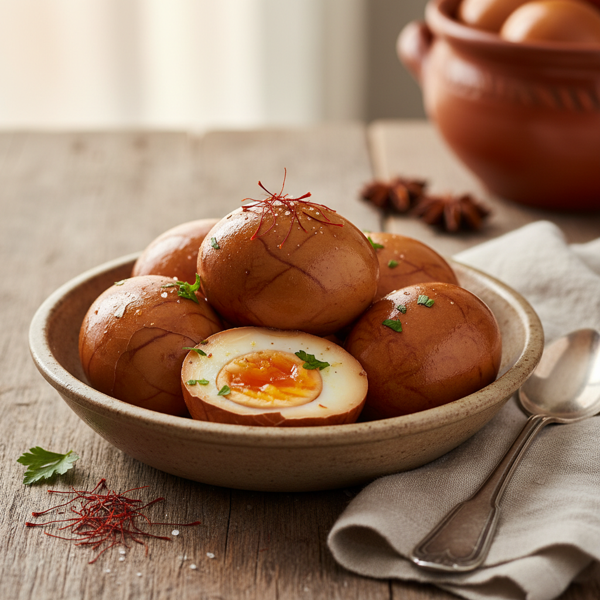
Experience a delightful twist on traditional Sephardic Haminados Eggs with this saffron-infused version, renowned for their rich brown color and subtle flavor. These hard-boiled eggs are cooked for an extended time in water mixed with dried onion peels, a splash of vegetable oil, and optional coffee grounds for an extra depth of taste. Infusing saffron not only adds a striking golden hue to the egg yolk but also imparts a delicate aroma, enhancing the overall sensory experience. The result is an elegant dish that can be served warm, cold, or sliced atop salads, making it perfect for gatherings. These eggs are often paired splendidly with Potato Boreks, creating a beautiful harmony of flavors and textures.
6
Servings
70
Calories
6
Ingredients
Ingredients
eggs
6 (whole)
vegetable oil
1 tablespoon (for added flavor)
salt
1 teaspoon (to taste)
pepper
1 teaspoon (to taste)
dried onion peels
a handful (from various types of onions)
ground coffee or instant coffee
1-2 tablespoons (optional for additional flavor)
Instructions
1
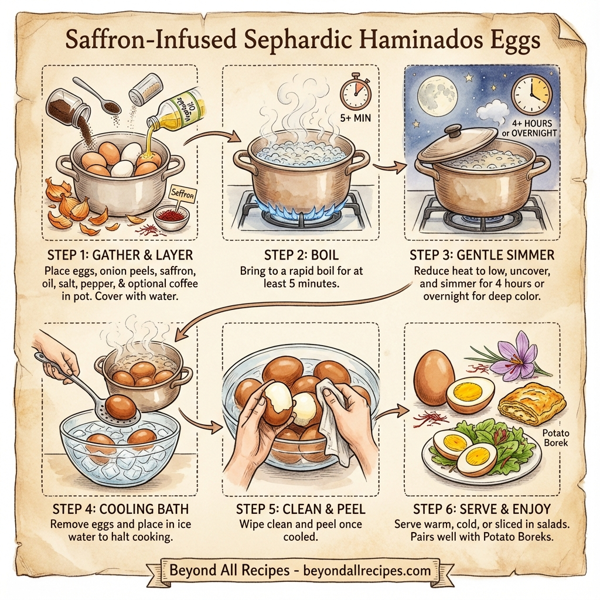
Begin by gathering dried onion peels and ground or instant coffee, if using. Place the eggs gently into a large pot or saucepan, ensuring they sit in a single layer.
2
Add the dried onion skins around the eggs and pour in enough water to fully submerge them. Include the vegetable oil, salt, and pepper to the mix. Optionally, add the ground or instant coffee for a unique touch.
3
Bring the mixture to a rapid boil over medium-high heat and allow it to boil profusely for at least five minutes.
4
Once boiled, reduce the heat to low to maintain a gentle simmer. Allow the eggs to cook uncovered for a minimum of four hours; for best results, consider letting them simmer overnight for deeper flavor and color absorption.
5
After cooking, carefully remove the eggs from the pot using a slotted spoon and place them into a bowl filled with ice water to halt the cooking process and make peeling easier.
6
Once the eggs have cooled, gently wipe them clean to remove any residue. Serve them plain as a snack, or use them in salads, as a garnish for dishes, or layered in an egg salad. For storage, leftover eggs can be refrigerated and easily reheated.
Nutrition Information
4g
Fat
1g
Carbs
6g
Protein
Frequently Asked Questions
Frequently Asked Questions
What are Saffron-Infused Sephardic Haminados Eggs?
They are a unique version of traditional Sephardic hard-boiled eggs known for their deep brown color, golden yolks, and subtle aroma enhanced by saffron.
What gives Haminados eggs their distinct brown color?
The rich brown color is achieved by simmering the eggs for a long duration with dried onion peels and optionally ground or instant coffee.
How long do these eggs need to cook?
The eggs should be simmered for a minimum of four hours, though cooking them overnight provides the best results for flavor and color.
What is the role of saffron in this recipe?
Saffron imparts a striking golden hue to the egg yolk and adds a delicate, elegant aroma to the dish.
How should the eggs be placed in the pot?
Eggs should be placed gently into a large pot or saucepan in a single layer to ensure even cooking.
Why is vegetable oil added to the cooking water?
A tablespoon of vegetable oil is added to the mixture to enhance the flavor of the eggs during the long simmering process.
Can I use instant coffee instead of ground coffee?
Yes, either ground coffee or instant coffee can be used to add extra depth of taste and color.
What is the best way to peel Haminados eggs?
After cooking, place the eggs in a bowl of ice water to halt the cooking process, which makes them much easier to peel.
How should Haminados eggs be served?
They can be served warm or cold, either plain as a snack, sliced in salads, or as a garnish for other dishes.
What side dish pairs well with these eggs?
They are traditionally and splendidly paired with Potato Boreks for a harmony of textures and flavors.
How many servings does this recipe provide?
This recipe is designed to make 6 servings.
What is the calorie count per serving?
Each serving contains approximately 70 calories.
How much protein is in one serving?
There are 6 grams of protein per serving.
What kind of onion peels should be used?
A handful of dried onion peels from various types of onions can be used for the best color results.
Is the cooking pot covered or uncovered?
The instructions recommend allowing the eggs to cook uncovered during the simmering stage.
How much water is required?
You should pour in enough water to fully submerge the eggs and the dried onion skins.
What seasonings are added to the water?
The water is seasoned with one teaspoon of salt and one teaspoon of pepper.
Can these eggs be reheated?
Yes, leftover eggs can be refrigerated and are easily reheated for later use.
What is the first step in preparing these eggs?
The first step is gathering the dried onion peels and coffee, then placing the eggs in a single layer in the pot.
How long should the water boil before simmering?
The mixture should be brought to a rapid boil and allowed to boil profusely for at least five minutes.
What is the fat content per serving?
There are 4 grams of fat per serving.
Are there any carbohydrates in this dish?
Yes, but the amount is very low at 1 gram of carbohydrates per serving.
What is the intended texture of the final egg?
The result is a tender, long-cooked hard-boiled egg with a creamy, golden yolk.
Does this recipe include fiber?
No, this recipe does not contain any dietary fiber.
Can I use a crockpot for this recipe?
Yes, the recipe is suitable for slow-cooking methods like a crockpot or oven to achieve the long cook time.
How do you remove residue from the shells?
Once the eggs have cooled, you should gently wipe them clean to remove any residue from the onion peels or coffee.
Is this a traditional recipe?
Yes, it is a saffron-infused variation of the traditional Sephardic Haminados recipe.
What type of dish is this categorized as?
It is primarily categorized as an appetizer or snack, often served at gatherings.
How many ingredients are needed?
The recipe requires 6 main ingredients, including the optional coffee.
Are the eggs boiled on high heat the whole time?
No, after an initial 5-minute boil, the heat is reduced to low for a gentle, long-term simmer.