Saffron-Infused Portuguese Seafood Paella
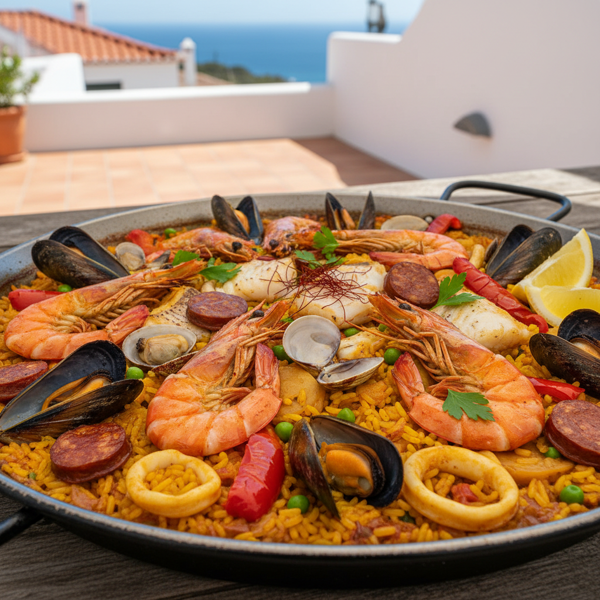
Experience the vibrant flavors of the Mediterranean with this delectable Saffron-Infused Portuguese Seafood Paella. Inspired by cherished memories of my time with a wonderful Portuguese family, this one-pot meal combines tender pieces of chicken, aromatic spices, and an array of fresh seafood, all beautifully infused with saffron. Paella is a festive dish that brings warmth and joy to any gathering, making it perfect for a romantic dinner or a fun family meal. Gather around the table and enjoy the delightful medley of flavors and textures that this dish offers.
4
Servings
450
Calories
18
Ingredients
Ingredients
chicken
1 (cut into pieces or use 6 skinless thighs)
small onion
1 (chopped)
ham hocks
2 (whole)
salt
to taste (for seasoning)
pepper
to taste (for seasoning)
extra virgin olive oil
1/4 cup (for sautéing)
garlic cloves
2 (chopped)
Spanish rice
2 cups (uncooked)
raw peeled shrimp
1/2 lb (peeled)
clams (littleneck)
1/2 lb (cleaned)
mussels
1/2 lb (cleaned)
sea scallops
1/2 lb (cleaned)
linguica sausage
3/4 lb (sliced into 2-inch pieces (or use chorizo))
red bell pepper
1 (sliced)
chicken stock or broth
1 cup (for flavor)
white wine
3/4 cup (optional, for depth of flavor)
saffron
1/4 teaspoon (for color and aroma (or substitute safflower spice or Sazon))
frozen peas
1/2 cup (for garnish)
Instructions
1
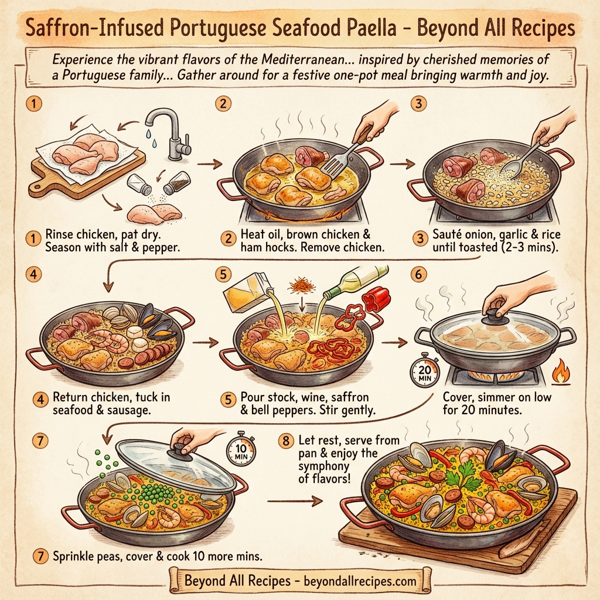
Rinse the chicken pieces under cold water and pat dry with a paper towel.
2
Season the chicken well with salt and pepper. In a large skillet or paella pan, heat 1/4 cup of extra virgin olive oil over medium heat.
3
Add the chicken and ham hocks to the pan and sauté until the chicken is golden brown on all sides, about 6-8 minutes. Remove the chicken and set aside, leaving the ham hocks in the pot.
4
In the same pan, add the chopped onion and sauté until translucent, then add the garlic and uncooked rice, stirring frequently for 2-3 minutes to toast the rice.
5
Return the chicken pieces to the skillet on top of the rice. Carefully tuck in the shrimp, clams, mussels, sea scallops, and sliced sausage.
6
Pour in the chicken stock (or broth), white wine, saffron, and add the sliced red bell pepper. Stir gently to combine, ensuring the rice is evenly distributed.
7
Cover the skillet with a lid and reduce the heat to low. Let it simmer for 20 minutes without stirring.
8
After 20 minutes, sprinkle the frozen peas on top, cover again, and cook for an additional 10 minutes, until the seafood is cooked through and the rice is tender.
9
Remove from heat and let it rest for a few minutes before serving. Serve directly from the pan and enjoy the symphony of flavors!
Nutrition Information
14g
Fat
44g
Carbs
32.5g
Protein
Frequently Asked Questions
Frequently Asked Questions
What is Saffron-Infused Portuguese Seafood Paella?
It is a vibrant Mediterranean one-pot meal that combines chicken, aromatic spices, and various fresh seafood, all infused with the distinct flavor and color of saffron.
What kind of chicken is best for this recipe?
The recipe calls for one chicken cut into pieces, but you can also use 6 skinless chicken thighs as a convenient alternative.
Can I substitute the linguica sausage?
Yes, if you cannot find linguica sausage, you can use chorizo as a substitute.
What type of rice should I use?
This recipe requires 2 cups of uncooked Spanish rice to achieve the proper texture.
How many servings does this recipe make?
This seafood paella recipe is designed to serve 4 people.
What can I use if I don't have saffron?
You can substitute saffron with safflower spice or Sazon to achieve a similar color and aroma.
What seafood is included in this dish?
The dish features a medley of raw peeled shrimp, littleneck clams, mussels, and sea scallops.
How many calories are in one serving?
Each serving of this paella contains approximately 450 calories.
Is this a one-pot meal?
Yes, it is categorized as a One Dish Meal, meaning everything is cooked together in a single large skillet or paella pan.
Do I need to use wine in this recipe?
The 3/4 cup of white wine is optional and used to add depth of flavor; you can omit it if preferred.
How do I prepare the chicken before cooking?
Rinse the chicken pieces under cold water, pat them dry with a paper towel, and season well with salt and pepper.
What is the role of the ham hocks?
The ham hocks are sautéed with the chicken to provide a deep, smoky base flavor to the dish.
Should I stir the rice while it simmers?
No, once you add the liquids and cover the skillet, let it simmer for 20 minutes without stirring.
When do I add the frozen peas?
The frozen peas should be sprinkled on top after the initial 20 minutes of simmering, then cooked for an additional 10 minutes.
How much protein is in this recipe?
This dish is high in protein, providing 32.5g per serving.
What is the fat content per serving?
There are 14g of fat in each serving of the paella.
How many carbohydrates are in a serving?
Each serving contains 44g of carbohydrates.
How long should the rice toast before adding liquid?
You should sauté the rice with the garlic and onion for 2-3 minutes until it is lightly toasted.
Should I remove the ham hocks?
While you set the chicken aside after browning, the ham hocks should remain in the pot throughout the cooking process.
What kind of oil should I use for sautéing?
The recipe recommends using 1/4 cup of extra virgin olive oil.
Do I need to clean the seafood?
Yes, ensure the clams, mussels, and scallops are thoroughly cleaned and the shrimp is peeled before adding them to the pan.
How long is the total simmering time?
The total simmering time is 30 minutes (20 minutes initially plus 10 minutes after adding the peas).
What vegetables are included in the paella?
The recipe includes chopped onion, garlic, a sliced red bell pepper, and frozen peas.
How should the linguica sausage be prepared?
The sausage should be sliced into 2-inch pieces before being tucked into the rice.
What is the recommended serving style?
It is best to serve the dish directly from the large skillet or paella pan after letting it rest for a few minutes.
Can I use chicken broth instead of stock?
Yes, you can use either 1 cup of chicken stock or chicken broth for flavor.
What is the inspiration behind this dish?
The recipe is inspired by the vibrant flavors of the Mediterranean and cherished memories spent with a Portuguese family.
How do I ensure the seafood is cooked properly?
The seafood is steamed on top of the rice during the final 30 minutes of cooking until the clams and mussels open and the shrimp and scallops are opaque.
Is there any salt or pepper in the recipe?
Yes, salt and pepper are used to season the chicken to taste before it is browned.
What makes this dish festive?
Its medley of diverse textures, bright colors from saffron and peppers, and the communal nature of eating from one pot make it ideal for celebrations.