Saffron Cauliflower Makloubeh
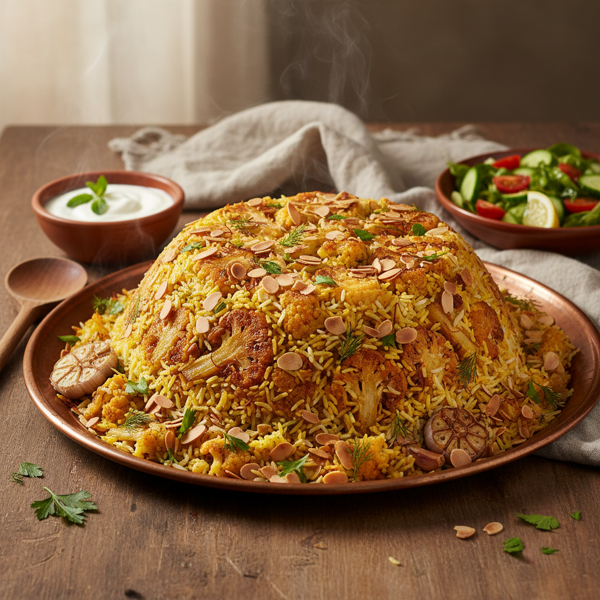
Saffron Cauliflower Makloubeh is a fragrant and hearty dish inspired by Middle Eastern cuisine, specifically crafted from the beloved recipes passed down through generations. This adaptation, inspired by a lesson with the talented Rita Rukab Harb, embraces the richness of beef and the delicate notes of saffron, perfectly complementing the deep-fried cauliflower, creating a beautiful layering of flavors. This crock pot version allows for easy preparation and serves as an excellent one-pot meal for gatherings, providing an aromatic centerpiece that transforms your dining experience. With no added salt in the cooking process, it’s a dish that caters to dietary considerations while still delivering on taste, allowing everyone to adjust seasoning at the table.
N/A
Servings
N/A
Calories
12
Ingredients
Ingredients
Cauliflower
1 (large, broken into florets)
Boneless beef cubes or lamb
1.5 (lbs)
Onion
1 (large, chopped)
Rice
2 (cups, uncooked)
Allspice
0.5 (teaspoon)
Black pepper
0.5 (teaspoon)
Garlic powder
1 (dash)
Butter
2 (tablespoons)
Salt
4 (teaspoons (to taste))
Broth or water
3.5 (cups)
Saffron
0.125 (teaspoon (optional))
Pine nuts
2 (tablespoons (optional, toasted for garnish))
Instructions
1
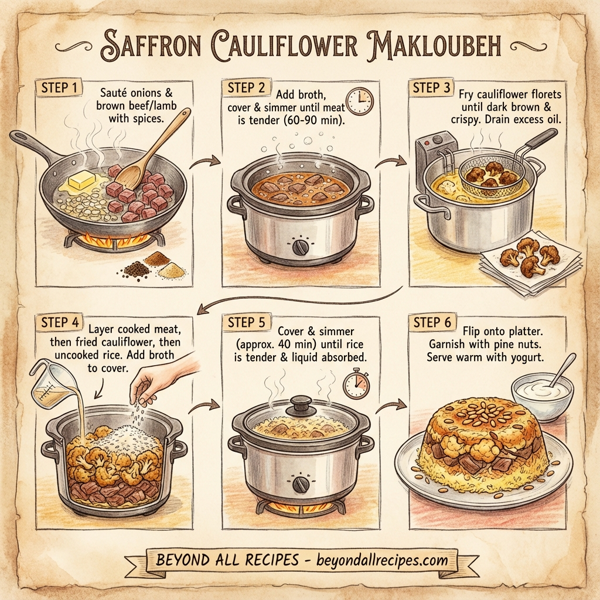
In a large skillet, melt the butter over medium heat. Sauté the chopped onion until translucent, then add the boneless beef or lamb cubes, cooking until browned on all sides.
2
Sprinkle in the salt, allspice, black pepper, and garlic powder, stirring to combine. Pour in 3 1/2 cups of broth or water, cover, and let the mixture simmer until the meat is tender, approximately 60-90 minutes.
3
While the meat simmers, break the cauliflower into medium-sized florets and sprinkle them with a pinch of salt. In a deep pot, heat oil to a high temperature and carefully fry the florets until they are dark brown and crispy, ensuring they don't burn. Drain them on paper towels to remove excess oil.
4
Once the meat is tender, carefully layer the fried cauliflower on top of the meat in the crock pot. Add the uncooked rice evenly over the cauliflower layer, ensuring it's uniformly distributed. Pour in additional broth or water if necessary to fully cover the rice and cauliflower.
5
Bring the contents of the crock pot to a boil, then reduce the heat. Cover and simmer for approximately 40 minutes, or until the rice is tender and all the liquid has been absorbed.
6
For the traditional presentation, let the dish sit for 30 minutes to cool slightly before flipping it onto a large serving platter. Garnish with toasted pine nuts, if using. Serve warm alongside plain yogurt for a refreshing balance.
Nutrition Information
Frequently Asked Questions
Frequently Asked Questions
What is Saffron Cauliflower Makloubeh?
Saffron Cauliflower Makloubeh is a fragrant and hearty Middle Eastern dish consisting of layered meat, fried cauliflower, and rice, known for its aromatic saffron notes.
Who inspired this version of the recipe?
This specific adaptation was inspired by a cooking lesson with Rita Rukab Harb.
What types of meat are suitable for this dish?
You can use either boneless beef cubes or lamb cubes for this recipe.
How should the cauliflower be prepared?
The cauliflower should be broken into medium-sized florets and deep-fried until they are dark brown and crispy.
What is the recommended simmer time for the meat?
The meat should be simmered in broth or water for approximately 60 to 90 minutes until tender.
In what order should the ingredients be layered?
Layer the cooked meat at the bottom, followed by the fried cauliflower, and then the uncooked rice on top.
How long does the rice take to cook in the crock pot?
The rice typically takes about 40 minutes to simmer until tender and all liquid is absorbed.
Why does the dish need to sit for 30 minutes after cooking?
Letting the dish sit allows it to cool slightly and set, making it easier to flip onto a serving platter without falling apart.
What is the traditional presentation for Makloubeh?
The traditional presentation involves flipping the pot upside down onto a large platter to reveal the layered meat and vegetables on top.
What side dish is recommended for serving?
It is traditionally served warm alongside plain yogurt for a refreshing balance.
What garnish is suggested for this recipe?
Toasted pine nuts are suggested as a garnish for added texture and flavor.
Is saffron a mandatory ingredient?
Saffron is listed as optional, though it adds a delicate aromatic note that characterizes this specific version.
How is the onion prepared for the base?
One large onion should be chopped and sautéed in butter until translucent before browning the meat.
Is this a one-pot meal?
Yes, once the initial prep is done, it is cooked as an aromatic one-pot meal, making it excellent for gatherings.
How much rice is needed for this recipe?
The recipe calls for 2 cups of uncooked rice.
Can I use water instead of broth?
Yes, you can use either 3.5 cups of broth or water to cook the meat and rice.
What spices are used to season the meat?
The meat is seasoned with allspice, black pepper, and garlic powder.
What is the purpose of browning the meat?
Browning the meat in butter helps develop a rich flavor profile and color before the simmering process.
Is there added salt in the cooking process?
The description notes no added salt in the cooking process to cater to dietary needs, though the ingredient list mentions 4 teaspoons of salt to taste.
How do you ensure the cauliflower doesn't get soggy?
Deep-frying the cauliflower until dark brown and crispy, then draining on paper towels, helps it maintain structure during the layering process.
What type of cooking vessel is used for the final stage?
A crock pot or a similar slow-cooking pot is used to layer and simmer the final assembly.
How many ingredients are in this recipe?
There are 12 ingredients including the optional saffron and pine nuts.
What does the name Makloubeh imply?
The term is associated with the flipping technique, meaning upside down in Arabic, referring to the presentation style.
Is this dish considered comfort food?
Yes, it is tagged as comfort food due to its hearty nature and rich flavors.
How much butter is used to sauté the onion?
The recipe specifies 2 tablespoons of butter for sautéing.
Can the seasoning be adjusted at the table?
Yes, the recipe is designed so that guests can adjust the seasoning to their personal preference at the table.
What size of cauliflower is needed?
One large cauliflower is required for this recipe.
How much meat is used in the recipe?
The recipe calls for 1.5 lbs of boneless beef or lamb cubes.
Is garlic powder the only form of garlic used?
Yes, the recipe specifically uses 1 dash of garlic powder for seasoning.
What is the origin of this cuisine?
This dish originates from Middle Eastern culinary traditions.