Rustic Whole Wheat Sourdough Loaves
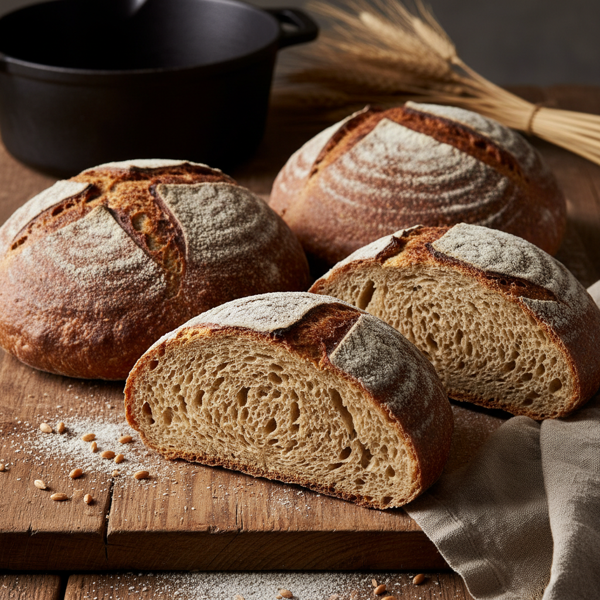
Discover the joy of baking with this delightful Rustic Whole Wheat Sourdough Loaves recipe! Unlike other whole wheat breads that can be dense and heavy, this sourdough version offers a unique tangy flavor with a soft, airy crumb. Perfect for sandwiches, toasting, or simply slathering with butter, these loaves are versatile enough to complement any meal. Whether you're a seasoned baker or just starting your sourdough journey, this recipe will guide you through each step, offering tips and adjustments along the way to ensure perfect loaves every time. Check back regularly for updates and tweaks to enhance this beloved recipe. You'll never look at whole wheat bread the same way again!
24
Servings
100
Calories
9
Ingredients
Ingredients
Filtered water
1 1/2 cups (room temperature)
Honey
2 tablespoons
Freshly milled whole wheat flour
2 cups
Sourdough starter
1/4 cup (at its peak, preferably whole wheat)
Oil
2 tablespoons
Salt
1 1/2 teaspoons
Bread enhancer
2 teaspoons
Vital wheat gluten
3 tablespoons
Additional freshly milled whole wheat flour
2 1/4 cups
Instructions
1
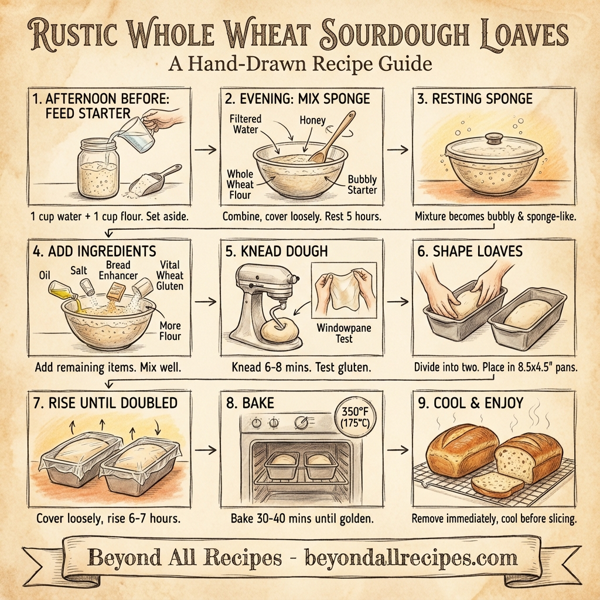
The afternoon before you intend to bake, feed your sourdough starter with 1 cup of distilled water and 1 cup of flour. Set aside.
2
In the evening, once the starter is bubbly and active (not at its peak, but very lively), combine the filtered water, honey, whole wheat flour, and sourdough starter in a large mixing bowl. Stir gently to combine, cover loosely, and let it rest for about 5 hours. This mixture will start to bubble and act like a sponge.
3
After the sponge has rested, add the oil, salt, bread enhancer, vital wheat gluten, and additional whole wheat flour to the bowl. Mix until all ingredients are incorporated.
4
Knead the dough for approximately 6-8 minutes in a stand mixer fitted with a dough hook until the gluten is well-developed. To test if the dough is ready, perform the windowpane test: take a golf-sized piece of dough and stretch it gently until thin enough to see light without tearing.
5
Divide the kneaded dough into two equal portions and shape each into a loaf. Place them in greased 8.5 x 4.5-inch bread pans (for smaller loaves). Alternatively, you can combine the dough into one larger loaf in a 9 x 5-inch pan.
6
Cover the loaves loosely with oiled plastic wrap and let them rise until doubled in size. This may take anywhere from 6-7 hours depending on your starter's activity. For a more sour flavor, consider refrigerating them in the light of their rise.
7
Preheat your oven to 350°F (175°C). Bake the loaves for 30-40 minutes or until golden brown and they sound hollow when tapped on the bottom.
8
Once baked, remove the loaves from the pans immediately and cool them on a wire rack before slicing.
Nutrition Information
2
Fat
17.5
Carbs
3.75
Protein
2.33
Fiber
Frequently Asked Questions
Frequently Asked Questions
What flavor can I expect from the Rustic Whole Wheat Sourdough Loaves?
This bread offers a unique tangy flavor with a soft, airy crumb, which is a delightful alternative to typically dense whole wheat breads.
When should I feed my sourdough starter for this recipe?
You should feed your sourdough starter the afternoon before you intend to bake the bread.
What are the measurements for feeding the sourdough starter?
Feed the starter with 1 cup of distilled water and 1 cup of flour.
What ingredients are required to make the initial sponge?
The sponge is made by combining 1 1/2 cups of filtered water, 2 tablespoons of honey, 2 cups of freshly milled whole wheat flour, and 1/4 cup of active sourdough starter.
How long should the sponge rest before adding the remaining ingredients?
The sponge should rest for approximately 5 hours until it begins to bubble.
What ingredients are added to the bowl after the sponge has rested?
After the rest, you add 2 tablespoons of oil, 1 1/2 teaspoons of salt, 2 teaspoons of bread enhancer, 3 tablespoons of vital wheat gluten, and 2 1/4 cups of additional whole wheat flour.
How long should I knead the dough in a stand mixer?
Knead the dough for approximately 6 to 8 minutes using a dough hook until the gluten is well-developed.
How can I test if the dough has been kneaded enough?
Perform the windowpane test by stretching a small piece of dough until it is thin enough to see light through without tearing.
What size bread pans should I use for two loaves?
For two smaller loaves, use greased 8.5 x 4.5-inch bread pans.
Can I bake the dough as a single large loaf?
Yes, you can combine all the dough into one larger loaf using a 9 x 5-inch bread pan.
How long is the final rise for the shaped loaves?
The loaves should rise until they have doubled in size, which typically takes between 6 and 7 hours.
What is a tip for achieving a more sour flavor in the finished bread?
For a more pronounced sour flavor, you can refrigerate the loaves during their final rise.
At what temperature should the oven be set for baking?
Preheat your oven to 350 degrees Fahrenheit (175 degrees Celsius).
How long do the loaves need to bake?
The loaves should bake for 30 to 40 minutes.
How do I know when the bread is finished baking?
The bread is done when it is golden brown and produces a hollow sound when tapped on the bottom.
What should I do with the loaves immediately after taking them out of the oven?
Remove the loaves from the pans immediately and place them on a wire rack to cool.
What type of whole wheat flour is recommended for this recipe?
The recipe recommends using freshly milled whole wheat flour for both the sponge and the final dough.
Why is vital wheat gluten included in the ingredients?
Vital wheat gluten is added to help the whole wheat flour rise better and create a lighter, less dense structure.
How many servings does this recipe provide?
This recipe yields approximately 24 servings.
What is the calorie count per serving?
There are approximately 100 calories per serving of this bread.
How much fiber is in each serving?
Each serving contains approximately 2.33 grams of fiber.
What are the carbohydrate and protein counts per serving?
Each serving contains about 17.5 grams of carbohydrates and 3.75 grams of protein.
What type of water is suggested for the dough?
The recipe calls for filtered water at room temperature.
What is the role of honey in this sourdough recipe?
Honey is used in the sponge to provide a touch of sweetness and help feed the sourdough culture during the initial rest.
What are some recommended ways to serve these loaves?
These loaves are perfect for sandwiches, toasting, or simply serving with butter.
Should the sourdough starter be at its peak when mixing the sponge?
The recipe suggests using the starter when it is bubbly and active in the evening, though preferably it should be at its peak.
What is the purpose of the bread enhancer?
The bread enhancer is used to improve the texture and rise of the sourdough loaves.
Is it necessary to grease the bread pans?
Yes, you should use greased bread pans to ensure the loaves can be easily removed after baking.
What should I use to cover the dough during the final rise?
The recipe recommends covering the loaves loosely with oiled plastic wrap.
How much fat is contained in a single serving of this bread?
Each serving contains approximately 2 grams of fat.