Rustic Sourdough Starter Magic
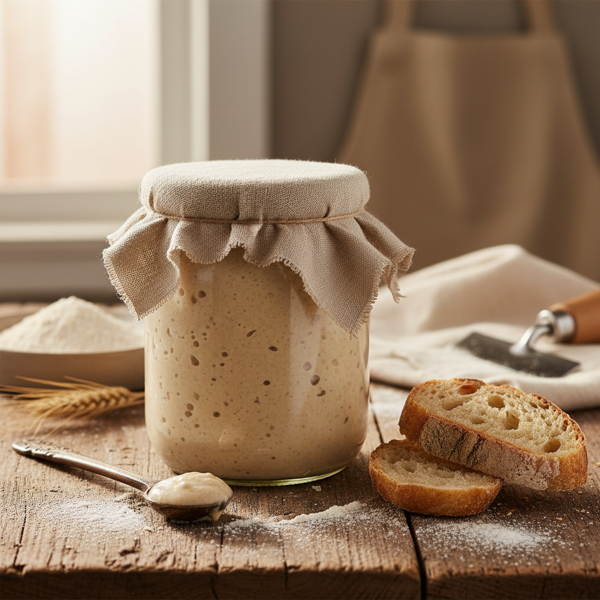
Unlock the secret to a vibrant and flavorful sourdough starter with this foolproof recipe! Originating from Alaska, this method provides a solid foundation for baking light, tangy bread that boasts a delightful crust and chews. In just four days, you can achieve a bubbly, active starter that develops the quintessential sour aroma. This starter will continue to improve with each feeding, offering a unique and delicious flavor that elevates your sourdough bread to new heights. Perfect for beginners and experienced bakers alike, this starter is a living culture that thrives in warmth and care. Let's get started on your sourdough journey!
1
Servings
N/A
Calories
3
Ingredients

Ingredients
Plain Yogurt
1/2 cup (Use plain yogurt, free from any additives or flavors.)
Milk
1/2 cup (Choose from skim, regular, or buttermilk.)
Unbleached Flour
1/2 cup (Use unbleached flour for best results.)
Instructions
1
In a clean glass or ceramic container, combine the plain yogurt and milk. Avoid using metal containers to prevent interference with the starter's culture.
2
Loosely cover the container with a lid or cloth but do not seal it completely; the mixture needs to breathe to ferment properly.
3
Place the container in a warm area, ideally between 80 and 90 degrees Fahrenheit, for about 24 hours.
4
After 24 hours, you should notice that the yogurt and milk have begun to separate, forming a large curd. Stir the mixture gently to recombine.
5
Gradually incorporate the unbleached flour into the mixture, stirring well to ensure everything is combined.
6
Return the stirred mixture to its warm location for an additional 3 to 5 days. Stir it daily to encourage fermentation and watch for bubbles and a pleasant sour smell, signaling that it is ready to use.
7
Once active and bubbly, remember that your starter is a living organism requiring regular feeding. To maintain its health, allow it to sit at room temperature for several hours.
8
Remove 1/2 cup of the starter and discard the remaining starter to maintain balance.
9
Feed the remaining 1/2 cup starter with an equal measure of milk (buttermilk can enhance the sour flavor) and unbleached flour. Specifically, add 1 cup of flour and 1 cup of milk to the 1/2 cup of starter.
10
Alternatively, for a different feeding option, replace the 1 cup of milk with 1/3 cup dry milk powder and 2/3 cup bottled water.
Nutrition Information
Frequently Asked Questions
Frequently Asked Questions
What is Rustic Sourdough Starter Magic?
It is a foolproof recipe for creating a vibrant, flavorful, and active sourdough starter originating from Alaska, perfect for baking light, tangy bread.
Where does this sourdough starter method originate?
This specific sourdough starter method originates from Alaska.
How long does it take to create a bubbly, active starter?
It takes approximately four days to achieve a bubbly, active starter that develops the quintessential sour aroma.
What type of container should I use for the starter?
You should use a clean glass or ceramic container. Avoid using metal containers as they can interfere with the starter's culture.
Why should I avoid metal containers?
Metal containers should be avoided to prevent any chemical interference with the delicate culture of the sourdough starter.
What are the primary ingredients for the initial mixture?
The initial ingredients are 1/2 cup of plain yogurt and 1/2 cup of milk.
Can I use flavored yogurt for this recipe?
No, you should use plain yogurt that is free from any additives or flavors.
What kind of milk can be used?
You can use skim, regular, or buttermilk for this starter recipe.
How should I cover the container during the fermentation process?
Loosely cover the container with a lid or cloth. Do not seal it completely, as the mixture needs to breathe to ferment properly.
What is the ideal temperature for the starter to ferment?
The ideal temperature for fermentation is between 80 and 90 degrees Fahrenheit.
What happens after the first 24 hours of fermentation?
The yogurt and milk will begin to separate and form a large curd; you should stir the mixture gently to recombine them.
When do I add the flour to the mixture?
The unbleached flour is incorporated after the first 24 hours, once the milk and yogurt have been stirred back together.
What type of flour is best for this sourdough starter?
Unbleached flour is recommended for the best results when making this starter.
How many days should the mixture sit after adding the flour?
After adding the flour, let the mixture sit in a warm location for an additional 3 to 5 days.
How often should I stir the fermenting starter?
You should stir the mixture daily to encourage fermentation and check for bubbles.
How can I tell when the starter is ready to use?
The starter is ready when it is active, bubbly, and has developed a pleasant sour smell.
Is the sourdough starter a living organism?
Yes, the starter is a living culture that requires regular care and feeding to thrive.
How do I maintain the health of the starter once it is active?
To maintain its health, allow it to sit at room temperature for several hours and ensure it is fed regularly.
What is the standard procedure for feeding the starter?
Remove 1/2 cup of the starter to keep, discard the rest, and then feed that 1/2 cup with fresh flour and milk.
How much flour and milk should I add during a feeding?
Add 1 cup of flour and 1 cup of milk to your 1/2 cup of reserved starter.
Can I use buttermilk for feeding the starter?
Yes, using buttermilk for feedings can help enhance the sour flavor of the starter.
Is there an alternative feeding method using dry milk?
Yes, you can replace 1 cup of milk with 1/3 cup of dry milk powder and 2/3 cup of bottled water.
Does the flavor of the starter change over time?
Yes, the starter will continue to improve and develop a more unique and delicious flavor with each feeding.
What kind of bread can I make with this starter?
This starter is ideal for baking light, tangy sourdough bread with a delightful crust and chew.
Is this recipe suitable for beginner bakers?
Yes, this foolproof recipe is perfect for both beginners and experienced bakers.
What are the tags associated with this recipe?
The tags include sourdough starter, yeast culture, homemade bread, fermentation, baking, artisan bread, starter recipe, and easy sourdough.
Why is unbleached flour specifically mentioned?
Unbleached flour is preferred because it contains fewer chemicals that might inhibit the growth of the natural yeast and bacteria.
What category does this recipe fall under?
This recipe is categorized under Sourdough Breads.
What is the serving size for this recipe?
The recipe is designed to create 1 starter culture.
What should the starter smell like?
A healthy, ready-to-use starter should have a distinctly pleasant sour aroma.