Rustic No-Knead European Country Bread
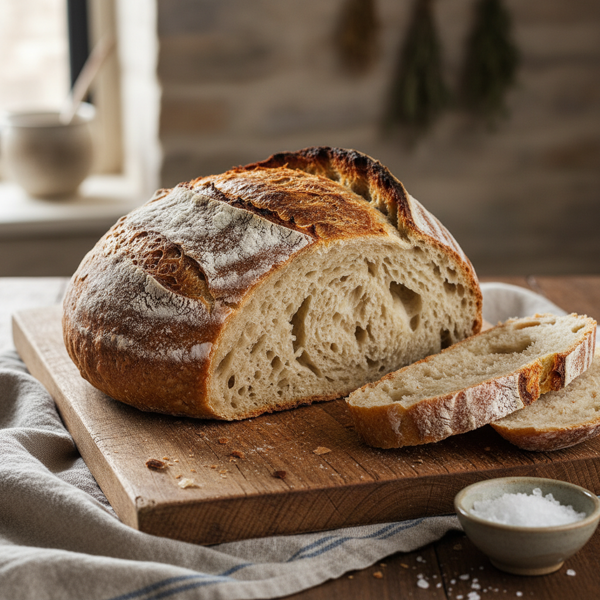
Experience the delightful simplicity of this Rustic No-Knead European Country Bread. This recipe offers an effortless way to achieve the heartwarming aroma and taste reminiscent of traditional European peasant bread. With no kneading involved, even novice bakers can create a wonderfully crusty loaf with a soft, chewy interior. Perfect for toasting, serving with soups, or enjoying with butter, this versatile bread will become a staple in your home. Inspired by the Artisan Bread in Five Minutes a Day cookbook, this bread is not only easy to make but also adaptable for various add-ins such as herbs or seeds for added flavor.
4
Servings
N/A
Calories
7
Ingredients
Ingredients
lukewarm water
3 cups (lukewarm)
granulated yeast
1 1/2 tablespoons (dry)
salt
1 1/2 tablespoons (table salt)
rye flour
1/2 cup (dry)
whole wheat flour
1/2 cup (dry)
unbleached all-purpose flour
5 1/2 cups (dry)
cornmeal
as needed (for dusting)
Instructions
1
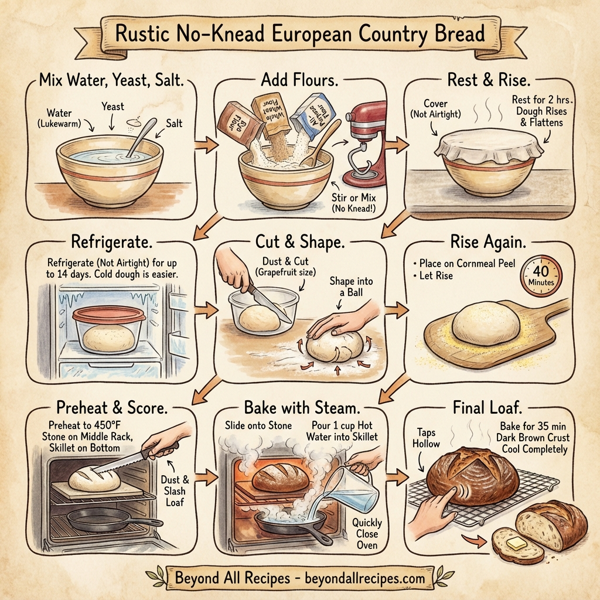
In a 5-quart bowl or a lidded food container (not airtight), mix the lukewarm water with the yeast and salt. Stir until dissolved.
2
Gradually add the rye flour, whole wheat flour, and 5 1/2 cups of unbleached all-purpose flour to the water mixture. Use a spoon or a heavy-duty stand mixer with a dough hook to combine. If mixing by hand, wet your hands to help incorporate the last bit of flour.
3
Once mixed, cover the bowl or container (not airtight) and let the dough rest at room temperature for about 2 hours, or until it rises and flattens on top.
4
For best results, refrigerate the dough in a lidded (not airtight) container and use within the next 14 days. The cold dough is easier to handle.
5
When ready to bake, dust the surface of the refrigerated dough with a little flour. Cut off a piece of dough about the size of a grapefruit (approximately 1 lb.).
6
Dust the cut piece with more flour and shape it into a ball by stretching the surface of the dough around to the bottom on all four sides, rotating the ball a quarter-turn each time.
7
Place the shaped loaf on a pizza peel dusted with cornmeal. Allow it to rise for 40 minutes.
8
While the loaf is rising, preheat your oven to 450°F. Place a baking stone on the middle rack, and an empty cast iron skillet or broiler tray on the bottom rack.
9
Just before baking, sprinkle the loaf generously with flour and create a few slashes on the top using a serrated bread knife.
10
Slide the loaf onto the preheated baking stone. Carefully pour 1 cup of hot tap water into the skillet or broiler tray beneath to create steam. Quickly close the oven door.
11
Bake for 35 minutes, or until the crust is dark brown and sounds hollow when tapped on the bottom.
12
Remove the bread from the oven and let it cool on a wire rack. Allow it to cool completely before slicing to preserve its texture.
Nutrition Information
Frequently Asked Questions
Frequently Asked Questions
What is Rustic No-Knead European Country Bread?
It is an effortless bread recipe that replicates the aroma and taste of traditional European peasant bread with a crusty exterior and chewy interior.
Is kneading required for this recipe?
No, this is a no-knead recipe designed for simplicity, making it perfect for novice bakers.
What flours are used in this bread?
The recipe uses a blend of unbleached all-purpose flour, rye flour, and whole wheat flour.
How many servings does this recipe provide?
The recipe is designed for 4 servings or approximately 4 one-pound loaves.
How long does the initial rise take?
The dough should rest at room temperature for about 2 hours until it rises and flattens on top.
Can I store the dough for later use?
Yes, the dough can be refrigerated in a lidded, non-airtight container for up to 14 days.
What is the benefit of refrigerating the dough?
Cold dough is much easier to handle and shape than dough at room temperature.
How much yeast is needed?
The recipe requires 1 1/2 tablespoons of granulated dry yeast.
What temperature should the water be for mixing?
You should use 3 cups of lukewarm water to help activate the yeast.
How much salt is included in the recipe?
The recipe calls for 1 1/2 tablespoons of table salt.
What size container should I use for mixing?
A 5-quart bowl or a lidded food container is recommended.
Why should the container not be airtight?
An airtight container can trap gases from the yeast; the lid should allow some air to escape.
Do I need a stand mixer to make this bread?
No, you can use a heavy-duty stand mixer with a dough hook or simply mix by hand with a spoon.
How do I shape the bread loaf?
Dust a grapefruit-sized piece of dough with flour and stretch the surface to the bottom on all four sides while rotating.
How long is the second rise after shaping?
Once shaped, the loaf should rise on a pizza peel for 40 minutes.
What is the purpose of cornmeal in this recipe?
Cornmeal is used to dust the pizza peel to prevent the dough from sticking.
At what temperature should the bread be baked?
Preheat your oven to 450 degrees Fahrenheit.
Why is a baking stone used?
A baking stone provides even, intense heat that helps create a professional-style crust.
How do I create steam in the oven?
Place an empty cast iron skillet on the bottom rack and pour 1 cup of hot tap water into it just after sliding the loaf in.
Why is steam important for European bread?
Steam helps develop a dark, crispy, and professional-looking crust.
When should I slash the top of the dough?
Slash the top with a serrated knife just before sliding the loaf into the oven.
How long does the bread take to bake?
The loaf takes approximately 35 minutes to bake.
How can I tell if the bread is finished baking?
The crust should be dark brown and the loaf should sound hollow when tapped on the bottom.
Why should the bread cool completely before slicing?
Allowing it to cool on a wire rack helps preserve the internal texture and prevents the bread from becoming gummy.
Can I add other ingredients to this bread?
Yes, the recipe is adaptable for add-ins such as various herbs or seeds for extra flavor.
What was the inspiration for this recipe?
This recipe was inspired by the Artisan Bread in Five Minutes a Day cookbook.
What are the main categories for this recipe?
It falls under Yeast Breads and is tagged as Artisan and Rustic bread.
How much all-purpose flour is required?
The recipe uses 5 1/2 cups of unbleached all-purpose flour.
Is this bread suitable for toasting?
Yes, it is excellent for toasting, serving with soups, or eating with butter.
What should I do if the dough is too sticky to handle?
Wetting your hands or dusting the dough surface with flour can help manage stickiness.