Rustic Italian Tomato Sauce with Savory Parmesan Meatballs
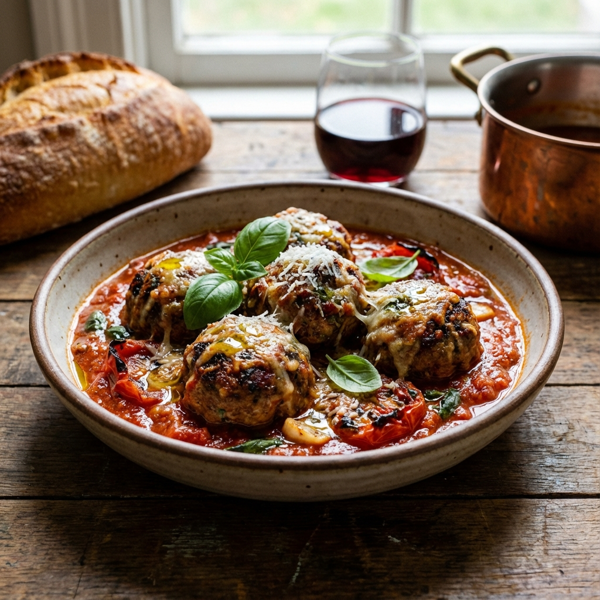
Experience the true essence of Italian cuisine with this rich and hearty tomato pasta sauce paired with succulent Parmesan meatballs. This recipe emphasizes the importance of a slow cooking process, allowing the flavors to meld and mature over time, resulting in a sauce that is nothing short of extraordinary. By preparing the sauce at least a day in advance, you’ll achieve a depth of flavor that will have everyone reaching for seconds. The ingredients blend together harmoniously, creating an irresistible aroma that fills your kitchen and warms the heart. This dish not only feeds a crowd but also freezes beautifully for future meals—simply reheat and enjoy! Perfect for family gatherings, weeknight dinners, or any occasion where comfort food is a must.
N/A
Servings
N/A
Calories
15
Ingredients

Ingredients
Prepared meatballs
as directed (see my Kittencal's Italian Melt-In-Your-Mouth Meatballs)
Olive oil
2-3 tablespoons (to cover the bottom of the pot)
Large onion
1 (chopped)
Large garlic cloves
6 (finely chopped (or to taste))
Bay leaf
1-2 (whole)
Dried oregano
1 tablespoon (rubbed with fingers to release oils)
Dried basil
1 tablespoon (rubbed with fingers to release oils)
Salt
1-2 tablespoons (or to taste)
Fresh ground black pepper
1 teaspoon (or to taste)
Crushed red pepper flakes
1 teaspoon (optional or to taste)
Tomato paste
1 (6 ounce) can (none)
Dry red wine
1/3-1/2 cup (or to taste)
Crushed tomatoes
2 (28 ounce) cans (none (use 3 cans if you plan on freezing some sauce))
Diced tomatoes
2 (28 ounce) cans (well drained)
Sugar
1 tablespoon (optional and to be added in the last 30 minutes of cooking time)
Instructions
1
Prepare the meatballs according to my Kittencal's Italian Melt-In-Your-Mouth Meatballs recipe, shaping them into your desired size. Transfer them to a plate, cover with plastic wrap, and refrigerate until needed (meatballs can be made up to one day ahead).
2
Drain the diced tomatoes in a strainer to remove excess liquid and ensure the sauce is not too watery.
3
In a large, heavy-bottomed pot, coat the bottom with a generous amount of olive oil and heat over medium heat.
4
Once the oil is hot, add the chopped onion, bay leaf, dried oregano, dried basil, salt, black pepper, and crushed red pepper flakes. Sauté for about 5-7 minutes, or until the onion is soft and translucent.
5
Add the finely chopped garlic to the pot and sauté for an additional 2 minutes, stirring frequently to prevent burning.
6
Introduce the tomato paste into the mixture, stirring well to combine thoroughly, about 2 minutes.
7
Pour in the dry red wine, stirring to incorporate, and let it simmer for a couple of minutes.
8
Add the crushed tomatoes and the drained diced tomatoes to the pot, stirring well. Allow the mixture to come to a gentle boil, then boil for 5-8 minutes before reducing the heat to low.
9
Carefully add the uncooked meatballs to the sauce. If cooking them uncooked, avoid stirring for the first 30 minutes to prevent them from breaking apart.
10
Simmer the sauce uncovered on low heat for about 3-5 hours, stirring occasionally. The longer it simmers, the thicker and richer it will become; don't hesitate to let it go for up to 6 hours.
11
As the sauce simmers, skim off any excess fat that appears on the surface.
12
Once cooked, allow the sauce to cool to room temperature. Store it in the refrigerator (with the meatballs in the sauce) for a minimum of 1 day or up to 4 days to allow the flavors to develop.
13
Freeze any leftovers in airtight containers for future meals (sauce will keep well for up to 6 months). Reheat gently on the stove or in the microwave before serving.
Nutrition Information
Frequently Asked Questions
Frequently Asked Questions
What is the name of this recipe?
The recipe is for Rustic Italian Tomato Sauce with Savory Parmesan Meatballs.
How long should the sauce simmer for the best flavor?
The sauce should simmer for at least 3 to 5 hours, though you can let it go for up to 6 hours for a thicker, richer result.
Can I make this sauce ahead of time?
Yes, preparing the sauce at least one day in advance allows the flavors to mature and develop more depth.
What type of meatballs are recommended for this recipe?
The recipe recommends Kittencal's Italian Melt-In-Your-Mouth Meatballs, which include Parmesan cheese.
Should the meatballs be cooked before adding them to the sauce?
The instructions suggest adding uncooked meatballs directly to the sauce and letting them cook while it simmers.
How long can I store the sauce in the refrigerator?
The sauce can be stored in the refrigerator for a minimum of 1 day and up to 4 days.
Can this tomato sauce be frozen?
Yes, it freezes beautifully in airtight containers for up to 6 months.
What is the best way to reheat the sauce?
Reheat the sauce gently on the stove or in the microwave before serving.
Do I need to drain the diced tomatoes?
Yes, you should drain them in a strainer to remove excess liquid and prevent the sauce from becoming watery.
Why should I rub the dried herbs with my fingers?
Rubbing dried oregano and basil helps release their natural oils and enhances the flavor of the sauce.
What kind of wine is best for this sauce?
A dry red wine is recommended to add depth to the flavor profile.
Should the sauce be covered or uncovered while simmering?
The sauce should be simmered uncovered to allow it to thicken and the flavors to concentrate.
What should I do if I notice excess fat on top of the sauce?
As the sauce simmers, you should skim off any excess fat that appears on the surface.
When should I add the garlic to the pot?
Add the garlic after sautéing the onions and spices, cooking it for an additional 2 minutes while stirring frequently.
Is sugar a required ingredient?
No, sugar is optional and should be added in the last 30 minutes of cooking if desired.
How do I prevent uncooked meatballs from breaking in the sauce?
Avoid stirring the sauce for the first 30 minutes after adding the uncooked meatballs.
Can the meatballs be made in advance?
Yes, the meatballs can be shaped and refrigerated up to one day ahead of time.
What type of pot is best for cooking this sauce?
A large, heavy-bottomed pot is ideal to ensure even heating and prevent burning.
How much tomato paste is needed?
One 6-ounce can of tomato paste is used to enrich the sauce.
What aromatics are included in the base?
The base includes large onion, garlic, bay leaf, dried oregano, dried basil, and crushed red pepper flakes.
How many cans of tomatoes should I use if I plan to freeze some?
The recipe suggests using 3 cans of crushed tomatoes instead of 2 if you intend to freeze portions for later.
Is this sauce spicy?
It has a slight kick from crushed red pepper flakes, but this is optional and can be adjusted to taste.
How long should I sauté the onions?
Sauté the onions for about 5 to 7 minutes until they are soft and translucent.
Should I boil the sauce before simmering?
Yes, allow the tomato mixture to come to a gentle boil for 5 to 8 minutes before reducing the heat to low.
How much olive oil is used?
Use 2 to 3 tablespoons, or enough to generously cover the bottom of the pot.
What kind of pepper is used in the recipe?
Freshly ground black pepper and crushed red pepper flakes are used.
Do I need to cool the sauce before putting it in the fridge?
Yes, allow the sauce to cool to room temperature before storing it in the refrigerator.
How many garlic cloves are recommended?
The recipe calls for 6 large garlic cloves, finely chopped.
What is the role of the bay leaf?
The bay leaf adds a subtle layer of herbal flavor during the long simmering process.
Is this recipe suitable for a crowd?
Yes, it is described as perfect for family gatherings and feeding a crowd because it is hearty and yields a large amount.