Rustic Italian Olive Bread
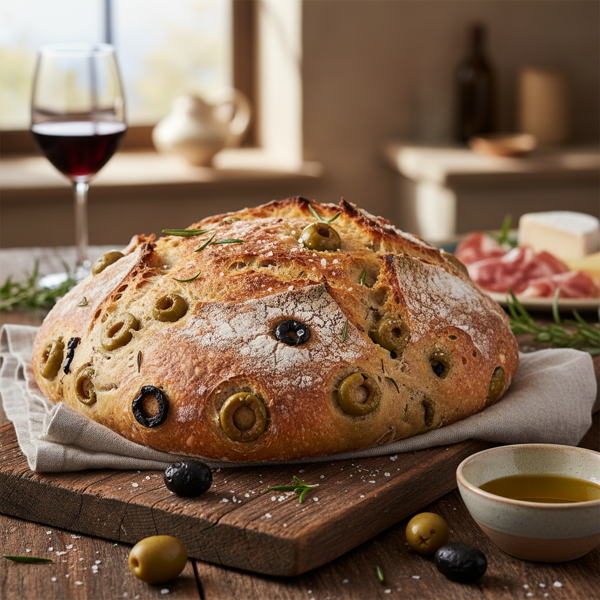
Indulge in the delightful flavors of Mediterranean cuisine with this Rustic Italian Olive Bread. Inspired by Bernard Clayton's Complete Book of Breads, this artisanal loaf combines the richness of eggs and butter with the briny goodness of green and black olives. Its beautiful crust and tender interior make it an eye-catching centerpiece for any meal or gathering, and it's equally delicious served warm or at room temperature. A guaranteed crowd-pleaser, this bread offers a harmonious blend of textures and flavors, making it a fantastic accompaniment to soups, salads, and antipasto platters.
N/A
Servings
N/A
Calories
10
Ingredients
Ingredients
flour
2 1/2 - 3 cups (all-purpose)
yeast
2 1/4 teaspoons (instant or active dry (1 packet))
sugar
2 tablespoons (granulated)
salt
1 teaspoon
hot water
1/3 cup (approximately 110°F (43°C))
eggs
2 (large)
butter
1/4 cup (room temperature, cut into pieces)
green pimento stuffed olives
1/2 cup (drained and chopped)
ripe black olives
1/2 cup (pitted and chopped)
egg yolk
1 (beaten)
Instructions
1
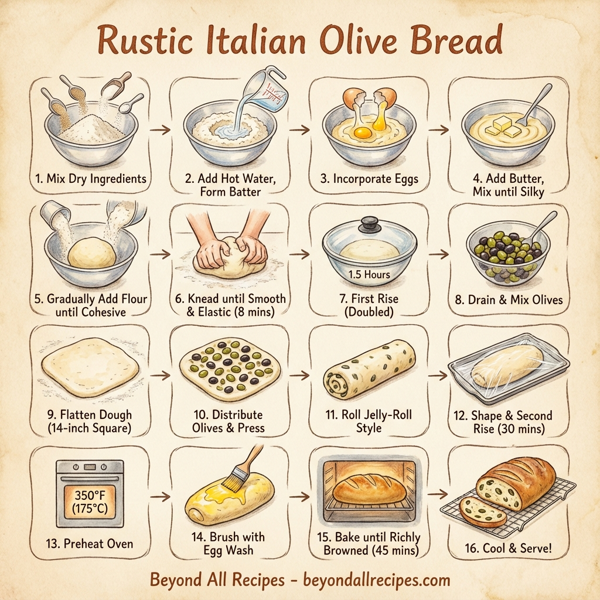
In a mixing bowl, combine 2 cups of flour with yeast, sugar, and salt. Mix well to combine dry ingredients.
2
Create a well in the center of the flour mixture and pour in the hot water. Using a wooden spoon, gradually pull the flour into the water to form a rough batter.
3
Crack the eggs into the batter and mix vigorously until the eggs are fully incorporated and the batter is smooth.
4
Add the butter in pieces and continue mixing until the dough is silky and well combined, approximately 2 minutes.
5
Gradually incorporate additional flour, 1/2 cup at a time, until the dough forms a cohesive ball that can be easily handled. It should not be sticky; add extra flour if necessary.
6
Knead the dough on a floured surface or using a dough hook until it becomes smooth and elastic, for about 8 minutes. Be assertive in your kneading, using a push-turn-fold technique.
7
After kneading, place the dough in a greased bowl and cover it. Allow it to rise at room temperature until doubled in size, approximately 1.5 hours.
8
While the dough rises, drain the olives and mix them together. Set aside.
9
Once the dough has risen, punch it down and turn it out onto a floured surface. Flatten the dough into a square about 14 inches across, allowing it to relax for 3-4 minutes.
10
Evenly distribute the olives over the dough, pressing them in gently. Roll the dough tightly, jelly-roll style, to enclose the olives, placing the seam side down on a baking sheet.
11
Shape the dough into a smooth oval about 2 inches thick by tucking the ends underneath.
12
Cover the loaf with waxed paper or plastic wrap and let it rise at room temperature until puffy, about 30 minutes.
13
Preheat your oven to 350°F (175°C) about 20 minutes before baking.
14
Once preheated, uncover the loaf and brush it with the beaten egg yolk for a beautiful glossy finish.
15
Bake the bread until it is richly browned, approximately 45 minutes. It should sound hollow when tapped. Keep an eye on doneness to avoid over-browning.
16
Remove from the oven and allow to cool on a rack for at least 10 minutes before slicing. Serve warm or at room temperature.
Nutrition Information
Frequently Asked Questions
Frequently Asked Questions
What is Rustic Italian Olive Bread?
It is an artisanal yeast bread featuring a rich dough made with eggs and butter, filled with a blend of green and black olives for a Mediterranean flavor profile.
Who is the inspiration behind this bread recipe?
This recipe is inspired by the techniques and recipes found in Bernard Clayton's Complete Book of Breads.
What types of olives are recommended?
The recipe calls for a combination of green pimento-stuffed olives and ripe black olives, both drained and chopped.
Can I use active dry yeast instead of instant?
Yes, you can use either one packet (2 1/4 teaspoons) of instant or active dry yeast for this recipe.
What temperature should the water be for the yeast?
The water should be hot, approximately 110°F (43°C), to properly activate the yeast without killing it.
How much flour will I actually need?
You will need between 2 1/2 to 3 cups of all-purpose flour. Start with the smaller amount and add more until the dough is no longer sticky.
Why are eggs used in this bread dough?
Eggs add richness, a tender crumb, and contribute to the beautiful golden color of the final loaf.
How long should I knead the dough?
You should knead the dough for approximately 8 minutes until it becomes smooth and elastic.
What kneading technique is suggested?
A push-turn-fold technique is recommended to develop the gluten structure effectively.
How long is the first rising period?
The dough should rise at room temperature in a greased bowl for about 1.5 hours, or until it has doubled in size.
Do I need to prepare the olives in a specific way?
Yes, olives should be drained of their brine and chopped before being mixed and added to the dough.
How do I incorporate the olives into the bread?
Flatten the risen dough into a 14-inch square, distribute the olives evenly, and roll the dough tightly jelly-roll style.
What shape should the final loaf be?
The dough should be shaped into a smooth oval approximately 2 inches thick with the ends tucked underneath.
How long is the second rise?
After shaping, the loaf needs a second rise of about 30 minutes until it appears puffy.
What is the purpose of the egg yolk brush?
Brushing the loaf with a beaten egg yolk before baking provides a beautiful, glossy, and professional finish.
What oven temperature is required?
Preheat your oven to 350°F (175°C) about 20 minutes before you are ready to bake.
How long does the bread take to bake?
The bread typically takes about 45 minutes to bake until it is richly browned.
How can I tell if the bread is done?
The bread is done when it is richly browned and sounds hollow when tapped on the bottom.
How long should the bread cool before slicing?
It is best to let the bread cool on a wire rack for at least 10 minutes to allow the structure to set.
Should I serve this bread warm or cold?
This bread is versatile and can be served either warm or at room temperature.
What dishes pair well with Italian Olive Bread?
It makes an excellent accompaniment to soups, salads, antipasto platters, and various Mediterranean dishes.
Is the dough supposed to be sticky?
No, if the dough is sticky, you should gradually add more flour until it is easy to handle and cohesive.
Can I use a stand mixer with a dough hook?
Yes, you can use a dough hook for the kneading process instead of kneading by hand on a floured surface.
How much butter is used in the recipe?
The recipe requires 1/4 cup of room temperature butter, cut into pieces for easier mixing.
What happens if I don't drain the olives?
Excess brine can make the dough too wet and salty, potentially affecting the rise and the texture of the bread.
Can I use only one type of olive?
While the recipe suggests a mix, you can use all green or all black olives depending on your personal preference.
What should the dough look like after adding butter?
After adding butter and mixing for about 2 minutes, the dough should appear silky and well combined.
Is this bread considered a snack or an appetizer?
It is tagged as both a snack and an appetizer, making it perfect for social gatherings or light eating.
What is the texture of the bread's interior?
The interior is described as tender, contrasting with the beautiful, slightly crisp crust.
How much sugar is in the dough?
The recipe uses 2 tablespoons of granulated sugar to help feed the yeast and add a hint of sweetness.