Rustic Healing Chicken Soup
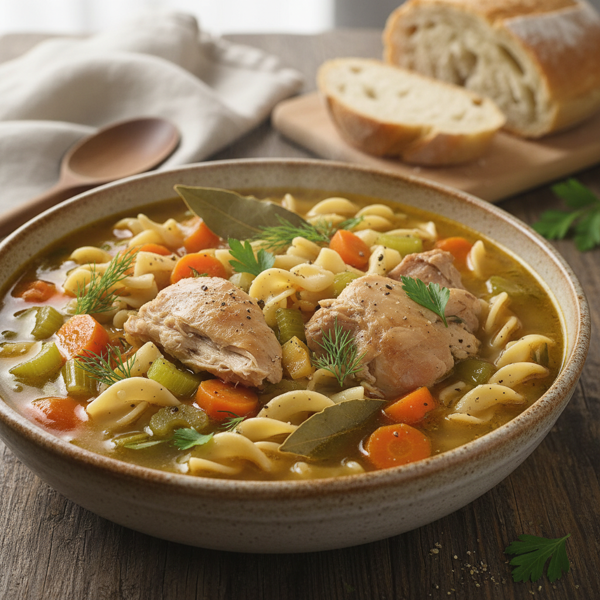
This hearty Rustic Healing Chicken Soup is a comforting dish that warms the soul and nourishes the body. Crafted from simple, wholesome ingredients, this soup is designed to chase away the chill and fight off colds with its rich flavors and aromatic herbs. Perfect for cozy family dinners or when you need a little extra care, this delightful soup brings back memories of home cooking. Let each spoonful provide comfort and healing as you enjoy the robust combination of succulent chicken, fresh vegetables, and fragrant herbs.
7
Servings
N/A
Calories
14
Ingredients
Ingredients
whole chicken or chicken pieces
3 lb (whole or cut up)
cold water
2 quarts (for soup base)
carrots
4 (sliced)
celery ribs
3 (sliced)
onion
1 (chopped)
garlic cloves
4 (minced)
poultry seasoning
2 teaspoons
salt
2 teaspoons
peppercorns
2 teaspoons
ground pepper
1 teaspoon
bay leaves
3
potatoes
2 (cut into about 1 inch chunks)
fresh parsley
3 tablespoons (optional, chopped)
fresh dill
2 tablespoons (or 1 teaspoon dried dill)
Instructions
1
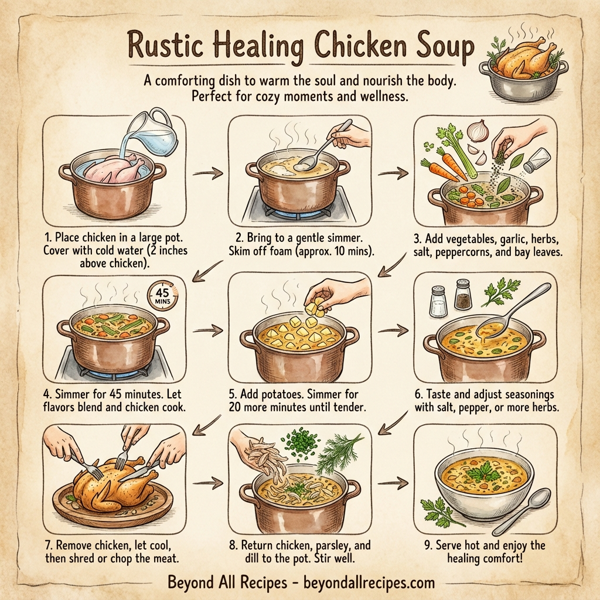
In a large soup pot, place the chicken and cover it with cold water, ensuring the water level is about two inches above the chicken.
2
Bring the mixture to a gentle simmer, skimming off any foam that rises to the surface. This should take about 10 minutes.
3
Once the surface foam has diminished, add the carrots, celery, onion, garlic, poultry seasoning, salt, peppercorns, ground pepper, and bay leaves to the pot.
4
Continue to simmer the soup for approximately 45 minutes, allowing the flavors to blend together and the chicken to cook through.
5
After 45 minutes, carefully add the potatoes to the pot and continue simmering for an additional 20 minutes or until the potatoes are fork-tender.
6
Taste the soup and adjust the seasonings based on your preference, adding more salt, pepper, or herbs if desired.
7
Once the chicken has cooled enough to handle, remove it from the pot and place it on a platter. Shred or chop the chicken meat from the bones.
8
Return the shredded chicken back into the soup pot, along with the chopped parsley and dill.
9
Stir well to combine, and serve the soup hot. Enjoy this nourishing dish as you recover and rejuvenate!
Nutrition Information
Frequently Asked Questions
Frequently Asked Questions
What is Rustic Healing Chicken Soup?
Rustic Healing Chicken Soup is a hearty, comforting dish made from simple, wholesome ingredients designed to nourish the body and fight off colds.
How many people does this recipe serve?
This recipe is designed to yield approximately 7 servings.
Can I use chicken pieces instead of a whole chicken?
Yes, you can use either a 3 lb whole chicken or an equivalent weight of chicken pieces like thighs or breasts.
How long does the chicken need to simmer?
The chicken should simmer for about 45 minutes initially, then an additional 20 minutes after adding the potatoes.
What are the primary vegetables in this soup?
The main vegetables include carrots, celery, onion, garlic, and potatoes.
Why do I need to skim the foam off the soup?
Skimming the foam removes impurities that rise to the surface, resulting in a clearer and cleaner-tasting broth.
Is there a substitute for fresh dill?
Yes, you can substitute 2 tablespoons of fresh dill with 1 teaspoon of dried dill.
When should I add the potatoes to the pot?
Add the potatoes after the soup has simmered for 45 minutes, then cook for another 20 minutes.
Can I make this soup in advance?
Yes, this soup stores well and often tastes even better the next day after the flavors have melded.
What herbs are used for seasoning?
The soup is seasoned with poultry seasoning, bay leaves, fresh parsley, and fresh dill.
How do I prepare the garlic?
The 4 cloves of garlic should be minced before being added to the soup pot.
Do I need to peel the potatoes?
The recipe suggests cutting them into 1-inch chunks; peeling is optional depending on your preference for a rustic texture.
Can I use chicken broth instead of water?
While the recipe calls for 2 quarts of cold water to create a natural broth, you can use low-sodium chicken broth for an even richer flavor.
How do I know when the potatoes are cooked?
The potatoes are ready when they are fork-tender, which usually takes about 20 minutes of simmering.
Is it okay to leave the peppercorns in the soup?
The recipe calls for 2 teaspoons of peppercorns which add flavor; you can strain them out or leave them for a rustic feel.
What size should I cut the vegetables?
Carrots and celery should be sliced, the onion chopped, and potatoes cut into 1-inch chunks.
How do I handle the chicken after cooking?
Remove the chicken from the pot, let it cool, then shred or chop the meat from the bones before returning it to the soup.
Can I add noodles or rice to this recipe?
Yes, though not in the original recipe, you can add cooked noodles or rice at the end for a more filling meal.
Is this soup gluten-free?
The core ingredients are naturally gluten-free, but always check your poultry seasoning label to ensure no gluten-based fillers are present.
How many bay leaves are required?
The recipe requires 3 bay leaves to be added during the simmering process.
Can I use dried parsley instead of fresh?
Yes, if you don't have fresh parsley, you can use 1 tablespoon of dried parsley as a substitute.
What makes this soup 'healing'?
It uses garlic, onion, and herbs known for their immune-boosting properties, combined with a hydrating and nutrient-rich broth.
How much water should I use?
Use 2 quarts of cold water, ensuring it sits about two inches above the chicken in the pot.
Can I freeze this soup?
Yes, this soup freezes well. Store it in airtight containers for up to 3 months.
How long does it take to prepare the ingredients?
Preparation including chopping and slicing takes roughly 15-20 minutes.
What kind of onion is best?
A standard yellow or white onion works best for a balanced, savory flavor.
Can I add extra garlic?
Absolutely, if you are fighting a cold, adding extra minced garlic can enhance the healing properties.
Should I use ground pepper or peppercorns?
This recipe uses both: 2 teaspoons of peppercorns for the broth and 1 teaspoon of ground pepper for seasoning.
What is poultry seasoning?
Poultry seasoning is typically a blend of dried sage, thyme, rosemary, marjoram, and sometimes nutmeg or onion powder.
How do I adjust the final seasoning?
Taste the soup after the potatoes are cooked and add more salt, ground pepper, or herbs according to your personal preference.