Rustic German Rye Bread with Caraway Seeds
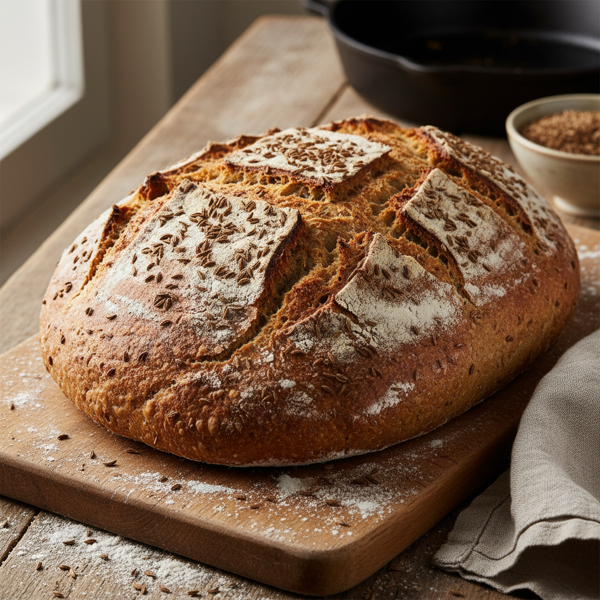
Indulge in the deep, complex flavors of this traditional Rustic German Rye Bread, infused with aromatic caraway seeds. This artisanal loaf combines the hearty nutrition of rye flour with the richness of butter and a hint of malt, delivering a robust taste that pairs excellently with cheeses, cold cuts, or simply butter. Crafted with care, this bread undergoes a slow fermentation process that enhances its flavor profile and texture, making each bite a delightful experience. Perfect for a cozy dinner or as an impressive homemade gift, this bread is bound to become a cherished favorite.
1
Servings
N/A
Calories
7
Ingredients

Ingredients
rye flour
1 lb (plus extra for dusting)
fresh yeast
1 ounce
water
1 1/8 cups (tepid)
salt
1/2 ounce
malt extract
1 teaspoon
butter
2 ounces
caraway seeds
3 tablespoons
Instructions
1
In a large mixing bowl, combine 8 ounces of rye flour with fresh yeast. Gradually add about 3/4 cup of tepid water, mixing thoroughly until a thick batter forms.
2
Cover the bowl with a damp cloth and let the batter rest in a warm place for approximately 2 hours, or until it has risen significantly and then fallen back.
3
Once the batter has rested, incorporate the remaining rye flour, tepid water, salt, malt extract, softened butter, and caraway seeds. Mix until a pliable dough forms—if the dough is too sticky, add a little extra rye flour.
4
Lightly dust a rye loaf basket with some rye flour. Shape the dough into a loaf and carefully place it in the basket, seam side up. Cover again and let it rise for another 2 hours.
5
Preheat your oven to 425°F (220°C).
6
Once the dough has risen, carefully transfer the loaf to a baking tray lined with parchment paper. Dust the top lightly with rye flour.
7
Bake the bread in the preheated oven for about 30 minutes, or until the crust is deep brown and sounds hollow when tapped.
8
Remove the bread from the oven and let it cool on a wire rack before slicing.
Nutrition Information
Frequently Asked Questions
Frequently Asked Questions
What is Rustic German Rye Bread with Caraway Seeds?
It is a traditional artisanal loaf featuring the hearty nutrition of rye flour, the richness of butter, and a hint of malt, all infused with aromatic caraway seeds.
What are the primary ingredients for this bread?
The main ingredients include 1 lb of rye flour, fresh yeast, tepid water, salt, malt extract, softened butter, and caraway seeds.
How much rye flour is needed in total?
The recipe requires 1 lb of rye flour, with a portion used for the initial batter and the rest for the dough and dusting.
What type of yeast is used in this recipe?
This recipe specifically calls for 1 ounce of fresh yeast.
How much caraway seeds should I use?
The recipe calls for 3 tablespoons of caraway seeds to provide a robust, aromatic flavor.
How do I start the baking process?
Begin by mixing 8 ounces of rye flour with fresh yeast and 3/4 cup of tepid water to form a thick batter.
How long does the initial batter need to rest?
The batter should rest in a warm place for approximately 2 hours, or until it has risen significantly and fallen back.
What should I do if the dough is too sticky?
If the dough is too sticky when mixing, you can add a little extra rye flour until it becomes pliable.
How long is the second rising period?
After shaping the dough into a loaf, it should rise for an additional 2 hours.
At what temperature should the oven be preheated?
Preheat your oven to 425 degrees Fahrenheit or 220 degrees Celsius.
How long does the bread bake?
The bread bakes for about 30 minutes in the preheated oven.
How do I know if the rye bread is fully cooked?
The bread is done when the crust is deep brown and the loaf sounds hollow when tapped on the bottom.
Should I slice the bread immediately after baking?
No, you should let the bread cool on a wire rack before slicing to ensure the internal texture sets properly.
What is the purpose of the malt extract?
Malt extract adds a hint of sweetness and helps enhance the flavor profile and fermentation of the rye dough.
Can I use cold water for the dough?
The recipe recommends using tepid water to help activate the fresh yeast effectively.
What kind of container is used for the second rise?
A rye loaf basket dusted with flour is used to shape and support the dough during its second rise.
Is there any fat in this bread recipe?
Yes, the recipe includes 2 ounces of softened butter which adds richness to the loaf.
What food pairings are recommended for this bread?
This bread pairs excellently with various cheeses, cold cuts, or can be enjoyed simply with butter.
What is the benefit of the slow fermentation process?
Slow fermentation enhances the deep, complex flavor profile and improves the overall texture of the bread.
How much salt is required for the dough?
The recipe calls for 1/2 ounce of salt.
How should I prepare the baking tray?
Line the baking tray with parchment paper to prevent the loaf from sticking during the baking process.
Do I need to cover the dough while it rests?
Yes, cover the bowl with a damp cloth during the resting periods to keep the dough from drying out.
What is the total time for the dough to rise?
The total rising time is approximately 4 hours, split into two 2-hour sessions.
Can I dust the top of the loaf?
Yes, lightly dust the top of the loaf with rye flour before placing it in the oven for a rustic look.
What makes this bread 'artisanal'?
Its artisanal nature comes from the traditional ingredients, manual shaping, and the slow fermentation process.
Is this recipe suitable for gifting?
Yes, this hearty and impressive homemade loaf makes for a cherished gift for friends or family.
What is the yield of this recipe?
This recipe is designed to produce one large loaf of bread.
How much water is needed in total?
The recipe uses a total of 1 1/8 cups of tepid water.
What preparation is needed for the rye flour?
The flour is used in stages for the batter and dough, and extra is needed for dusting the basket and the loaf.
Does the recipe use any sugar?
No refined sugar is used; the recipe uses malt extract to provide a subtle sweetness and aid fermentation.