Rustic French Country Loaf
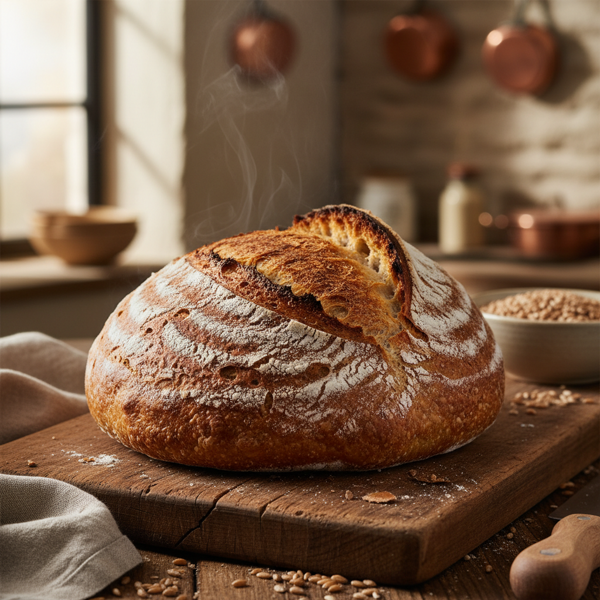
Indulge in the delightful taste and aroma of this Rustic French Country Loaf, a cherished family recipe inspired by the heart of the French countryside. This bread features a perfectly crusty exterior and a soft, chewy interior, perfect for soaking in rich soups or serving as an accompaniment to your favorite meal. With its simple ingredients, this recipe allows you to create irresistible homemade bread in the comfort of your own kitchen, and any leftovers can be transformed into delicious croûtons or enjoyed with creamy spreads. The versatile method allows you to use a bread machine or bake traditional baguettes in the oven—perfect for every baker!
10
Servings
180
Calories
6
Ingredients
Ingredients
Water
1 3/8 cups (room temperature)
Olive oil
1 1/2 tablespoons (none)
Salt
1 1/2 teaspoons (none)
Bread flour
4 cups (none)
Sugar
1 tablespoon (none)
Active dry yeast
2 teaspoons (none)
Instructions
1
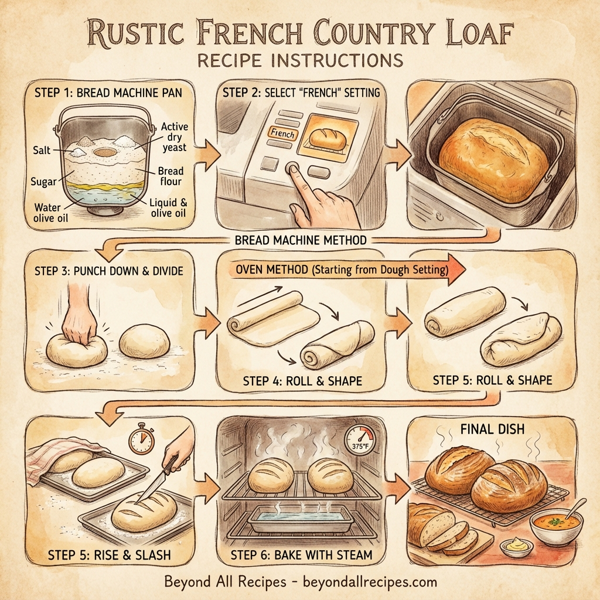
In your bread machine's pan, add the water and olive oil, ensuring the liquids are at room temperature.
2
Carefully add the bread flour to cover the liquid, making sure not to disturb the wet ingredients.
3
Add the salt and sugar evenly on top of the flour, avoiding direct contact with the yeast.
4
Create a small well in the center of the flour mixture and sprinkle the active dry yeast into the well.
5
Select the 'French' setting on your bread machine and adjust the crust settings to your preference. Press start.
6
For the oven method: Use the 'Dough' setting on the machine. Once the cycle completes, punch down the dough and divide it into two equal pieces.
7
On a lightly floured surface, roll each piece into a rectangle (approximately 10 x 15 inches). Starting from the long side, tightly roll each rectangle into a loaf shape, sealing seams and ends by pinching.
8
Place the loaves seam-side down on a large, ungreased baking sheet, optionally sprinkling with cornmeal or flour.
9
Cover the loaves with a clean kitchen towel and allow them to rise in a warm area for about 30 minutes or until doubled in size.
10
Preheat your oven to 375°F (190°C) and place a pan of hot water on the bottom rack to create steam.
11
Once risen, use a sharp knife to make 3 to 4 diagonal slashes in each loaf, cutting about half an inch deep.
12
Optionally, brush the loaves with an egg white glaze (one egg white beaten with 1 tablespoon of water) and sprinkle with sesame seeds or dried herbs.
13
Bake on the middle rack for 25-30 minutes, or until the loaves sound hollow when tapped.
14
Allow to cool on wire racks before serving warm.
Nutrition Information
1g
Fat
36g
Carbs
6g
Protein
1g
Fiber
Frequently Asked Questions
Frequently Asked Questions
What is a Rustic French Country Loaf?
It is a cherished family recipe inspired by the French countryside, featuring a crusty exterior and a soft, chewy interior.
How many servings does this recipe provide?
This recipe yields approximately 10 servings.
What are the main ingredients for this bread?
The main ingredients include bread flour, water, olive oil, salt, sugar, and active dry yeast.
What type of flour should I use?
The recipe specifically calls for 4 cups of bread flour.
How much yeast is required?
You will need 2 teaspoons of active dry yeast.
Can I make this bread in a bread machine?
Yes, you can use the 'French' setting on your bread machine to bake this loaf.
What temperature should the water be?
The water should be at room temperature when added to the bread machine.
How much olive oil is in the recipe?
The recipe requires 1 1/2 tablespoons of olive oil.
Does this bread contain sugar?
Yes, it contains 1 tablespoon of sugar.
What is the calorie count per serving?
Each serving contains approximately 180 calories.
How much protein is in one serving?
There are 6 grams of protein per serving.
How do I bake this in the oven instead of the machine?
Use the 'Dough' setting on your machine, then shape the loaves and bake in a preheated oven at 375°F.
How long should the dough rise for oven baking?
The dough should rise in a warm area for about 30 minutes or until doubled in size.
How do I create steam in the oven for a better crust?
Place a pan of hot water on the bottom rack of the oven during preheating and baking.
What is the recommended oven temperature?
Preheat your oven to 375°F (190°C).
How do I shape the loaves for the oven?
Roll the dough into 10 x 15 inch rectangles and then tightly roll them into a loaf shape, sealing the seams.
Should I grease the baking sheet?
The recipe suggests using a large, ungreased baking sheet, optionally sprinkled with cornmeal or flour.
How many slashes should I make in the loaf?
Use a sharp knife to make 3 to 4 diagonal slashes in each loaf, about half an inch deep.
What is the optional glaze for the crust?
You can brush the loaves with an egg white glaze made of one egg white and 1 tablespoon of water.
Can I add toppings to the bread?
Yes, you can sprinkle the top with sesame seeds or dried herbs before baking.
How long does the bread bake in the oven?
Bake the loaves for 25-30 minutes.
How do I know when the bread is finished baking?
The loaves are done when they sound hollow when tapped.
What should I do after taking the bread out of the oven?
Allow the loaves to cool on wire racks before serving.
What can I do with leftover bread?
Leftovers can be transformed into delicious croutons or enjoyed with creamy spreads.
What are the best ways to serve this loaf?
It is perfect for soaking in rich soups or serving as an accompaniment to a meal.
How much fat is in this bread?
This recipe is low in fat, containing only 1 gram of fat per serving.
How many carbohydrates are in a serving?
There are 36 grams of carbohydrates per serving.
Is there fiber in this bread?
Yes, there is 1 gram of fiber per serving.
Can I adjust the crust settings on my bread machine?
Yes, you can adjust the crust settings to your personal preference before starting the machine.
Is this considered an artisan bread?
Yes, it is tagged as an artisan bread due to its rustic nature and traditional preparation methods.