Rustic Country Baguettes
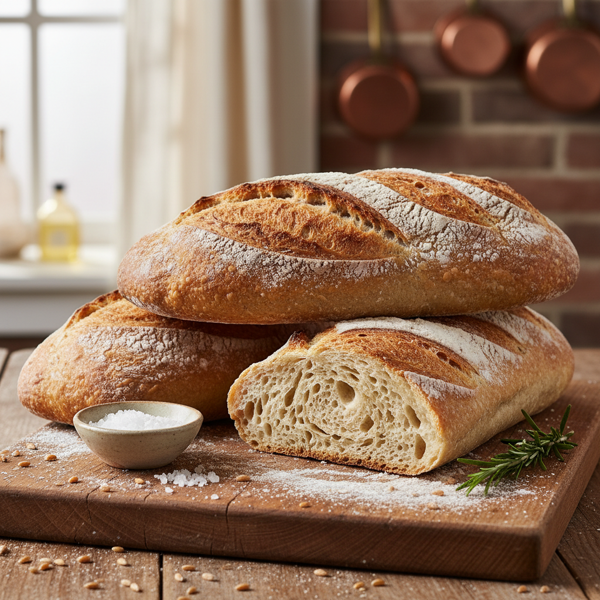
Experience the heart of French baking with our Rustic Country Baguettes, crafted using traditional methods to yield a crusty exterior and a soft, airy interior. This wholesome bread is enriched with the natural sweetness of honey and a touch of sea salt, providing a full-bodied flavor that elevates any meal. Ideal for sandwiches, or simply enjoyed with butter, these artisan-style baguettes are best consumed fresh on the same day of baking. This recipe produces two delightful baguettes, perfect for sharing or for stockpiling in your bread basket.
N/A
Servings
N/A
Calories
5
Ingredients
Ingredients
Active dry yeast
1 (1/4 ounce) packet (Activated with warm water and honey)
Organic honey
1 tablespoon (Used to sweeten the dough)
Warm water
1 1/2 cups (Temperature should be around 110°F (43°C) to activate yeast)
Natural sea salt
2 teaspoons (Mixed with flour)
Unbleached all-purpose flour
4-4 1/2 cups (Measured and whisked with salt before use)
Instructions
1
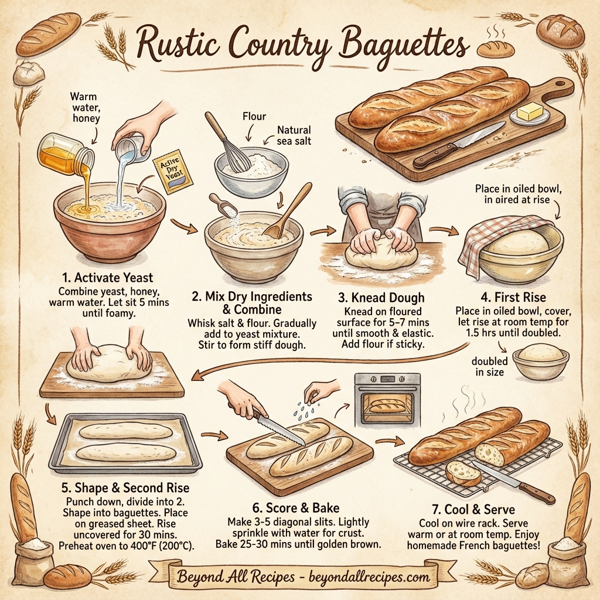
In a large mixing bowl, combine the active dry yeast, organic honey, and warm water. Allow the mixture to sit undisturbed for about 5 minutes, or until it becomes foamy on top, indicating that the yeast is activated.
2
In a separate bowl, whisk together the natural sea salt and the unbleached all-purpose flour until well combined.
3
Incorporate about 2 cups of the flour mixture into the yeast mixture, stirring with a wooden spoon until blended. Gradually add in the remaining flour mixture until a stiff dough forms.
4
Transfer the dough onto a clean, lightly floured work surface. Knead the dough with floured hands for approximately 5-7 minutes, or until it becomes smooth and elastic. If the dough is too sticky, add flour one tablespoon at a time as needed.
5
Place the kneaded dough into a lightly oiled bowl, turning it over to coat all sides. Cover the bowl with plastic wrap or a clean kitchen towel and allow it to rise at room temperature until doubled in size, about 1.5 hours.
6
Preheat your oven to 400°F (200°C).
7
After the dough has risen, gently punch it down to deflate and turn it out onto the floured surface. Divide the dough into two equal portions and shape each into an oblong baguette. Lightly dust the tops with flour and place them on a greased baking sheet. Let them rise uncovered for 30 minutes.
8
Just before baking, use a serrated knife to make 3-5 small diagonal slits on the tops of each baguette. For extra steam and a lovely crust, lightly sprinkle the loaves with water.
9
Bake the baguettes in the preheated oven for 25-30 minutes or until they are golden brown and sound hollow when tapped on the bottom. After baking, transfer them to a wire rack to cool completely.
10
Serve warm or at room temperature. Enjoy the exquisite taste of homemade French baguettes!
Nutrition Information
Frequently Asked Questions
Frequently Asked Questions
What is a Rustic Country Baguette?
It is a traditional artisan-style French bread characterized by a crusty exterior, a soft, airy interior, and a full-bodied flavor enriched with honey and sea salt.
How many baguettes does this recipe make?
This recipe produces two delightful baguettes, perfect for sharing or stockpiling.
What type of yeast is required for this recipe?
The recipe calls for one 1/4 ounce packet of active dry yeast.
Why is organic honey used in the dough?
Organic honey provides natural sweetness and helps to activate the yeast while contributing to the bread's flavor profile.
What is the ideal water temperature for activating the yeast?
The water should be warm, specifically around 110°F (43°C), to properly activate the yeast.
How long should the yeast mixture sit?
The yeast, honey, and warm water mixture should sit undisturbed for about 5 minutes until it becomes foamy.
What kind of flour is recommended?
The recipe specifies using 4 to 4.5 cups of unbleached all-purpose flour.
How do I prepare the dry ingredients?
Whisk together the natural sea salt and the unbleached all-purpose flour in a separate bowl until well combined.
What is the first step in mixing the dough?
Incorporate about 2 cups of the flour mixture into the activated yeast mixture, stirring with a wooden spoon until blended.
How much total flour should I add?
Gradually add the remaining flour mixture to the dough until a stiff dough forms.
How long should I knead the baguette dough?
Knead the dough on a lightly floured surface for approximately 5-7 minutes.
How do I know when the dough is sufficiently kneaded?
The dough is ready when it becomes smooth and elastic to the touch.
What should I do if the dough is too sticky during kneading?
If the dough is too sticky, you can add extra flour one tablespoon at a time as needed.
How should the dough be prepared for the first rise?
Place the kneaded dough into a lightly oiled bowl, turning it once to coat all sides, and cover it with plastic wrap or a clean towel.
How long does the first rise take?
The dough should rise at room temperature for about 1.5 hours, or until it has doubled in size.
At what temperature should the oven be preheated?
Preheat your oven to 400°F (200°C).
What do I do after the first rise is complete?
Gently punch the dough down to deflate it, turn it out onto a floured surface, and divide it into two equal portions.
How are the baguettes shaped?
Shape each portion into an oblong baguette and place them on a greased baking sheet.
Is there a second rise period?
Yes, let the shaped baguettes rise uncovered on the baking sheet for an additional 30 minutes.
What should I do to the tops of the baguettes before baking?
Lightly dust the tops with flour and use a serrated knife to make 3-5 small diagonal slits.
How can I achieve a better crust?
Lightly sprinkle the loaves with water just before putting them in the oven to create extra steam and a lovely crust.
How long do the baguettes need to bake?
Bake them in the preheated oven for 25-30 minutes.
How do I check if the baguettes are done?
The baguettes are done when they are golden brown and sound hollow when tapped on the bottom.
What is the best way to cool the bread?
After baking, transfer the baguettes to a wire rack to cool completely.
Can I serve the baguettes while they are warm?
Yes, you can serve them warm or at room temperature.
What is the shelf life of these baguettes?
These artisan-style baguettes are best consumed fresh on the same day they are baked.
What are some suggested uses for these baguettes?
They are ideal for sandwiches, or simply enjoyed with butter as a side to any meal.
What makes this recipe 'rustic'?
The use of traditional methods, natural ingredients like honey and sea salt, and the resulting coarse, crusty texture define its rustic character.
What is the texture of the interior of the bread?
The interior of the Rustic Country Baguette is soft and airy.
Does this recipe require any special equipment?
You will need standard kitchen items: mixing bowls, a wooden spoon, a greased baking sheet, a serrated knife, and a wire rack.