Rustic Cornmeal Scones
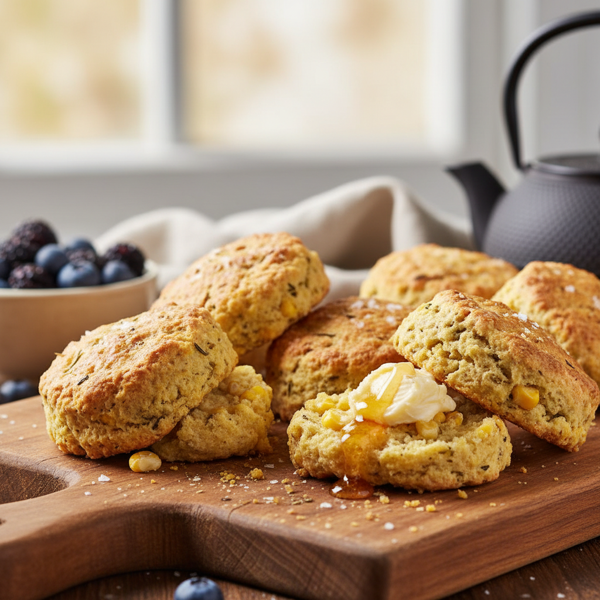
These Rustic Cornmeal Scones are a perfect blend of traditional scone texture with a delightful crunch and flavor from cornmeal. Ideal for breakfast or a cozy afternoon tea, they offer a unique twist with their golden hue and rich buttery taste. Serve them warm with jam, honey, or just a pat of butter, and watch them disappear quickly.
N/A
Servings
N/A
Calories
7
Ingredients
Ingredients
all-purpose flour
2 cups (null)
cornmeal
1/3 cup (null)
baking powder
1 teaspoon (null)
baking soda
1/2 teaspoon (null)
salt
1/2 teaspoon (null)
cold butter or cold margarine
1/2 cup (cut into 8 pieces)
buttermilk
3/4 cup (null)
Instructions
1
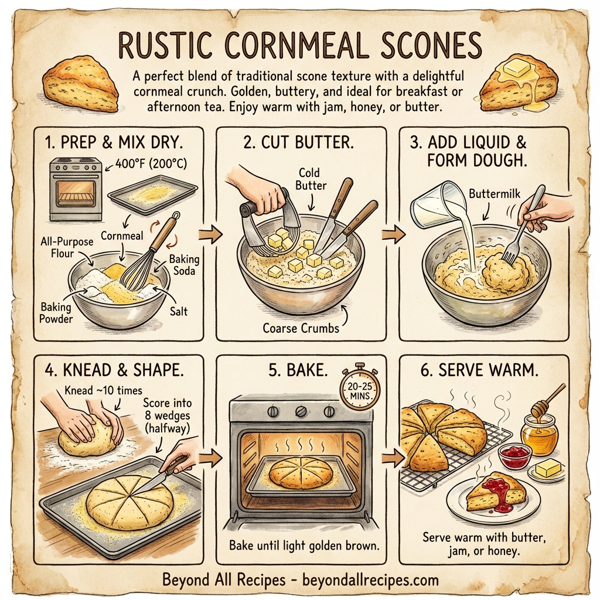
Preheat your oven to 400°F (200°C) and prepare a cookie sheet by dusting it lightly with cornmeal to prevent sticking.
2
In a medium mixing bowl, combine the all-purpose flour, cornmeal, baking powder, baking soda, and salt. Mix these dry ingredients thoroughly.
3
Take your cold butter or margarine and cut it into the dry mixture using a pastry blender or two knives, until it resembles coarse crumbs.
4
Pour in the buttermilk slowly, stirring gently with a fork or spatula until the mixture starts to come together and pulls away from the sides of the bowl to form a dough ball.
5
Transfer the dough onto a lightly floured surface and knead it gently about 10 times to ensure the ingredients are well combined.
6
Shape the dough into a 7-inch round disc and place it on the prepared cookie sheet. Use a knife to score the top into 8 wedges, ensuring you cut about halfway through the scone.
7
Place the cookie sheet in the preheated oven and bake for 20 to 25 minutes, or until the scones have a light golden brown appearance.
8
Once baked, remove the scones from the oven and quickly but carefully separate the wedges with a knife.
9
Serve the scones warm, ideally with accompaniments like butter, jam, or honey.
Nutrition Information
Frequently Asked Questions
Frequently Asked Questions
What are Rustic Cornmeal Scones?
Rustic Cornmeal Scones are a traditional scone variety featuring a golden hue and a unique crunch from cornmeal, making them perfect for breakfast or tea.
What temperature should the oven be set to?
The oven should be preheated to 400°F (200°C) before baking the scones.
How do I prepare the cookie sheet for baking?
Dust the cookie sheet lightly with cornmeal to prevent the scone dough from sticking.
What dry ingredients are required for this recipe?
You will need all-purpose flour, cornmeal, baking powder, baking soda, and salt.
Can I use margarine instead of butter?
Yes, the recipe allows for either cold butter or cold margarine.
How should the butter be prepared before mixing?
The cold butter or margarine should be cut into 8 pieces before being added to the dry ingredients.
What tool should I use to mix the butter into the flour?
You can use a pastry blender or two knives to cut the butter into the dry mixture.
What should the mixture look like after adding the butter?
The mixture should resemble coarse crumbs once the butter is properly incorporated.
What liquid is used to bind the scone dough?
This recipe calls for 3/4 cup of buttermilk to be stirred in gently.
How do I know when the dough is ready to be kneaded?
The dough is ready when it starts to come together and pulls away from the sides of the bowl to form a ball.
How many times should the dough be kneaded?
Gently knead the dough about 10 times on a lightly floured surface.
What size should the dough disc be before baking?
Shape the dough into a round disc that is approximately 7 inches in diameter.
How do I create the individual scone shapes?
Use a knife to score the top of the disc into 8 wedges, cutting about halfway through the dough.
How long do the scones need to bake?
Bake the scones for 20 to 25 minutes in the preheated oven.
What color should the finished scones be?
The scones are done when they have a light golden brown appearance.
When should the wedges be separated?
Carefully separate the wedges with a knife immediately after removing them from the oven.
What are some recommended toppings for these scones?
These scones are best served warm with butter, jam, or honey.
How much all-purpose flour is used?
The recipe requires 2 cups of all-purpose flour.
How much cornmeal goes into the dough?
You will need 1/3 cup of cornmeal for the scone mixture.
What role does the buttermilk play?
Buttermilk provides moisture and a slight tang, helping the dough come together into a ball.
How much baking powder is in the recipe?
The recipe uses 1 teaspoon of baking powder.
Is there baking soda in these scones?
Yes, the recipe includes 1/2 teaspoon of baking soda.
What is the serving size for this recipe?
The recipe creates 8 individual scone wedges.
What texture does the cornmeal provide?
The cornmeal adds a delightful crunch and a rustic, grainy texture to the scone.
Why is it important to use cold butter?
Cold butter ensures a flaky, buttery texture by creating small pockets of steam during baking.
Can I use a fork to mix the buttermilk?
Yes, a fork or a spatula can be used to stir the buttermilk into the dry ingredients gently.
Does the recipe require salt?
Yes, 1/2 teaspoon of salt is included to balance the flavors.
Are these scones sweet?
They have a rich buttery taste and are lightly sweetened by the cornmeal, making them suitable for sweet or savory toppings.
Is the dough sticky?
The dough should form a ball; if it is slightly sticky, use a lightly floured surface for kneading.
How many total ingredients are in this recipe?
There are 7 main ingredients: flour, cornmeal, baking powder, baking soda, salt, butter/margarine, and buttermilk.