Royal Mutton Nihari
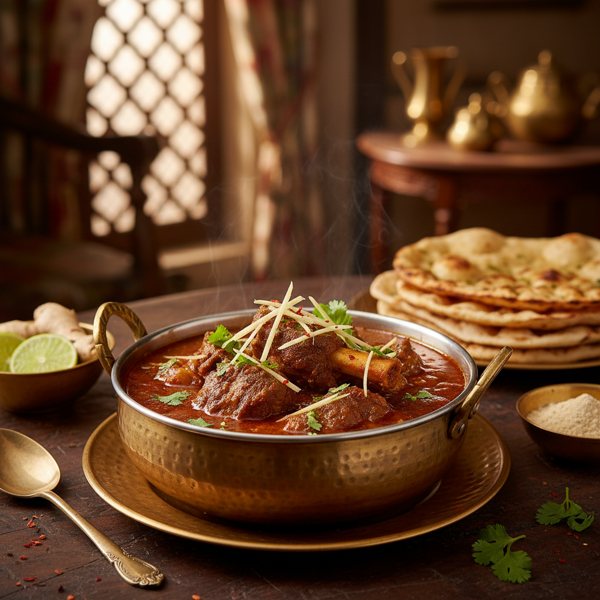
Royal Mutton Nihari is an exquisite and richly flavored stew that epitomizes the grand culinary heritage of Mughal cuisine. This dish features tender mutton, ideally sourced from the shank portion, slow-cooked to perfection with a blend of aromatic spices and a silky smooth gravy thickened with wheat flour. Traditionally cooked overnight and savored by Mughal emperors as a lavish breakfast, this recipe promises to transport you to a world of regal flavors and hearty traditions. The slow cooking process allows the spices to mingle beautifully, creating an unforgettable dining experience that is perfect for special occasions and family gatherings alike. Complete with fresh coriander and tangy lime, this mutton nihari is best served with naan or rice for a truly royal feast.
N/A
Servings
N/A
Calories
13
Ingredients
Ingredients
Mutton (preferably shank portion)
1 kg (cut into 8-10 pieces)
Ghee
4 tablespoons (for cooking)
Onions
2 medium (finely sliced)
Ginger paste
1 teaspoon (for flavor)
Garlic paste
1 teaspoon (for flavor)
Salt
1 teaspoon (or to taste)
Coriander powder
2 teaspoons (for flavor)
Turmeric powder
1/2 teaspoon (for color and health benefits)
Wheat flour
3 tablespoons (for thickening)
Garam masala
2 tablespoons (for flavor)
Fresh ginger
1 inch (cut into thin strips)
Fresh coriander leaves
3 sprigs (for garnish)
Lime juice
1 tablespoon (for brightness)
Instructions
1
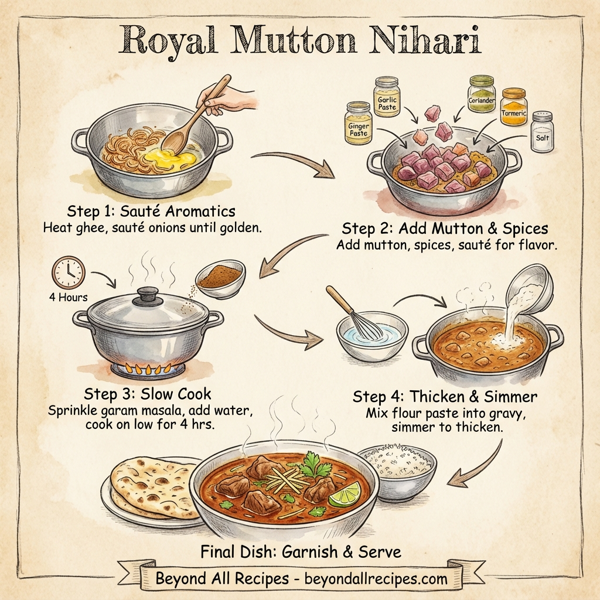
In a deep-bottomed stock pot, heat the ghee (or oil) over medium heat until hot. Add the finely sliced onions and sauté until they turn golden brown and caramelized, about 8-10 minutes.
2
Add the mutton pieces to the pot, ensuring they are well coated with the ghee. Incorporate the ginger paste, garlic paste, coriander powder, turmeric powder, and salt. Mix thoroughly and sauté for an additional 5 minutes to enhance the flavors.
3
Sprinkle the garam masala over the mutton, then pour in 8 cups of water. Stir to combine all ingredients, cover the pot, and reduce the heat to very low. Cook gently for approximately 4 hours, checking occasionally. The meat is done when it can be easily broken apart with a wooden spoon.
4
In a separate bowl, dissolve the wheat flour in half a cup of water, making sure there are no lumps. Once the mutton is tender, slowly mix the flour mixture into the gravy, stirring continuously. Allow it to simmer for an additional 10-15 minutes until the gravy thickens to your desired consistency.
5
Finish by drizzling lime juice over the dish and garnishing with ginger strips and fresh coriander leaves. Serve hot, accompanied by naan or steamed rice for an authentic dining experience.
Nutrition Information
Frequently Asked Questions
Frequently Asked Questions
What is Royal Mutton Nihari?
Royal Mutton Nihari is a rich and flavored Mughal stew featuring tender mutton slow-cooked with aromatic spices and thickened with wheat flour.
Which cut of meat is best for this recipe?
The shank portion of the mutton is ideally sourced and preferred for this traditional recipe.
How long does it take to cook Royal Mutton Nihari?
The mutton should be slow-cooked on very low heat for approximately 4 hours.
What is used to thicken the Nihari gravy?
A mixture of three tablespoons of wheat flour dissolved in water is used as a thickening agent.
Can I use oil instead of ghee?
Yes, you can use oil, though ghee is traditionally used for a richer and more authentic flavor.
How do I prevent lumps when adding the flour?
Dissolve the wheat flour in half a cup of water separately, ensuring there are no lumps, before slowly stirring it into the gravy.
What is the historical significance of Nihari?
Traditionally, Nihari was cooked overnight and enjoyed by Mughal emperors as a lavish breakfast.
How do I know the mutton is properly cooked?
The meat is perfectly cooked when it can be easily broken apart using only a wooden spoon.
What are the primary spices used in this dish?
The key spices include coriander powder, turmeric powder, garam masala, and salt.
What should be served with Royal Mutton Nihari?
This dish is best accompanied by naan or steamed rice for a complete royal feast.
How many onions are needed for this recipe?
Two medium onions, finely sliced, are required for the base of the stew.
What aromatics are used for the mutton marinade/sauté?
One teaspoon each of ginger paste and garlic paste are used to enhance the flavor.
What is the purpose of lime juice in the recipe?
Lime juice is added at the end to provide brightness and a tangy balance to the rich gravy.
How do I garnish the final dish?
The dish is garnished with thin strips of fresh ginger and fresh coriander leaves.
How much mutton is used in this recipe?
This specific recipe calls for 1 kg of mutton, cut into 8-10 pieces.
What type of pot is recommended for cooking?
A deep-bottomed stock pot is recommended to accommodate the meat and the 8 cups of water used for slow cooking.
How long should the onions be sautéed?
Onions should be sautéed for 8-10 minutes until they turn golden brown and caramelized.
When should the garam masala be added?
Garam masala is sprinkled over the mutton after it has been sautéed with the other spices and before adding water.
Is this recipe suitable for special occasions?
Yes, its rich flavor and heritage make it perfect for special occasions and family gatherings.
How much water is required for the stew?
Eight cups of water are added to the pot to allow for the long, slow-cooking process.
What is the purpose of turmeric in this dish?
Turmeric powder is used to provide a vibrant color and various health benefits.
How much ghee is used for cooking?
Four tablespoons of ghee are used to sauté the onions and coat the mutton.
Can I adjust the salt level?
Yes, the recipe suggests one teaspoon of salt, but it can be adjusted to your personal taste.
How long do I simmer the gravy after adding the flour mixture?
Allow the gravy to simmer for an additional 10-15 minutes until it reaches your desired thickness.
What is the role of fresh ginger in the garnish?
Fresh ginger strips provide a sharp, fresh contrast to the slow-cooked flavors of the meat.
How many sprigs of coriander are used?
Three sprigs of fresh coriander leaves are typically used for the garnish.
Should I cook Nihari on high heat?
No, once the water is added, the heat should be reduced to very low to ensure the meat becomes tender.
What flavor profile does coriander powder add?
Coriander powder provides a deep, earthy, and aromatic flavor to the gravy.
Is the mutton sautéed before boiling?
Yes, the mutton is sautéed for about 5 minutes with ginger, garlic, and spices before adding water.
Is this recipe considered gourmet?
Yes, it is tagged as a gourmet and royal dish due to its complex flavor and traditional preparation.