Rosemary Sun-Dried Tomato Artisan Bread
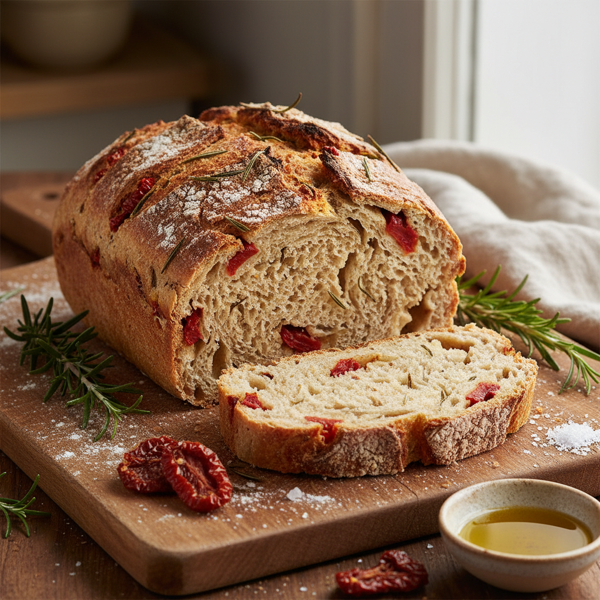
This Rosemary Sun-Dried Tomato Artisan Bread features a beautifully crafted, light-textured loaf imbued with the vibrant flavors of sun-dried tomatoes and fragrant rosemary. Each slice reveals delightful morsels of tangy tomatoes that perfectly complement the herbal notes, offering a taste of the Mediterranean with every bite. Ideal for accompanying your favorite Italian dishes or simply served with olive oil for dipping, this versatile loaf can also be shaped into dinner rolls for special occasions. An ideal choice for bread enthusiasts, this recipe harnesses the flavor and texture of homemade bread without the hassle, thanks to your bread machine.
N/A
Servings
150
Calories
10
Ingredients
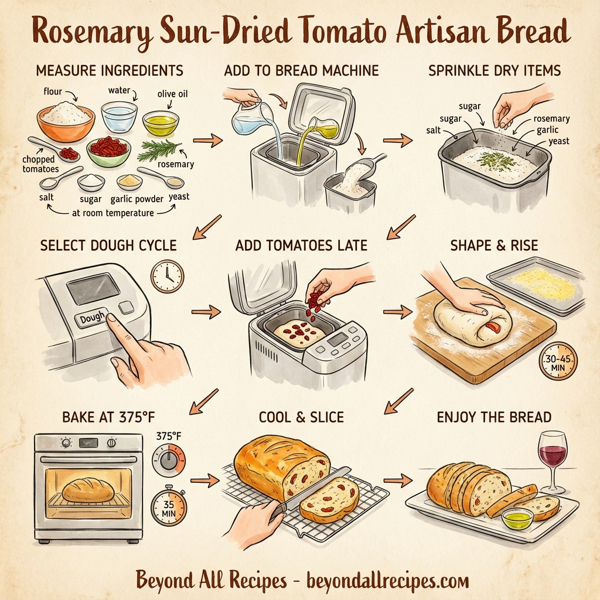
Ingredients
water
1 cup (plus 2 tablespoons, at room temperature)
olive oil
1 1/2 tablespoons (for dough mixture)
bread flour
2 1/4 cups (all-purpose and unbleached)
whole wheat flour
1 cup (for added texture and flavor)
sugar
1 tablespoon (for enhancing the bread's browning)
salt
1 teaspoon (to enhance flavors)
sun-dried tomatoes
3 tablespoons (chopped, dry packed)
fresh rosemary
3 teaspoons (minced, or 1 teaspoon dried rosemary)
garlic powder
1/2 teaspoon
active dry yeast
2 teaspoons (for leavening)
Instructions
1
Begin by measuring out all ingredients accurately, ensuring that the ingredients are at room temperature.
2
In your bread machine, add 1 cup of water, 2 tablespoons of additional water, and 1.5 tablespoons of olive oil, followed by the bread flour and whole wheat flour.
3
Sprinkle the sugar, salt, minced rosemary (or dried rosemary), garlic powder, and active dry yeast evenly over the flour mixture, ensuring not to mix them directly.
4
Select the dough cycle on your bread machine. This will knead and allow the dough to rise appropriately.
5
About 5 minutes before the dough cycle is complete, open the lid and gently add the chopped sun-dried tomatoes. This method allows for recognizable pieces of tomato to remain in your bread.
6
Once the dough cycle is complete, remove the dough from the bread machine and place it onto a lightly floured surface. Shape it into your desired form (loaf or rolls), gently tucking in any tomato pieces that are sticking out to prevent burning during baking.
7
Transfer the shaped dough onto a baking sheet that has been dusted with cornmeal. Lightly spray the top with olive oil and cover it with a clean kitchen towel. Allow it to rise in a warm place until it has doubled in size, typically around 30-45 minutes.
8
Preheat your oven to 375°F (190°C). Once the dough has risen, place it in the preheated oven and bake for approximately 35 minutes for a loaf, or 15 minutes for rolls, until golden brown and sounding hollow when tapped.
9
Remove the bread from the oven and let it cool on a wire rack before slicing to enjoy the perfect texture and flavors.
Nutrition Information
3.75g
Fat
25g
Carbs
4.17g
Protein
1.5g
Fiber
Frequently Asked Questions
Frequently Asked Questions
What is Rosemary Sun-Dried Tomato Artisan Bread?
It is a light-textured loaf featuring the vibrant flavors of sun-dried tomatoes and fragrant rosemary, designed to be prepared with the help of a bread machine.
What are the primary flavors of this bread?
The bread offers a Mediterranean profile with tangy sun-dried tomatoes and herbal notes from fresh or dried rosemary.
Can this recipe be used to make rolls?
Yes, the dough can be shaped into dinner rolls instead of a standard loaf for special occasions.
How many calories are in a serving?
Each serving contains 150 calories.
What type of flour is recommended for this bread?
The recipe uses a combination of 2 1/4 cups of bread flour and 1 cup of whole wheat flour.
Can I use dried rosemary instead of fresh?
Yes, you can substitute 1 teaspoon of dried rosemary for the 3 teaspoons of fresh minced rosemary.
What type of sun-dried tomatoes should I use?
The recipe calls for 3 tablespoons of chopped, dry-packed sun-dried tomatoes.
When should I add the sun-dried tomatoes to the bread machine?
Add the chopped tomatoes about 5 minutes before the dough cycle is complete to ensure recognizable pieces remain.
Why should I tuck in the tomato pieces before baking?
Tucking in any protruding tomato pieces prevents them from burning while the bread is in the oven.
What is the recommended oven temperature?
The bread should be baked in an oven preheated to 375°F (190°C).
How long does a loaf take to bake?
A loaf typically takes approximately 35 minutes to bake until golden brown.
How long do rolls take to bake?
If shaped into rolls, they only require about 15 minutes of baking time.
How do I know when the bread is finished baking?
The bread is done when it is golden brown and sounds hollow when tapped on the bottom.
What temperature should the water be when starting?
The water should be at room temperature to help activate the yeast properly.
Why is cornmeal used on the baking sheet?
Cornmeal is used to dust the baking sheet to prevent sticking and provide a traditional artisan crust texture.
How long is the second rise after shaping the dough?
The shaped dough should rise in a warm place for 30 to 45 minutes until it has doubled in size.
Is there fat in this recipe?
Yes, each serving contains 3.75g of fat, primarily from the olive oil.
What is the protein content of this bread?
This bread contains 4.17g of protein per serving.
Does this recipe use sugar?
Yes, 1 tablespoon of sugar is included to help with the browning of the crust.
What is the purpose of the garlic powder?
Garlic powder is added to enhance the savory Mediterranean flavor profile of the loaf.
How much fiber does this bread provide?
Each serving contains 1.5g of fiber.
What type of yeast is needed?
The recipe requires 2 teaspoons of active dry yeast.
How many grams of carbohydrates are in a serving?
There are 25g of carbohydrates per serving.
Is it necessary to cool the bread on a wire rack?
Yes, cooling on a wire rack ensures the texture sets correctly and prevents the bottom from becoming soggy.
Should the yeast be mixed directly with salt?
No, you should sprinkle ingredients like salt and sugar over the flour, ensuring they do not mix directly with the yeast immediately.
What setting should I use on my bread machine?
You should select the 'dough' cycle to handle the kneading and the initial rise.
What can I serve with this artisan bread?
It is ideal for accompanying Italian dishes or simply served with olive oil for dipping.
Is the bread flour unbleached?
Yes, the recipe suggests using unbleached bread flour.
How many total ingredients are in this recipe?
The recipe contains 10 ingredients in total.
Can I use olive oil to top the bread?
Yes, the recipe recommends lightly spraying the top of the dough with olive oil before the second rise.