Rich Slow-Cooked Beef and Beer Stew
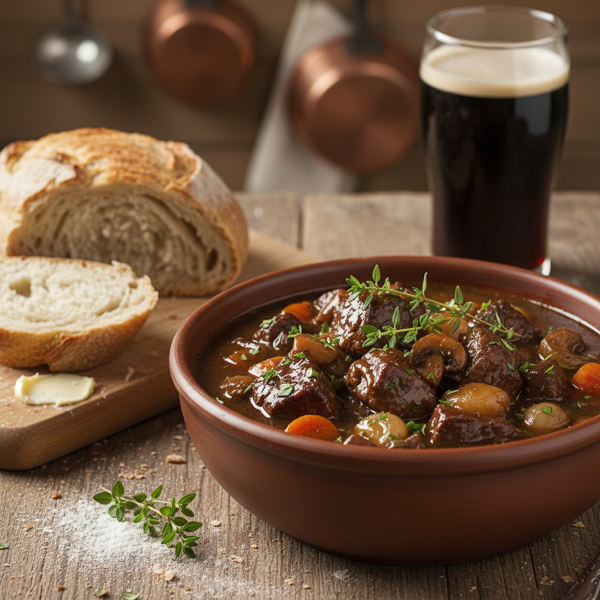
Experience the comforting warmth of this Rich Slow-Cooked Beef and Beer Stew, where tender beef cubes are slowly simmered alongside sweet pearl onions, aromatic garlic, and a blend of spices. The dark beer adds depth and richness, while hints of brown sugar balance the savory flavors. Perfect for chilly evenings, this hearty stew pairs beautifully with buttered rice or egg noodles, making it an ideal choice for a cozy family meal or gatherings. Enjoy the melded flavors the next day for an even more delightful experience.
4
Servings
N/A
Calories
13
Ingredients
Ingredients
Flour
1/4 cup (N/A)
Salt
1/2 teaspoon (N/A)
Black Pepper
1/2 teaspoon (N/A)
Beef Stew Meat
2 lbs (Cut into cubes)
White Pearl Onions
10 (Peeled)
Dark Beer
12 ounces (N/A)
Beef Broth
2 cups (N/A)
Water
2 cups (N/A)
Red Wine Vinegar
2 tablespoons (N/A)
Brown Sugar
1 tablespoon (N/A)
Dried Oregano
1 tablespoon (N/A)
Bay Leaves
2 (N/A)
Garlic
2 cloves (Minced)
Instructions
1
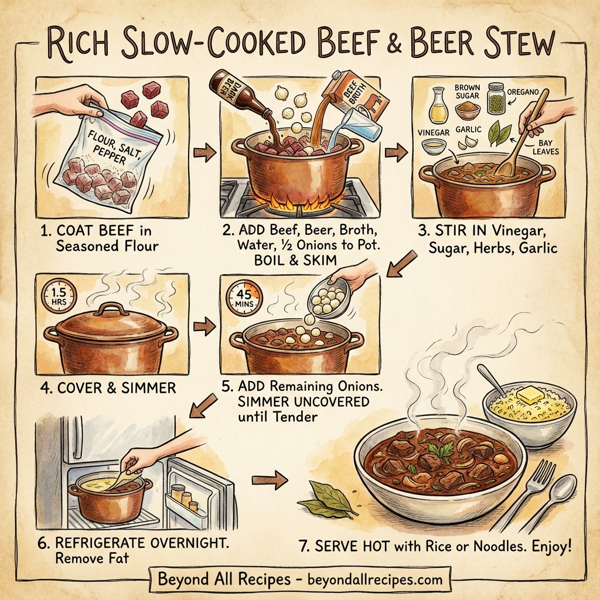
In a resealable plastic bag, combine the flour, salt, and black pepper.
2
Add the beef stew meat to the bag and shake to coat the meat evenly with the flour mixture.
3
In a large stew pot, add the coated beef, half of the peeled pearl onions, the bottle of dark beer, beef broth, and water.
4
Bring the mixture to a boil, skimming off any foam that may rise to the surface.
5
Once boiling, stir in the red wine vinegar, brown sugar, dried oregano, bay leaves, and minced garlic.
6
Cover the pot, reduce the heat, and let it simmer for approximately 1.5 hours.
7
After 1.5 hours, add the remaining pearl onions to the pot and continue to simmer uncovered for another 45 minutes or until the beef is extremely tender and the stew has thickened.
8
For the best flavor, refrigerate the stew overnight and reheat before serving to remove excess fat from the surface.
9
Before serving, remove the bay leaves and serve the stew hot with buttered rice or egg noodles.
Nutrition Information
Frequently Asked Questions
Frequently Asked Questions
What is Rich Slow-Cooked Beef and Beer Stew?
It is a hearty stew featuring tender beef cubes, pearl onions, and a rich sauce made with dark beer and beef broth.
What type of meat is used in this recipe?
The recipe calls for 2 pounds of beef stew meat cut into cubes.
How is the beef prepared before cooking?
The beef cubes are shaken in a plastic bag with a mixture of flour, salt, and black pepper to coat them evenly.
Why is the beef coated in flour?
The flour coating helps to brown the meat and acts as a thickening agent for the stew sauce as it simmers.
What kind of onions are used?
The recipe specifically uses 10 white pearl onions that have been peeled.
What type of beer should I use?
A 12-ounce bottle of dark beer is recommended to provide depth and a rich flavor to the stew.
How much beef broth and water are required?
The recipe requires 2 cups of beef broth and 2 cups of water.
What is the first step of the cooking process in the pot?
Combine the coated beef, half of the onions, beer, broth, and water in a large pot and bring to a boil.
Should I remove anything from the surface while boiling?
Yes, you should skim off any foam that rises to the surface once the mixture begins to boil.
What ingredients are added once the stew reaches a boil?
Stir in red wine vinegar, brown sugar, dried oregano, bay leaves, and minced garlic.
How much garlic is included?
The recipe calls for 2 cloves of minced garlic.
Why is brown sugar added to a savory stew?
Brown sugar is used to balance the savory and bitter notes from the beer and vinegar.
What role does red wine vinegar play?
The vinegar adds acidity which helps tenderize the beef and brightens the overall flavor profile.
How long does the stew simmer initially?
The pot should be covered and allowed to simmer for approximately 1.5 hours.
When do I add the remaining onions?
Add the remaining half of the pearl onions after the initial 1.5-hour simmer.
How long is the second simmering period?
Simmer uncovered for an additional 45 minutes after adding the rest of the onions.
Why is the stew simmered uncovered at the end?
Simmering uncovered allows the liquid to reduce and the stew to thicken properly.
How do I know when the beef is ready?
The beef is ready when it is extremely tender and the stew has reached your desired thickness.
Is it better to serve the stew immediately?
For the best flavor, it is recommended to refrigerate the stew overnight and reheat it the next day.
How can I remove excess fat from the stew?
Refrigerating the stew overnight allows the fat to solidify on the surface, making it easy to remove before reheating.
What should be removed before serving?
The bay leaves should be removed from the pot before the stew is served.
What are the recommended side dishes for this stew?
This stew pairs beautifully with buttered rice or egg noodles.
How many servings does this recipe provide?
This recipe is designed to serve 4 people.
What herbs are used in the recipe?
The recipe uses dried oregano and bay leaves for aromatic flavor.
What is the total simmering time?
The total simmering time is approximately 2 hours and 15 minutes.
Is this a good recipe for cold weather?
Yes, it is described as a perfect winter recipe and a cozy dinner for chilly evenings.
Can I use fresh oregano instead of dried?
While the recipe calls for 1 tablespoon of dried oregano, you can use fresh, though the ratio may need adjustment.
What is the preparation for the pearl onions?
The pearl onions should be peeled before being added to the stew pot.
Can I make this in a slow cooker?
Although the instructions specify a stew pot, the recipe title and tags suggest it is well-suited for slow-cooking methods.
What is the flour to beef ratio for coating?
Use 1/4 cup of flour for every 2 pounds of beef stew meat.