Revitalizing Your Cast Iron Cookware

This method details how to thoroughly clean and rejuvenate your cast iron skillets, lids, and Dutch ovens, breathing new life into vintage cookware. Cleaning cast iron can be a daunting task, especially if your pieces have seen years of use, but with this procedure, you’ll restore their functionality while preserving their historic charm. This technique is suitable for well-maintained cast iron without breaks or cracks. Remember, frequent use contributes to non-stick properties, so make it a habit to keep your cast iron in top condition.
N/A
Servings
100
Calories
2
Ingredients
Ingredients
Crisco shortening
1 (tablespoon)
Mineral oil
1 (tablespoon)
Instructions
1
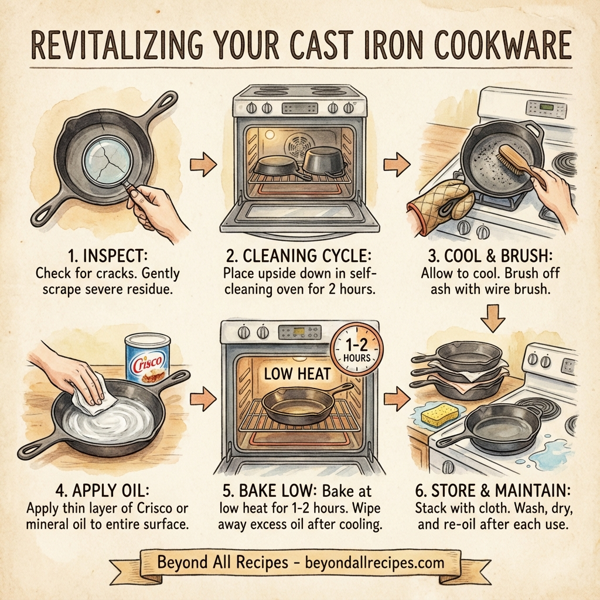
Inspect your cast iron pieces for any visible cracks or breaks. If any are found, consider alternative cleaning methods.
2
For heavily soiled cookware, gently scrape off any severe residue before the cleaning cycle; it’s likely most of this will be removed during the process.
3
Place your cast iron pieces upside down on the middle rack of your self-cleaning oven, ensuring they are evenly spaced.
4
Follow the instructions on your oven for starting the self-cleaning cycle. Don't forget to remove items from the stovetop and storage drawer to prevent any accidents.
5
The self-cleaning cycle typically lasts about two hours and is sufficient to cleanse your cast iron cookware.
6
Once the cycle is complete, allow everything to cool until manageable to touch before removing your cast iron.
7
Ensure the self-cleaning mode has ended, then reset your oven to a low temperature, akin to the warming setting.
8
Brush off any leftover ash, using a wire brush if necessary, to ensure a smooth surface on your cast iron. Dust off any remaining particles.
9
Using a fresh paper towel for each piece, apply a thin layer of Crisco shortening (or mineral oil) over the entire surface. Be sure to apply a slightly thicker coating on the interior surfaces of your cookware.
10
Return your cast iron pieces right-side up in the oven and bake at low heat for 1 to 2 hours, if your schedule permits.
11
Afterward, remove the cookware and allow it to cool on the stovetop.
12
Once cooled to the touch, wipe away any excess Crisco shortening using clean paper towels.
13
For storage, place a clean dishcloth between each piece if stacking, to prevent scratching.
14
For maintenance between uses, wash with mild soap and water, heat on medium-high on the stovetop until fully dry, then wipe the interior with Crisco or mineral oil on a clean paper towel.
Nutrition Information
11g
Fat
0g
Carbs
0g
Protein
0mg
Sodium
Frequently Asked Questions
Frequently Asked Questions
What is the primary goal of this cast iron method?
The goal is to thoroughly clean and rejuvenate cast iron skillets, lids, and Dutch ovens, breathing new life into vintage cookware.
What should I check for before cleaning my cast iron?
You should inspect the pieces for any visible cracks or breaks before starting the process.
Can I use this method if my cast iron is cracked?
No, if cracks or breaks are found, you should consider alternative cleaning methods.
How do I prepare heavily soiled cookware?
Gently scrape off any severe residue before starting the cleaning cycle.
How should the cast iron be positioned in the oven for cleaning?
Place the pieces upside down on the middle rack, ensuring they are evenly spaced.
Which oven setting is used for the cleaning process?
You should use the self-cleaning cycle as instructed by your oven manufacturer.
What safety precautions should I take before starting the oven cycle?
Remove all items from the stovetop and the storage drawer to prevent accidents.
How long does the self-cleaning cycle usually last?
The cycle typically lasts about two hours.
When should I remove the cast iron from the oven?
Allow the oven and the cookware to cool until they are manageable to touch.
What temperature should the oven be set to after the cleaning cycle?
Reset the oven to a low temperature, similar to a warming setting.
How do I handle ash left on the cookware?
Brush off leftover ash using a wire brush if necessary and dust off any remaining particles.
What materials can be used to oil the cast iron?
You can use Crisco shortening or mineral oil.
How should the oil or shortening be applied?
Apply a thin layer over the entire surface using a fresh paper towel for each piece.
Should I apply more oil to specific areas?
Yes, apply a slightly thicker coating on the interior surfaces of the cookware.
What is the orientation of the pans during the low-heat bake?
Place the cast iron pieces right-side up in the oven.
How long should the oiled cookware bake?
Bake at low heat for 1 to 2 hours if your schedule permits.
Where should the cookware cool after seasoning?
Remove the cookware from the oven and allow it to cool on the stovetop.
What do I do if there is excess shortening after cooling?
Once cooled, wipe away any excess Crisco shortening using clean paper towels.
How should cast iron be stored to prevent damage?
Place a clean dishcloth between each piece if stacking them to prevent scratching.
How should I clean the cookware between regular uses?
Wash with mild soap and water, then heat on medium-high on the stovetop until fully dry.
What is the benefit of frequent use?
Frequent use contributes to the non-stick properties of the cast iron.
Is soap safe for maintained cast iron?
Yes, the instructions suggest using mild soap and water for maintenance between uses.
How do I ensure the pan is completely dry after washing?
Heat it on medium-high on the stovetop until all moisture has evaporated.
What is the final step of routine maintenance?
Wipe the interior with Crisco or mineral oil on a clean paper towel after drying.
Is this method suitable for vintage cookware?
Yes, it is designed to restore functionality while preserving historic charm.
Does the self-cleaning cycle remove all residue?
It is sufficient to cleanse the cookware and remove most severe residue.
Can I use a wire brush?
Yes, a wire brush is recommended for removing stubborn ash to ensure a smooth surface.
What amount of Crisco is needed?
The recipe specifies 1 tablespoon of Crisco shortening.
What amount of mineral oil is suggested?
The recipe specifies 1 tablespoon of mineral oil.
What happens if I don't remove items from the storage drawer?
The instructions warn to remove them to prevent any accidents during the high-heat cycle.