Refreshing Soba Noodle Bowl with Dashi Broth

Delight in the delicate and nutty flavors of fresh soba noodles, a beloved staple of Japanese cuisine. This dish showcases perfectly cooked buckwheat noodles, paired with a wholesome dashi broth enhanced with soy sauce, mirin, and a hint of sweetness. Accompanied by vibrant garnishes like grated ginger, horseradish, and finely chopped green onions, this soba noodle bowl is not only refreshing but also versatile enough to serve alongside sushi such as California rolls. Enjoy a lovely meal that offers a balance of taste, texture, and nutrition.
N/A
Servings
N/A
Calories
11
Ingredients
Ingredients
Soba noodles (buckwheat noodles)
10 ounces (Dry)
Dashi
3 cups (Homemade or store-bought)
Dark soy sauce
3/4 cup (Liquid)
Mirin
1/3 cup (Liquid)
Sugar
2 teaspoons (Granulated)
Dried bonito flakes
2 ounces (Tied in cheesecloth)
Toasted nori
3 sheets (Cut into thin strips)
Grated fresh ginger
1-2 tablespoons (Fresh)
Grated horseradish
1-2 tablespoons (Fresh)
Finely chopped green onion
1/2 cup (Fresh)
Finely grated daikon radish
1/2 cup (Fresh)
Instructions
1
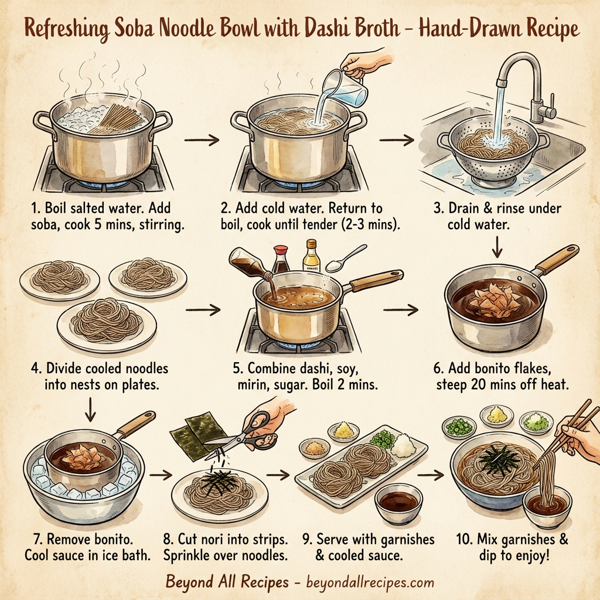
1. In a large pot, bring salted water to a rolling boil. Add the soba noodles and cook them for about 5 minutes, stirring occasionally.
2
2. After 5 minutes, add a small amount of cold water to the pot to halt the cooking process. Allow the noodles to return to a boil and continue cooking until they are tender, which should take an additional 2-3 minutes.
3
3. Once cooked, drain the noodles in a colander and rinse them under cold water to stop further cooking and to cool them down.
4
4. Divide the cooled soba noodles evenly among serving plates, creating a nest-like presentation.
5
5. In a separate pot, combine the dashi, dark soy sauce, mirin, and sugar, and bring to a vigorous boil. Cook for 2 minutes to allow the flavors to meld.
6
6. Carefully add the bundle of bonito flakes to the sauce, then remove the pot from the heat. Set aside and let the bonito steep in the sauce for about 20 minutes for a rich flavor infusion.
7
7. Once steeping is complete, remove the bonito flake bundle and cool the sauce by placing the pot in a bowl of ice or in the refrigerator.
8
8. Prepare the garnishes by cutting the toasted nori sheets into thin strips. Once the sauce is cooled, sprinkle the nori strips over the noodles.
9
9. Serve the soba noodles with small mounds of grated ginger, horseradish, chopped green onion, and grated daikon radish artfully arranged on the side, along with individual bowls of the cooled dashi sauce.
10
10. To enjoy, allow diners to mix in their preferred garnishes into the noodles at the table and then dip each bite into the flavorful dashi sauce.
Nutrition Information
Frequently Asked Questions
Frequently Asked Questions
What is a Refreshing Soba Noodle Bowl with Dashi Broth?
It is a traditional Japanese dish featuring buckwheat noodles served with a chilled dashi-based dipping sauce and various aromatic garnishes.
How long does it take to cook the soba noodles?
The noodles should be boiled for approximately 5 minutes, followed by an additional 2 to 3 minutes after adding cold water to the pot.
Why is cold water added to the boiling soba noodles?
Adding cold water halts the initial cooking process and helps the noodles achieve a perfect tender texture upon returning to a boil.
What is dashi made of in this recipe?
The sauce utilizes a combination of dashi, dark soy sauce, mirin, sugar, and dried bonito flakes.
How should the soba noodles be handled after boiling?
They should be drained in a colander and rinsed under cold water to stop the cooking and cool them down.
What is the recommended presentation for the noodles?
The cooled soba noodles should be divided onto serving plates and arranged in a nest-like presentation.
How long should the dried bonito flakes steep in the sauce?
The bonito flakes should steep in the hot sauce for about 20 minutes to ensure a rich flavor infusion.
How do you prepare the bonito flakes for the broth?
The dried bonito flakes should be tied in a cheesecloth bundle before being added to the sauce.
What are the primary garnishes for this noodle bowl?
Garnishes include toasted nori strips, grated fresh ginger, grated horseradish, chopped green onions, and grated daikon radish.
Is this recipe suitable for meal prep?
Yes, the recipe is tagged for meal prep as components can be prepared in advance and served chilled.
Can I use store-bought dashi?
Yes, the recipe allows for either homemade or store-bought dashi.
How do you cool the dashi sauce quickly?
The sauce can be cooled by placing the pot in a bowl of ice or by putting it in the refrigerator.
Is this dish served hot or cold?
This soba noodle bowl is specifically designed to be served refreshing and chilled.
What type of soy sauce is used in the broth?
The recipe calls for 3/4 cup of dark soy sauce for a deeper flavor profile.
How should the nori be prepared?
The toasted nori sheets should be cut into very thin strips and sprinkled over the noodles.
What role does mirin play in the sauce?
Mirin provides a subtle sweetness and depth to the dashi-based dipping sauce.
Is this recipe considered healthy?
Yes, buckwheat soba noodles are nutritious and the recipe is tagged as healthy.
What can I serve with this soba noodle bowl?
It is versatile enough to be served alongside sushi, such as California rolls.
How do diners eat this dish?
Diners mix their preferred garnishes into the noodles at the table and then dip each bite into the flavorful dashi sauce.
Is this recipe vegan?
While tagged as vegan, the recipe includes dried bonito flakes (fish); for a strict vegan version, one should use a vegan dashi and omit the bonito.
What is the purpose of the sugar in the broth?
A small amount of granulated sugar is used to provide a hint of sweetness to balance the salty soy sauce.
What is the texture of the soba noodles?
They are described as having a delicate and nutty flavor with a tender, wholesome texture.
How much soba is needed for this recipe?
The recipe requires 10 ounces of dry buckwheat soba noodles.
How much dashi is required for the sauce?
The recipe calls for 3 cups of dashi.
What kind of radish is used?
Finely grated daikon radish is used as a side garnish for the noodles.
How is the ginger prepared?
The fresh ginger should be finely grated into small mounds for serving.
What is the role of horseradish in this dish?
Grated horseradish adds a sharp, pungent kick that complements the cold noodles.
How long do you boil the sauce?
The sauce components should be brought to a vigorous boil and cooked for 2 minutes before steeping.
Are the noodles salted?
Yes, the noodles should be cooked in a large pot of salted water.
Can I use fresh horseradish?
Yes, the recipe specifically recommends using 1-2 tablespoons of fresh grated horseradish.