Refreshing Home-Brewed Kombucha
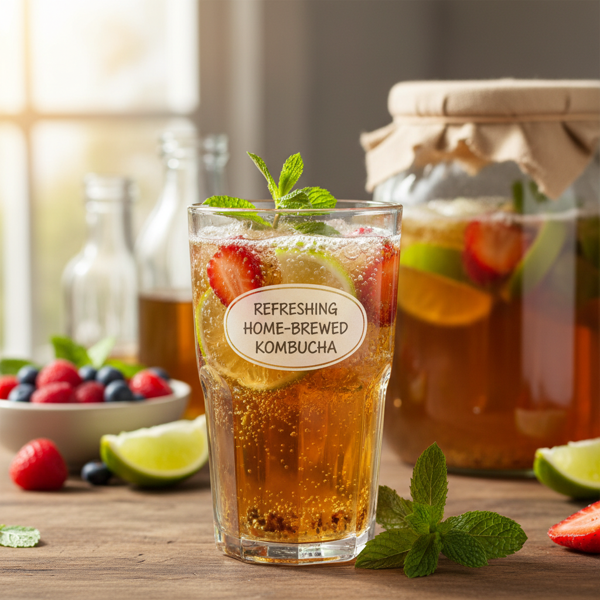
Crafting your own kombucha at home is not only simple but also an incredibly rewarding experience. This fizzy, tangy beverage is fully customizable to your taste preferences, allowing for endless variations with different flavors and sweetness levels. With this recipe, you'll save money while enjoying the health benefits of probiotics and nutrients packed in each effervescent sip. Embrace the art of fermentation and impress your friends with your very own handcrafted kombucha!
N/A
Servings
N/A
Calories
8
Ingredients
Ingredients
White vinegar
1/2 cup (for sanitizing equipment)
Filtered water
14 cups (for brewing tea)
Unbleached cane sugar
1 cup (to sweeten the tea)
Black tea bags
8 (for flavoring the brew)
Plain kombucha
2 cups (scoby starter)
Kombucha SCOBY
1 (for fermentation)
Additional sugar
as desired (for sweetening before bottling)
Unsweetened fruit juice (organic)
2-3 cups (for flavoring, if desired)
Instructions
1
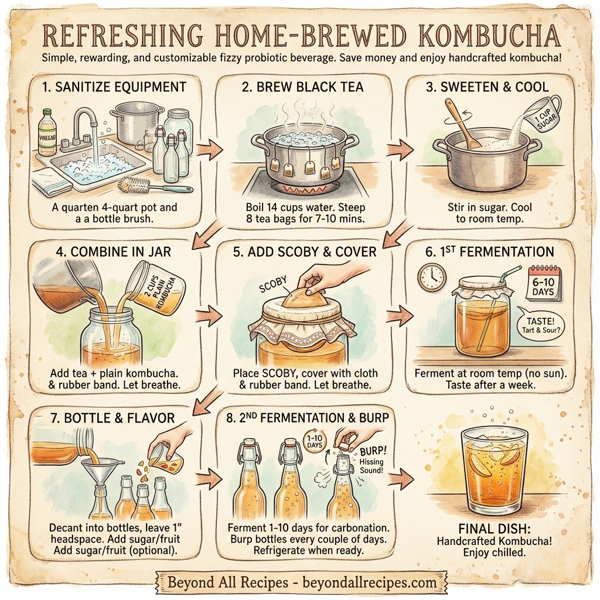
Start by sanitizing your equipment: Wash the pot, gallon jar, and swing-top bottles thoroughly with hot, soapy water, then wipe them down with plain white vinegar. Let the vinegar sit for a few minutes before rinsing with hot water. Allow everything to dry or dry with a clean towel.
2
In a 4-quart uncoated or stainless steel pot, bring 14 cups of filtered water to a boil on the stovetop. Once boiling, remove from heat and add the 8 black tea bags. Allow the tea to steep for 7 to 10 minutes before removing the teabags.
3
While the tea is still warm, stir in 1 cup of unbleached cane sugar until completely dissolved. Let the sweetened tea cool to room temperature.
4
Pour the cooled tea into the sanitized 1-gallon glass jar. Add 2 cups of plain kombucha to the jar and stir gently with a clean metal spoon to combine.
5
Carefully place the SCOBY in the jar, then cover the mouth of the jar with a tightly woven cloth and secure it with a large rubber band. This allows the brew to breathe while keeping out contaminants.
6
Allow the kombucha to ferment at room temperature, away from direct sunlight, for 6 to 10 days. After about a week, taste the kombucha using a straw to gauge its flavor. The longer you ferment, the more tart and sour it will become to suit your palate.
7
Once the desired taste is reached, use a small funnel to decant the kombucha into sanitized swing-top bottles, leaving around 1 inch of headspace. If you prefer sweeter kombucha, add additional sugar or fruit juice (up to ¼ cup per bottle) before topping it off with kombucha.
8
Seal the bottles and let them ferment at room temperature for an additional 1 to 10 days to develop carbonation. Carbonation typically occurs within 1 to 4 days.
9
Remember to burp the bottles every couple of days by gently loosening the caps to release any built-up pressure. This hissing sound indicates that the kombucha is bubbling up nicely! Once ready, transfer the bottles to the refrigerator to halt fermentation and carbonation.
Nutrition Information
Frequently Asked Questions
Frequently Asked Questions
What is Refreshing Home-Brewed Kombucha?
It is a fizzy, tangy beverage made from fermented tea that is rich in probiotics and can be customized with various flavors.
Is it difficult to make kombucha at home?
No, crafting your own kombucha at home is described as a simple and incredibly rewarding experience.
How do I sanitize the brewing equipment?
Wash your tools with hot, soapy water, then wipe them down with plain white vinegar and let it sit before rinsing with hot water.
What type of vinegar should be used for sanitizing?
Plain white vinegar is used to wipe down equipment like the pot, gallon jar, and bottles.
How much water is needed for this recipe?
The recipe requires 14 cups of filtered water.
What type of pot is recommended for boiling water?
A 4-quart uncoated or stainless steel pot should be used.
Which tea is best for brewing kombucha in this recipe?
The recipe specifies using 8 black tea bags for flavoring the brew.
How long should the black tea bags steep?
The tea bags should steep in the boiling water for 7 to 10 minutes.
What kind of sugar is used in the tea mixture?
One cup of unbleached cane sugar is stirred into the warm tea until dissolved.
Can I add the SCOBY to the tea while it is hot?
No, the sweetened tea must cool to room temperature before adding the SCOBY and starter kombucha.
What is the purpose of the 2 cups of plain kombucha?
The plain kombucha serves as a 'scoby starter' to begin the fermentation process.
What size jar is needed for the first fermentation?
A sanitized 1-gallon glass jar is used for the primary fermentation.
How do I cover the fermentation jar?
Cover the mouth of the jar with a tightly woven cloth and secure it with a large rubber band.
Why shouldn't I use a solid lid during fermentation?
A cloth cover allows the brew to breathe while keeping out contaminants.
Where should the kombucha be stored during fermentation?
It should be kept at room temperature and away from direct sunlight.
How long is the initial fermentation period?
The kombucha should ferment for 6 to 10 days.
How can I tell if the kombucha is finished fermenting?
Taste the liquid using a straw; the longer it ferments, the more tart and sour it will become.
What kind of bottles should I use for bottling?
Sanitized swing-top bottles are used for decanting the kombucha.
How much headspace should be left in the bottles?
Leave approximately 1 inch of headspace at the top of the bottles.
Can I add fruit juice to the bottles?
Yes, you can add up to 1/4 cup of unsweetened organic fruit juice per bottle for flavoring.
How long does the second fermentation for carbonation take?
It takes an additional 1 to 10 days, though carbonation typically occurs within 1 to 4 days.
What does it mean to 'burp' the bottles?
Gently loosening the caps every couple of days to release built-up pressure.
How do I know if the kombucha is carbonating?
You will hear a hissing sound when burping the bottles, indicating it is bubbling nicely.
When should the bottles be moved to the refrigerator?
Once the desired carbonation level is reached, transfer the bottles to the fridge.
Why is the kombucha placed in the refrigerator?
Refrigeration halts the fermentation and carbonation processes.
What are the health benefits of home-brewed kombucha?
It is packed with probiotics and various nutrients.
What is a SCOBY?
A SCOBY is the culture used for fermentation; it is added to the tea to turn it into kombucha.
Can I use extra sugar when bottling?
Yes, if you prefer a sweeter beverage, you can add additional sugar before sealing the bottles.
Is home-brewed kombucha cheaper than store-bought?
Yes, brewing it yourself helps you save money compared to purchasing individual bottles at the store.
How many ingredients are in this recipe?
There are 8 ingredients total, including optional items for flavoring and sweetening.