Ragu di Anatra Veneziana (Venetian Duck Ragu)
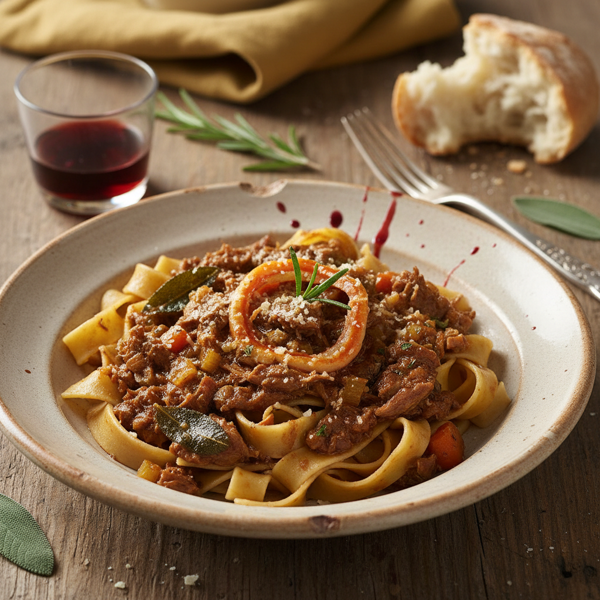
Experience the rich culinary tradition of northern Italy with this Venetian Duck Ragu, featuring tender duck legs slowly simmered in a fragrant sauce of aromatic herbs and savory vegetables. Unlike tomato-heavy ragus, this dish emphasizes the natural depth of flavor derived from the duck, complemented by the earthy notes of sage and the acidity of red wine. Perfect for special occasions or cozy family dinners, this ragu pairs beautifully with fresh pasta, creating a comforting one-dish meal designed to warm your soul. Best of all, it can be made in advance and frozen for a convenient, gourmet meal later on.
6
Servings
N/A
Calories
15
Ingredients

Ingredients
Extra-virgin olive oil
1 tablespoon (none)
Duck legs and thighs
4 (skin on, bone in)
Kosher salt
to taste (none)
Freshly ground black pepper
to taste (none)
Celery ribs
2 medium (finely chopped)
Garlic cloves
2 medium (smashed and peeled (leave whole))
Yellow onion
1 small (minced)
Carrot
1 medium (minced)
Fresh sage
1 tablespoon (chopped)
Bay leaf
1 (none)
Dry Italian red wine
1 cup (Valpolicella recommended)
Diced tomatoes
28 ounces (canned)
Low sodium chicken broth
1 cup (divided)
Fresh fettuccine or spaghetti
1 pound (none)
Parmigiano-Reggiano cheese
to taste (freshly grated (optional))
Instructions
1
In a 6-quart Dutch oven or heavy-duty pot, heat the olive oil over medium-high heat.
2
Season both sides of the duck legs and thighs with kosher salt and freshly ground black pepper. Place them in the pot, skin side down, and sear until the skin is browned and crisp, approximately 7 minutes.
3
Using tongs, turn the legs over and sear the other side for about 2-3 minutes.
4
Transfer the seared duck to a deep platter. Pour off all but 1 tablespoon of the rendered fat and either discard it or save it for another use.
5
Reduce the heat to medium-low. Add the chopped celery, whole garlic cloves, minced onion, minced carrot, chopped sage, and bay leaf to the pot. Cook the vegetables, stirring frequently, until softened, about 7-8 minutes.
6
Pour in the red wine and increase the heat to high. Allow the mixture to simmer vigorously for 2 minutes, then reduce the heat back to medium.
7
Stir in the canned diced tomatoes along with their juice and 1/2 cup of the chicken broth. Return the duck to the pot and bring the mixture to a boil.
8
Lower the heat to maintain a gentle simmer and cover the pot. Allow the ragu to simmer for 1.5 to 2 hours, or until the duck meat is fork-tender.
9
Once cooked, remove the duck from the pot and allow it to cool until it can be handled comfortably.
10
Skim off the excess fat from the top of the sauce using a large spoon. If the sauce appears too thin, continue to simmer until it thickens to a desirable consistency.
11
Discard the duck skin and shred the meat with forks. Return the shredded duck to the sauce, adding the remaining 1/2 cup of chicken broth.
12
Let the ragu simmer gently for another 15 minutes. Discard the garlic cloves and bay leaf. Taste the sauce and adjust seasoning with additional salt and pepper if needed.
13
While the sauce is simmering, bring a large pot of well-salted water to a boil. Add the fresh pasta and cook until al dente.
14
Before draining the pasta, reserve about 1 cup of the cooking water. Drain the pasta and return it to the pot. Toss the pasta with some of the ragu, adding a bit of reserved cooking water as needed to prevent drying.
15
Serve the pasta on plates, topped with more ragu and garnished with freshly grated Parmigiano-Reggiano cheese, if desired.
Nutrition Information
Frequently Asked Questions
Frequently Asked Questions
What is Venetian Duck Ragu?
Venetian Duck Ragu is a rich, slow-cooked Italian sauce from northern Italy featuring tender duck meat, aromatic herbs like sage, and a red wine base rather than a heavy tomato sauce.
Which parts of the duck are used in this recipe?
The recipe uses 4 skin-on, bone-in duck legs and thighs to provide maximum flavor and tenderness.
How long does the duck ragu need to simmer?
The ragu should simmer for 1.5 to 2 hours, or until the duck meat is fork-tender and ready to be shredded.
What type of red wine is best for Ragu di Anatra?
A dry Italian red wine is recommended, specifically Valpolicella, to complement the earthy notes of the duck and sage.
What pasta pairs best with this Venetian ragu?
Fresh pasta like fettuccine or spaghetti is ideal for soaking up the savory sauce.
Can this duck ragu be made in advance?
Yes, this dish can be made in advance and even frozen, making it a convenient option for a gourmet meal later on.
Should I leave the duck skin in the sauce?
No, after the duck is cooked and removed from the pot, you should discard the skin before shredding the meat.
How do I thicken the ragu sauce if it is too thin?
If the sauce appears too thin after skimming the fat, continue to simmer it until it reaches your desired consistency.
How many servings does this recipe provide?
This recipe is designed to serve 6 people.
What aromatics and vegetables are used in the soffritto?
The vegetable base consists of finely chopped celery, minced onion, minced carrot, whole smashed garlic, and fresh sage.
How do I handle the duck fat during cooking?
After searing the duck, pour off all but one tablespoon of the rendered fat. Later, skim any excess fat from the surface of the finished sauce.
What herbs are essential for this recipe?
Fresh sage and a bay leaf are the primary herbs used to give the ragu its traditional Venetian flavor profile.
Do I need to mince the garlic?
No, the garlic cloves should be smashed and peeled but left whole so they can be easily discarded before serving.
Why is chicken broth added in two parts?
The first half cup is used for the long simmer, and the remaining half cup is added with the shredded meat to ensure the final sauce is moist and flavorful.
How long should I sear the duck legs?
Sear the duck skin-side down for about 7 minutes until browned and crisp, then flip and sear the other side for 2-3 minutes.
Is this a tomato-heavy sauce?
No, unlike many other ragus, this version uses only one 28-ounce can of diced tomatoes to allow the natural flavor of the duck to shine.
What should I do with the pasta cooking water?
Reserve about 1 cup of the salted cooking water to toss with the pasta and ragu; this helps prevent the dish from drying out.
Can I use dried pasta instead of fresh?
Yes, while fresh fettuccine is recommended, high-quality dried spaghetti or fettuccine will also work well.
What kind of cheese is recommended for garnish?
Freshly grated Parmigiano-Reggiano is the traditional choice for topping this Venetian dish.
How do I shred the duck meat?
Once the duck has cooled enough to handle, use two forks to pull the meat away from the bones and shred it into bite-sized pieces.
What temperature should the stove be during the long simmer?
The stove should be set to a low heat to maintain a gentle simmer while the pot is covered.
Is the duck seasoned before cooking?
Yes, both sides of the duck legs and thighs should be seasoned with kosher salt and freshly ground black pepper before searing.
What size pot is recommended?
A 6-quart Dutch oven or a similar heavy-duty pot is best for this recipe.
How long do the vegetables need to cook initially?
The celery, garlic, onion, carrot, and sage should be sautéed for 7-8 minutes until they have softened.
When should I remove the bay leaf?
The bay leaf, along with the whole garlic cloves, should be discarded after the final 15-minute simmer with the shredded meat.
Is this considered a one-dish meal?
Yes, since it combines protein, vegetables, and pasta into one hearty serving, it is an excellent one-dish comfort meal.
Can I use regular olive oil?
The recipe specifies extra-virgin olive oil for its superior flavor, though regular olive oil can be used for searing if necessary.
What makes this 'Venetian' style?
Its 'Venetian' style is defined by the use of duck (a common protein in the region), the inclusion of sage, and a focus on wine and meat depth over heavy tomato usage.
How do I prepare the vegetables?
The celery should be finely chopped, the onion and carrot minced, and the garlic smashed and peeled.
Should the duck be bone-in when served?
No, the bones should be removed and discarded when you shred the meat before returning it to the sauce.