Quick Rise Baking Substitute

This Quick Rise Baking Substitute is a handy solution for those moments when you find yourself without yeast on hand. Perfect for the occasional baker, this easy mix can turn your flat baking efforts into delightful treats without the hassle of waiting for dough to rise. Combining baking soda with the tanginess of lemon juice not only activates the leavening reaction needed for a light texture but also infuses a subtle brightness into your baked goods. Ideal for quick breads, pancakes, and more, this substitute ensures you can achieve a delicious result, even without traditional yeast.
1
Servings
N/A
Calories
2
Ingredients
Ingredients
baking soda
1 teaspoon (none)
lemon juice
1 teaspoon (freshly squeezed)
Instructions
1
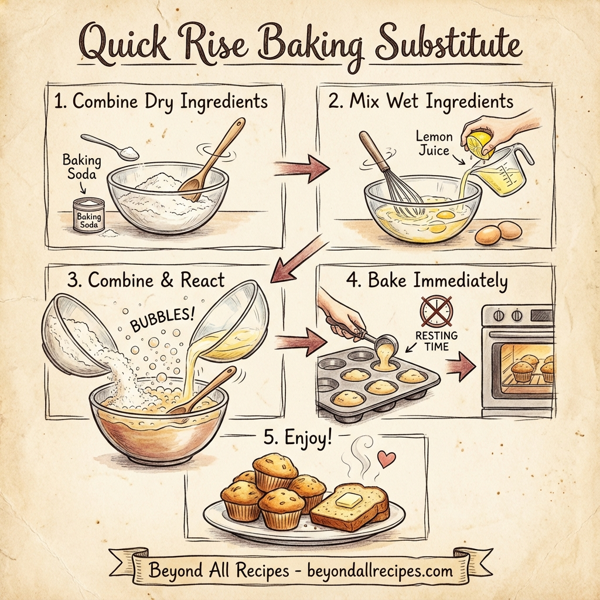
In a small bowl, combine the baking soda with the dry ingredients of your recipe, ensuring it is evenly distributed.
2
In a separate bowl, measure out the lemon juice and combine it with the wet ingredients of your recipe.
3
When you are ready to mix your batter or dough, combine the dry and wet mixtures together. As you stir, the baking soda will react with the lemon juice, creating bubbles that will help your baked goods rise.
4
Proceed with the rest of your recipe as directed. There’s no need to let the mixture rise before baking, as it will not require resting time.
5
Enjoy your freshly baked goods!
Nutrition Information
Frequently Asked Questions
Frequently Asked Questions
What is the Quick Rise Baking Substitute?
It is a simple leavening alternative made from baking soda and lemon juice, designed for moments when you do not have yeast on hand.
How many ingredients are required for this substitute?
There are only two ingredients: 1 teaspoon of baking soda and 1 teaspoon of freshly squeezed lemon juice.
How do I incorporate the baking soda into my recipe?
You should combine the baking soda with the dry ingredients of your recipe to ensure it is evenly distributed.
How should I prepare the lemon juice?
The lemon juice should be freshly squeezed and mixed with the wet ingredients of your recipe before combining with the dry mixture.
Does this substitute require any resting or rising time?
No, there is no need to let the mixture rise; you can proceed with baking immediately after mixing.
What causes the dough to rise using this substitute?
The baking soda reacts with the acid in the lemon juice to create bubbles, which provides the necessary lift for baked goods.
Is this recipe suitable for low protein diets?
Yes, the recipe category is listed as Low Protein.
What types of baked goods are best for this substitute?
It is ideal for quick breads, pancakes, and other recipes that typically require a light texture.
Does the lemon juice affect the flavor of the final product?
It infuses a subtle brightness into your baked goods, enhancing the overall flavor profile.
How many servings does this substitute yield?
This recipe is intended for 1 serving or application within a larger recipe.
Can I use this for traditional yeast breads?
While it works for quick breads, it may result in a different texture than traditional yeast fermentation in standard bread loaves.
What is the preparation required for the baking soda?
There is no special preparation needed; just ensure it is measured accurately at 1 teaspoon.
Why is it important to mix soda with dry ingredients and juice with wet?
Mixing them separately prevents the reaction from occurring too early, ensuring the maximum rise happens inside the oven.
Is this substitute fat-free?
Yes, based on the ingredient list, this substitute contains no fat.
Does this recipe contain any sugar?
No, this leavening mixture does not contain any sugar.
Is there any cholesterol in this baking substitute?
No, this mixture is cholesterol-free.
Can I use this for pizza dough?
It can be used for quick-style pizza dough, though it will not have the same fermented flavor as yeast-based dough.
Is this substitute easy to make?
Yes, it is specifically described as a handy and easy solution for occasional bakers.
What is the serving size for this substitute?
The serving size is not specified as a weight, but the total amount is intended to replace a standard leavening portion.
Does this substitute contain fiber?
No, there is no fiber content in baking soda or lemon juice.
Are there any calories in this mixture?
The caloric content for this small amount of leavening is negligible and listed as null.
Can I use bottled lemon juice instead of fresh?
Freshly squeezed is recommended for the best chemical reaction, but bottled juice can be used if necessary.
What tags are associated with this recipe?
Associated tags include baking substitute, yeast alternative, quick rise, and leavening agent.
What is the protein content?
The protein content is listed as null, making it suitable for low protein needs.
How fast is the rise reaction?
The reaction is immediate upon mixing the wet and dry ingredients together.
Do I need to change the oven temperature?
No, you should proceed with the rest of your original recipe as directed.
Is this substitute vegan?
Yes, both baking soda and lemon juice are plant-based and mineral-based, making it vegan-friendly.
Can this be used for muffins?
Yes, this is an excellent substitute for leavening in muffin recipes.
What happens if I don't bake it immediately?
The bubbles created by the reaction may escape, potentially resulting in a denser final product.
Why should I use this instead of buying yeast?
It is a convenient alternative if you are out of yeast or want to avoid the lengthy rising times required by traditional yeast.