Quick & Flavorful Sourdough Starter
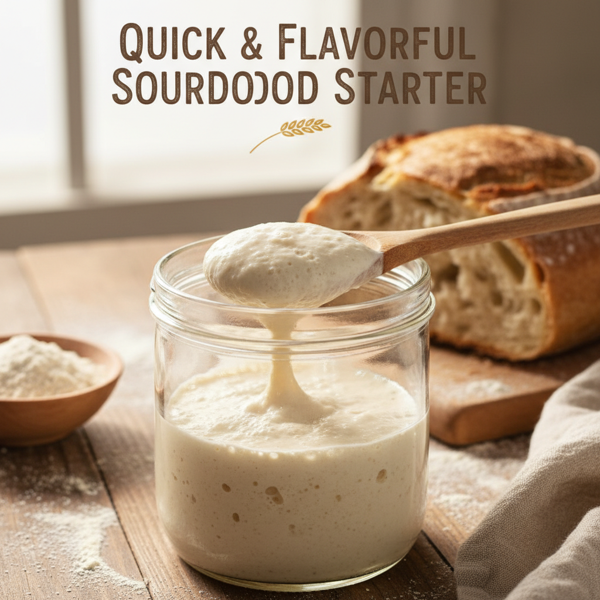
This Quick & Flavorful Sourdough Starter is an approachable and efficient way to create a rich, tangy sourdough culture without the fuss of traditional methods. Merging the best attributes of both classic sourdough and yeasted bread, this starter maintains the desired sour flavor while ensuring a light, airy texture in your baked goods. By simplifying the feeding process and embracing the natural symbiotic relationship of yeast and bacteria, you’ll be well on your way to sourdough success. This starter utilizes various whole grains and the addition of rapid-rise yeast to encourage a robust yeast community, and introduces beneficial bacteria through probiotics or yogurt to ward off unwanted invaders. With minimal waste and easy adjustments based on your baking needs, this recipe allows for spontaneous sourdough baking, ensuring that your culinary creations are not only delicious but uniquely yours.
N/A
Servings
N/A
Calories
4
Ingredients
Ingredients
All-purpose flour
1/2 cup (Measured)
Warm water
1/3 cup (Warmed slightly)
Fast rise yeast
1/2 teaspoon (Measured)
Probiotic capsule or active culture yogurt
1 capsule or 1 tablespoon (Opened or measured)
Instructions
1
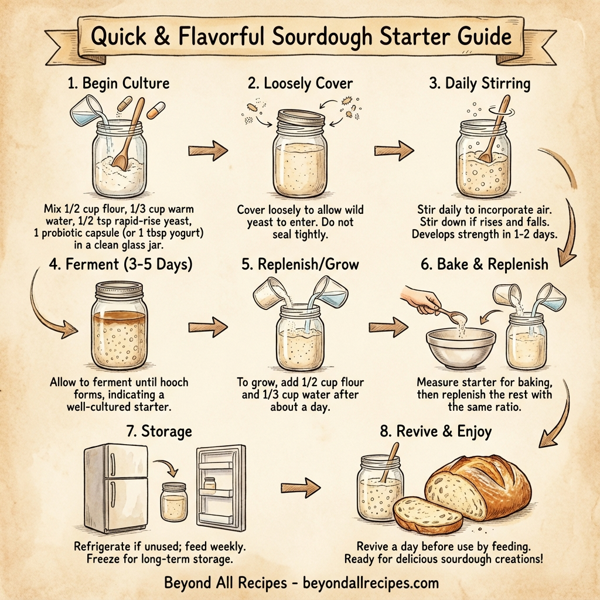
Begin by preparing your culture in a clean glass jar. Mix 1/2 cup of all-purpose flour, 1/3 cup of warm water, 1/2 teaspoon of rapid-rise yeast, and the contents of an opened probiotic capsule until smooth. If you prefer, you can substitute the probiotic with about 1 tablespoon of active culture yogurt.
2
Cover the jar loosely with its lid to prevent contamination while allowing wild yeast to enter. Ensure the lid is not tightly secured to avoid pressure build-up.
3
Stir the starter mixture daily to incorporate air. If the mixture rises and then falls, give it a good stir down. This active stirring helps develop the culture's strength over 1-2 days.
4
To ensure a flavorful starter, allow the mixture to ferment for 3-5 days until hooch (a layer of alcohol) forms on top, indicative of a well-cultured environment.
5
When you require more starter, simply add flour and water in a ratio of 1/2 cup of flour to 1/3 cup of water after about a day, adjusting the consistency as needed.
6
When ready to bake, measure out the needed amount of starter and replenish with the same flour to water ratio of 1/2 cup of flour to 1/3 cup of water.
7
For storage, move your starter to the fridge if not in use for a few days and remember to feed it at least once a week. If you have to be away, place it in the freezer to preserve its life.
8
To revive your starter, take it out a day or so before use, feed it, and by baking day, it will be ready for your delicious sourdough creations.
Nutrition Information
Frequently Asked Questions
Frequently Asked Questions
What makes this sourdough starter recipe unique?
This recipe merges classic sourdough flavor with the efficiency of yeasted bread, making it approachable and fast.
How much all-purpose flour do I need to start?
You need 1/2 cup of all-purpose flour for the initial culture.
What is the correct amount of water for the initial mix?
The recipe calls for 1/3 cup of warm water.
What type of yeast is added to this starter?
A 1/2 teaspoon of rapid-rise (fast rise) yeast is used to encourage a robust yeast community.
Why are probiotics or yogurt included in the recipe?
They introduce beneficial bacteria to the culture, which helps ward off unwanted invaders and adds depth of flavor.
Can I substitute the probiotic capsule?
Yes, you can substitute the probiotic capsule with 1 tablespoon of active culture yogurt.
What kind of container should I use?
A clean glass jar is recommended for preparing and storing your sourdough culture.
How should I cover the jar?
Cover the jar loosely with its lid to allow wild yeast to enter and prevent pressure build-up.
Why shouldn't I tighten the lid completely?
Tightening the lid too much can lead to dangerous pressure build-up from fermentation gases.
How often should I stir the starter?
You should stir the starter mixture daily to incorporate air.
What should I do if the mixture rises and then falls?
If the mixture rises and falls, simply give it a good stir down to help develop its strength.
How long does it take for the starter to develop strength initially?
It typically takes about 1 to 2 days of active stirring to develop the culture's strength.
How long should I ferment the starter for maximum flavor?
Allow the mixture to ferment for 3 to 5 days until hooch forms on top.
What is hooch in sourdough baking?
Hooch is a layer of alcohol that forms on top of the starter, indicating a well-cultured and mature environment.
How do I increase the amount of starter I have?
Simply add flour and water in a ratio of 1/2 cup of flour to 1/3 cup of water.
What is the standard feeding ratio for this recipe?
The feeding ratio is 1/2 cup of flour to 1/3 cup of water.
How do I replenish the starter after baking?
After measuring out what you need, replenish the jar with the same 1/2 cup flour to 1/3 cup water ratio.
Where should I store the starter if I'm not baking daily?
Move the starter to the refrigerator if it will not be used for a few days.
How often does the starter need feeding in the fridge?
It should be fed at least once a week while stored in the refrigerator.
Can this sourdough starter be frozen?
Yes, you can place it in the freezer to preserve its life if you will be away for an extended period.
How do I revive the starter after refrigeration or freezing?
Take it out a day or so before use and feed it to ensure it is active by baking day.
What is the expected texture of the final baked goods?
The starter ensures a light and airy texture in your finished breads.
Does this method create a lot of waste?
No, this recipe is designed for minimal waste and easy adjustments.
Is this recipe suitable for spontaneous baking?
Yes, because it is quicker than traditional methods, it allows for more spontaneous sourdough projects.
What temperature should the water be?
The water should be warmed slightly (warm water) to help activate the yeast.
Can I use whole grains with this starter?
Yes, the starter is designed to utilize various whole grains effectively.
What is the primary goal of the first 2 days?
The goal is to incorporate air and build culture strength through active stirring.
How do I prepare the probiotic capsule?
The capsule should be opened and the powder contents mixed directly into the flour and water.
Is this starter sour or mild?
It maintains a desired rich and tangy sourdough flavor.
What if my starter consistency feels off?
You can adjust the consistency as needed when feeding by slightly varying the flour or water amounts.