Quick & Easy Microwave Poached Eggs
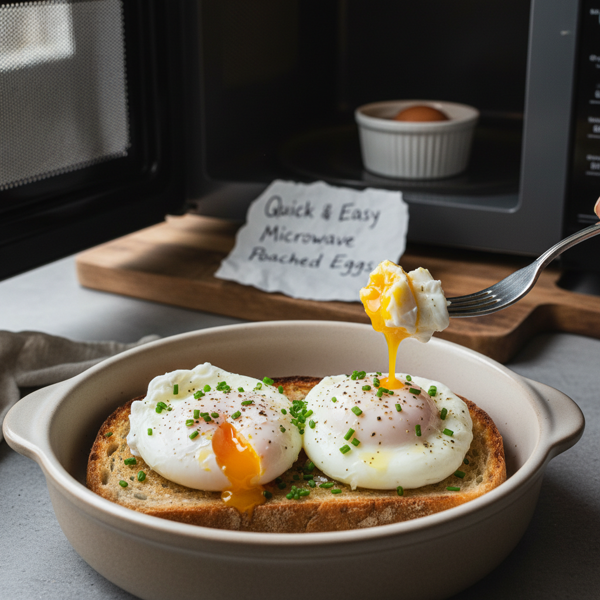
Elevate your breakfast game with these perfectly poached eggs made in the microwave! This method allows you to quickly prepare deliciously soft and creamy eggs in just a minute, making it ideal for busy mornings. The addition of white vinegar helps to set the egg whites beautifully while ensuring that your yolks remain runny and luscious. Remember to pierce the yolk with a toothpick to prevent any messy explosions. This recipe serves one but can easily be multiplied for more servings. Enjoy them on a bed of greens, atop toasted bread, or on their own with a sprinkle of salt and pepper!
1
Servings
N/A
Calories
5
Ingredients
Ingredients
large egg
1 (whole)
white vinegar
1/8 (teaspoon)
water
1/3 (cup)
salt
to taste
pepper
to taste
Instructions
1
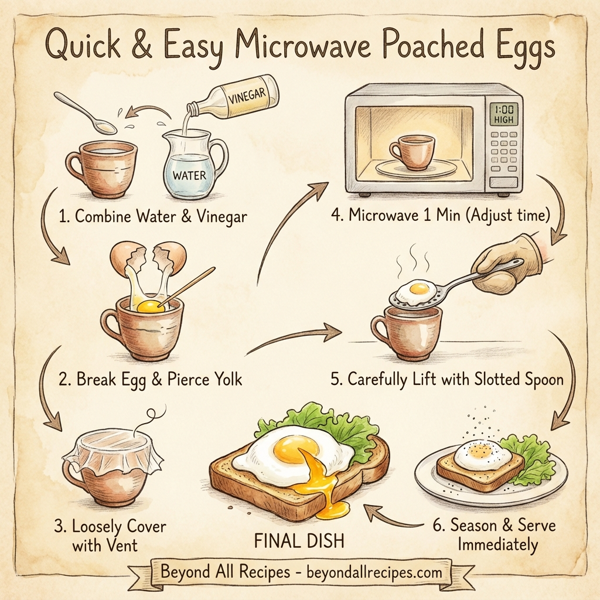
In a 6-ounce custard cup, combine the water and white vinegar thoroughly.
2
Carefully break the egg into the cup, ensuring the yolk remains intact. Use a toothpick to pierce the yolk gently, which is crucial to prevent it from exploding during cooking.
3
Loosely cover the cup with plastic wrap, allowing a small vent for steam to escape.
4
Place the cup in the microwave and cook on high for 1 minute, or until the egg is to your preferred level of doneness. Cooking times may vary based on your microwave's wattage, so feel free to adjust accordingly.
5
Once finished, remove the cup from the microwave with caution, as it will be hot. Use a slotted spoon to carefully lift the egg from the water to prevent further cooking.
6
Season the poached egg with salt and pepper to taste and serve immediately.
Nutrition Information
Frequently Asked Questions
Frequently Asked Questions
How long does it take to poach an egg in the microwave?
It takes approximately 1 minute on high power, though times may vary depending on your microwave's wattage.
Why do I need to pierce the egg yolk with a toothpick?
Piercing the yolk is a crucial safety step to prevent the egg from exploding in the microwave due to pressure buildup.
What is the purpose of adding white vinegar to the water?
The white vinegar helps the egg whites set more quickly and maintain their shape during the cooking process.
What type of container should I use for microwave poaching?
A 6-ounce microwave-safe custard cup or a similar small microwave-safe bowl is ideal for this recipe.
How much water is required for this recipe?
You should use 1/3 cup of water combined with the vinegar.
Should the container be covered while cooking?
Yes, cover the cup loosely with plastic wrap, leaving a small vent for steam to escape.
How do I know when the egg is finished cooking?
The egg is done when the whites are set and the yolk reaches your preferred level of doneness, typically after 1 minute.
What is the best way to remove the egg from the hot water?
Use a slotted spoon to carefully lift the egg out of the water to prevent further cooking and drain excess liquid.
Can I skip the vinegar?
You can, but the vinegar is recommended to help ensure the egg whites stay together and set beautifully.
How should I season my poached egg?
Season with salt and pepper to taste immediately before serving.
What can I serve microwave poached eggs with?
They are delicious on a bed of greens, atop toasted bread, or simply on their own.
Is this recipe suitable for a single serving?
Yes, this recipe is specifically designed for a single serving but can easily be repeated for more.
Does this recipe work with different egg sizes?
This recipe specifies one large egg; if using a different size, you may need to slightly adjust the cooking time.
Is microwave poaching a healthy breakfast option?
Yes, it is a high-protein, healthy breakfast method that requires no added fats or oils for cooking.
What is the first step in the instructions?
The first step is to thoroughly combine the water and white vinegar in a 6-ounce custard cup.
How much vinegar should I use?
The recipe calls for 1/8 teaspoon of white vinegar.
Can I use a microwave-safe mug instead of a custard cup?
Yes, a microwave-safe mug can work as long as it accommodates the water and egg safely.
What should I do if the egg white is still runny after 1 minute?
Microwave it in additional 5 to 10-second intervals until the whites are fully set.
Is the cup hot after cooking?
Yes, use caution when removing the cup from the microwave as it will be very hot.
How many ingredients are needed for this recipe?
There are 5 ingredients: a large egg, white vinegar, water, salt, and pepper.
Can I make multiple eggs at the same time in one cup?
It is recommended to cook one egg at a time for the most consistent and even results.
Is this recipe considered easy?
Yes, it is tagged as an easy and quick recipe, perfect for beginners or busy mornings.
Does this recipe contain any sugar?
No, this is a savory recipe with no added sugar.
What is the main benefit of this poaching method?
It allows you to prepare perfectly poached eggs in just a minute with minimal cleanup.
What does the description say about the yolk?
The method ensures that your yolks remain runny and luscious.
What safety precaution is mentioned regarding the plastic wrap?
The plastic wrap must be loose and have a small vent to allow steam to escape safely.
Is this recipe keto-friendly?
Yes, as it consists of an egg and seasonings, it is naturally low-carb and keto-friendly.
Can I use apple cider vinegar instead of white vinegar?
While white vinegar is preferred for its neutral color, apple cider vinegar will work but may slightly tint the egg.
What is the total preparation and cook time?
The total time is just over a minute, including minimal prep and 60 seconds of cooking.
Should the egg be added to the water before or after microwaving?
The egg is added to the water-vinegar mixture before placing the cup in the microwave.