Provencal Onion and Olive Tart (Pissaladiere) with Anchovies
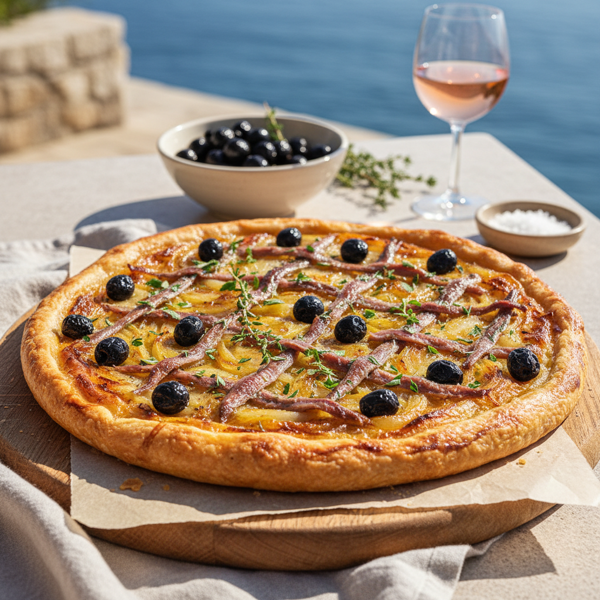
Experience the delightful flavors of Provence with this Pissaladiere, a traditional onion tart brimming with caramelized onions, savory black Nicoise olives, and anchovies. This dish, often enjoyed as street food in Nice, is perfect for both casual gatherings and formal appetizers. The flaky, homemade dough forms a sturdy yet tender base, allowing the rich, sweet-sour flavor of the beautifully caramelized onions to shine. Complete with fresh herbs like thyme and optional marjoram, this tart brings the essence of the French Riviera to your table, evoking nostalgia for the charming streets filled with local markets and vendors, wherever you are.
N/A
Servings
N/A
Calories
19
Ingredients
Ingredients
bread flour
2 cups (plus extra for dusting work surface)
instant yeast
1 teaspoon
table salt
1 teaspoon
olive oil
1 tablespoon (plus additional oil for brushing dough and greasing hands)
water
1 cup (warm (about 110°F))
olive oil
2 tablespoons
yellow onions
2 lbs (sliced 1/4 inch thick)
garlic cloves
4 (minced)
table salt
1/2 teaspoon
brown sugar
1 teaspoon
balsamic vinegar
2 teaspoons
water
1 tablespoon
ground black pepper
1/2 teaspoon
nicoise olives
1/2 cup (pitted, chopped coarse)
anchovy fillets
8 (rinsed, patted dry, chopped coarse)
fresh thyme leaves
2 teaspoons (minced)
marjoram leaves
1 tablespoon (optional, minced)
fennel seed
1 teaspoon (optional)
fresh parsley leaves
1 tablespoon (optional, minced)
Instructions
1
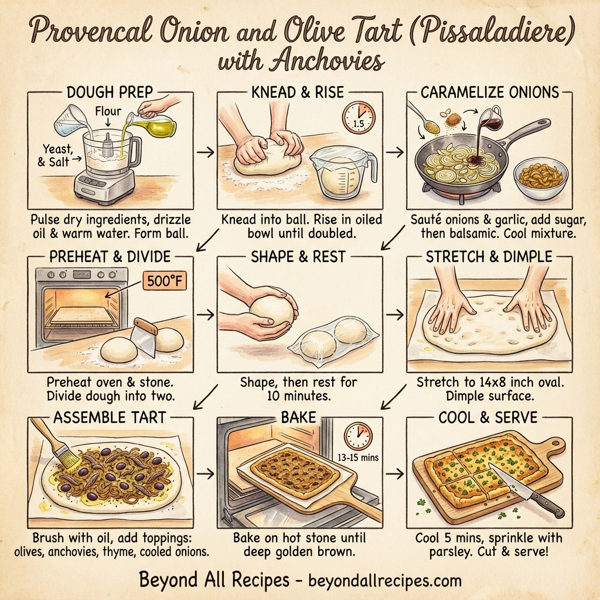
In the work bowl of a food processor, pulse together 2 cups of bread flour, 1 teaspoon instant yeast, and 1 teaspoon salt for about five 1-second pulses until combined.
2
With the machine running, slowly drizzle in 1 tablespoon of olive oil and 1 cup of warm water (approximately 110°F) through the feed tube. Continue processing until the mixture forms a ball, roughly 15 seconds.
3
Flour your work surface generously. Using floured hands, transfer the dough onto the surface and knead it lightly to shape it into a ball.
4
Lightly oil a 1-quart measuring cup or small bowl, place the dough inside, cover tightly with plastic wrap, and set it aside in a draft-free location until it has doubled in size (1 to 1½ hours).
5
While the dough is rising, heat 2 tablespoons of olive oil in a 12-inch nonstick skillet over high heat until shimmering but not smoking. Add 2 lbs of sliced yellow onions and 4 minced garlic cloves, along with ½ teaspoon salt and 1 teaspoon brown sugar.
6
Cook while stirring frequently for about 10 minutes, until the moisture from the onions evaporates and they begin to brown.
7
Lower the heat to medium-low and continue cooking, stirring often. After 15 minutes, remove the garlic cloves, mince them, and return them to the pan with 2 teaspoons of balsamic vinegar. Stir well and cook for an additional 5 minutes until the onions are medium to golden brown. Remove from heat, stir in 1 tablespoon of water, and transfer the mixture to a bowl to cool.
8
Once the dough has risen, adjust the oven rack to the lowest position, place a baking stone on this rack, and preheat the oven to 500°F.
9
Turn the risen dough onto a lightly floured surface and divide it into two equal pieces with a dough scraper. Working with one piece at a time, form each into a rough ball by pulling the edges into the center and pinching to seal. Then, cup the dough and gently roll it to create a taut ball shape.
10
Oil the surface of each dough ball lightly, cover with plastic wrap, and let them rest for 10 minutes. Prepare two 20-inch lengths of parchment paper during this time.
11
Generously oil your hands. Use a dough scraper to loosen one piece of dough, lift it, and gently stretch it to a 12-inch length. Place it on a piece of parchment paper and dimple the surface of the dough with your fingertips. Flatten the dough into a 14x8 inch oval using your palms.
12
Brush the dough with olive oil and sprinkle with ¼ teaspoon of black pepper. Leave a ½ inch border around the edge, sprinkling ¼ cup of Nicoise olives, 1 tablespoon of chopped anchovies, and 1 teaspoon of thyme evenly over the dough. Layer on half of the cooled onion mixture, followed by optional fennel seeds and marjoram.
13
Carefully transfer the parchment with the tart onto a pizza peel or an inverted rimless baking sheet, then slide it onto the hot baking stone in the oven. Bake for 13 to 15 minutes until deep golden brown.
14
While the first tart is baking, shape and top the second tart using the remaining ingredients.
15
Once the first tart is done, remove it with the peel or pull the parchment onto a baking sheet. Let it cool on a cutting board for 5 minutes, then sprinkle with minced parsley, if desired.
16
Cut the tart into halves lengthwise, followed by crosswise cuts to create 8 pieces. Serve immediately. Repeat the cooling and serving process for the second tart.
Nutrition Information
Frequently Asked Questions
Frequently Asked Questions
What is a Pissaladiere?
A Pissaladiere is a traditional Provencal onion tart from Nice, France, topped with caramelized onions, savory black Nicoise olives, and anchovies.
What are the primary flavors of this tart?
The tart features a rich, sweet-sour flavor from beautifully caramelized onions, savory olives, and salty anchovies on a tender, flaky crust.
What type of flour is recommended for the dough?
Bread flour is used in this recipe to create a sturdy yet tender base for the heavy toppings.
How long should the dough rise?
The dough needs to rise in a draft-free location for approximately 1 to 1.5 hours, or until it has doubled in size.
What is the ideal temperature for the water in the dough?
The water should be warm, approximately 110 degrees Fahrenheit, to properly activate the yeast.
How do I prepare the onions for the topping?
Slice 2 lbs of yellow onions 1/4 inch thick and cook them with garlic, salt, and brown sugar until they are medium to golden brown.
Why is brown sugar added to the onions?
Brown sugar is added to the onions to enhance the caramelization process and contribute to the sweet-sour flavor profile.
When should I add balsamic vinegar to the onions?
Add the balsamic vinegar after the onions have cooked for about 25 minutes and the garlic has been minced and returned to the pan.
What kind of olives should be used for Pissaladiere?
Nicoise olives, which are savory black olives from the Provence region, are used for this traditional recipe.
How should the anchovy fillets be prepared?
The 8 anchovy fillets should be rinsed, patted dry, and then chopped coarsely before being added to the tart.
What herbs are included in this recipe?
The recipe calls for fresh thyme leaves, and optionally marjoram and fresh parsley.
What temperature should the oven be set to?
The oven should be preheated to a high temperature of 500 degrees Fahrenheit.
Why use a baking stone for this tart?
A baking stone helps provide intense, even heat to the bottom of the tart, ensuring the crust becomes deep golden brown and crispy.
How many tarts does this recipe produce?
This recipe makes two oval tarts, each approximately 14x8 inches in size.
How do I shape the tart dough?
Stretch the dough into a 12-inch length, place it on parchment paper, and use your palms to flatten it into a 14x8 inch oval.
What is the recommended oven rack position?
The oven rack should be adjusted to the lowest position before placing the baking stone and preheating.
How long does the baking process take?
The tart should bake for 13 to 15 minutes until it reaches a deep golden brown color.
Can I make this tart vegetarian?
While traditional Pissaladiere includes anchovies, you could omit them to make a vegetarian version, focusing on the caramelized onions and olives.
Should the onion mixture be cooled before topping the dough?
Yes, the instructions state to transfer the onion mixture to a bowl to cool before layering it onto the dough.
What is the purpose of dimpling the dough?
Dimpling the dough with your fingertips before adding toppings helps create a texture that holds the olive oil and toppings in place.
How should the tart be sliced for serving?
Cut the tart in half lengthwise, then make crosswise cuts to create 8 individual pieces.
How long should the tart rest after baking?
The tart should cool on a cutting board for 5 minutes before being sprinkled with parsley and sliced.
Can I use a food processor for the dough?
Yes, the recipe specifically instructs using a food processor to pulse the dry ingredients and then combine the wet ingredients.
Is there a specific way to handle the garlic?
Cook the garlic cloves whole with the onions for 15 minutes, then remove, mince, and return them to the pan for the final stage of caramelization.
What optional spices can be added?
Fennel seeds can be added as an optional topping for additional Mediterranean flavor.
How do I transfer the tart into the oven?
Use a pizza peel or an inverted rimless baking sheet to slide the parchment paper with the tart onto the hot baking stone.
What type of yeast is required?
This recipe calls for 1 teaspoon of instant yeast.
Should I oil my hands when working with the dough?
Yes, generously oiling your hands helps prevent the dough from sticking while you stretch and flatten it.
What is the purpose of the 10-minute rest after dividing the dough?
Resting the dough balls for 10 minutes relaxes the gluten, making it easier to stretch the dough into its final oval shape.
Can this tart be served as an appetizer?
Yes, Pissaladiere is perfect for both casual gatherings and formal appetizers, and is traditionally served as street food in Nice.