Pollo En Escabeche: Authentic Uruguayan Pickled Chicken

Experience the rich flavors of Uruguay with this authentic Pollo En Escabeche recipe. This marinated chicken dish showcases tender chicken that has been perfectly seasoned and simmered in a tangy apple cider vinegar marinade, combined with earthy spices and aromatic vegetables. Ideal for gatherings, this recipe serves 8 and can be enjoyed cold, making it a refreshing option for warm weather or as a delightful addition to any picnic spread. Although it requires some chilling time, the preparation is straightforward and rewarding, resulting in a dish that is not only delicious but also visually appealing. Perfectly balance creamy sides like mashed potatoes or fresh salads that complement the vibrant flavors of the marinated chicken.
N/A
Servings
N/A
Calories
11
Ingredients
Ingredients
whole chickens
2 (cut into serving pieces (approx. 3 lbs each))
olive oil
2 tablespoons (for browning the chicken)
carrots
4 (sliced)
garlic cloves
3 (chopped)
large onions
2 (sliced)
thyme
1/2 teaspoon (dried)
marjoram
1/2 teaspoon (dried)
whole black peppercorns
18 (whole)
salt
to taste
apple cider vinegar
3 cups
olive oil
1 1/2 cups (for marinating)
Instructions
1
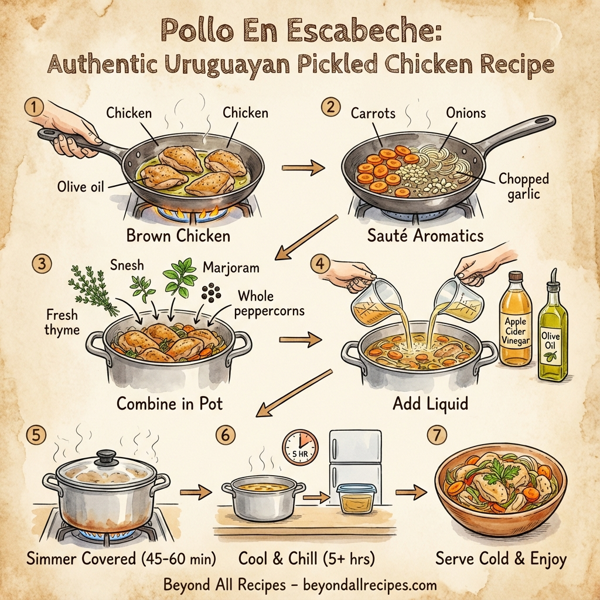
Begin by heating 2 tablespoons of olive oil in a heavy skillet over high heat. Add the chicken pieces, working in batches if necessary, to ensure they brown nicely on all sides. Once browned, transfer the chicken to a large saucepan or casserole pot.
2
In the same skillet, add the sliced carrots, onions, and chopped garlic, sautéing for a few minutes until slightly softened.
3
Add the sautéed vegetables to the saucepan with the chicken. Then incorporate the thyme, marjoram, and whole black peppercorns. Season with salt according to your taste.
4
Pour in 3 cups of apple cider vinegar and 1.5 cups of olive oil, ensuring the chicken and vegetables are well-coated.
5
Bring the mixture to a simmer over low heat, covering the pot partially. Allow it to cook for 45 minutes to 1 hour, or until the chicken is fully cooked and tender.
6
Once cooked, remove the saucepan from heat and let it cool to room temperature. Then, cover and chill in the refrigerator for at least 5 hours, although overnight is recommended for enhanced flavor development.
7
Serve the Pollo En Escabeche cold, garnished with the marinated vegetables and enjoy the rich Uruguayan flavors!
Nutrition Information
Frequently Asked Questions
Frequently Asked Questions
What is Pollo En Escabeche?
Pollo En Escabeche is a traditional Uruguayan dish featuring tender chicken marinated and simmered in a tangy apple cider vinegar sauce with aromatic vegetables and spices.
How is the chicken prepared in this recipe?
The chicken is first browned in olive oil, then simmered with sautéed vegetables, vinegar, and spices until tender, and finally chilled before serving.
Should Pollo En Escabeche be served hot or cold?
This dish is traditionally served cold, making it a refreshing option for warm weather, picnics, or gatherings.
How many people does this recipe serve?
This authentic Uruguayan recipe is designed to serve 8 people.
What type of vinegar is best for this chicken dish?
The recipe calls for 3 cups of apple cider vinegar, which provides the characteristic tang and acidity required for the pickling process.
How long does the chicken need to chill?
The chicken should be refrigerated for at least 5 hours after cooling, though leaving it overnight is recommended for the best flavor development.
What kind of chicken is used in this recipe?
The recipe uses 2 whole chickens, approximately 3 lbs each, cut into serving pieces.
What vegetables are included in the marinade?
The marinade includes 4 sliced carrots, 2 large sliced onions, and 3 chopped garlic cloves.
What spices give the dish its flavor?
The dish is seasoned with dried thyme, dried marjoram, whole black peppercorns, and salt.
How much olive oil is needed for the marinade?
Beyond the oil used for browning, 1.5 cups of olive oil are added to the marinade to ensure the chicken and vegetables are well-coated.
What is the total cooking time for the chicken?
The chicken should simmer for 45 minutes to 1 hour, or until it is fully cooked and tender.
Can I make this dish for a picnic?
Yes, Pollo En Escabeche is an ideal addition to a picnic spread because it is intended to be served cold and is very portable.
What are some recommended side dishes?
It pairs well with creamy sides like mashed potatoes or fresh salads that complement the vibrant, acidic flavors of the marinated chicken.
How many peppercorns are used in the recipe?
The recipe specifies 18 whole black peppercorns to provide an earthy spice note.
Is it necessary to brown the chicken first?
Yes, browning the chicken pieces in olive oil over high heat ensures they have a nice texture and color before simmering.
Should the pot be covered during simmering?
The pot should be partially covered while simmering over low heat to maintain the right temperature and moisture levels.
Does the recipe use fresh or dried herbs?
The recipe calls for 1/2 teaspoon each of dried thyme and dried marjoram.
Can I use boneless chicken for this recipe?
While the authentic recipe calls for whole chickens cut into pieces, you could use boneless pieces, though cooking times may need to be adjusted.
What makes this dish 'Escabeche'?
The 'Escabeche' style refers to the method of marinating and cooking meat in an acidic mixture, such as vinegar, to preserve and flavor it.
Is this a one-dish meal?
Yes, it is considered a one-dish meal because it incorporates protein and vegetables in a single cooking process.
How should the garlic be prepared?
The three garlic cloves should be chopped before being sautéed with the other vegetables.
How should the onions be cut?
The two large onions should be sliced before being added to the skillet.
Can I prepare the vegetables and chicken in the same pan?
The vegetables are sautéed in the same skillet used to brown the chicken, but both are then transferred to a larger saucepan or casserole pot for simmering.
What is the origin of this recipe?
This is an authentic Uruguayan recipe, showcasing the traditional flavors of the region.
How long should the dish cool at room temperature?
The dish should be allowed to cool completely to room temperature before being covered and placed in the refrigerator.
Is this recipe difficult to make?
No, the preparation is straightforward and rewarding, though it does require time for the chicken to chill and marinate.
What is the flavor profile of this dish?
The flavor profile is tangy, savory, and aromatic, with a balance of acidity from the vinegar and earthiness from the herbs.
Should the chicken be garnished?
Yes, the dish is typically served garnished with the marinated carrots and onions from the pot.
Can I adjust the amount of salt?
Yes, salt should be added 'to taste' during the step where the herbs and peppercorns are added to the pot.
Does the chicken stay tender after chilling?
Yes, the simmering process and the oil-and-vinegar marinade help the chicken remain tender even when served cold.