Pollo a la Salsa de Vino
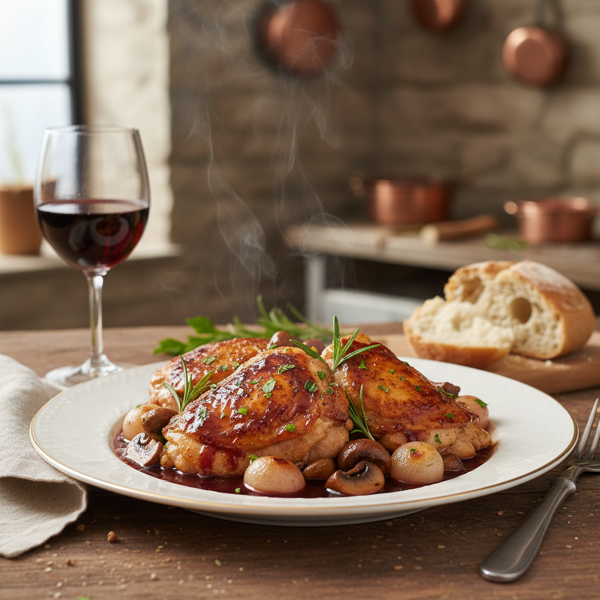
Pollo a la Salsa de Vino is an exquisite Salvadoran dish that offers a delightful blend of flavors and aromas. Unlike the traditional 'arroz con pollo' which incorporates rice during the cooking process, this dish features succulent chicken pieces simmered in a rich wine sauce. The addition of prunes, olives, and green peppers not only enhances the taste but also adds a beautiful contrast in texture. Ideal for family meals or special occasions, this recipe is best served over fluffy rice, allowing the sauce to soak into every grain.
N/A
Servings
75
Calories
15
Ingredients
Ingredients
Chicken pieces
2.5-3 lbs (Rinsed and patted dry)
Cooking oil
2 tablespoons (For browning chicken)
Medium onion
1 (Chopped)
Dry red wine
3/4 cup (N/A)
Cider vinegar
1/4 cup (N/A)
Worcestershire sauce
1 tablespoon (N/A)
Salt
1 teaspoon (N/A)
Garlic powder
1/4 teaspoon (N/A)
Ground coriander
1/4 teaspoon (N/A)
Ground red pepper
1/8 teaspoon (N/A)
Large green pepper
1 (Chopped)
Dried prunes
12 (Pitted and halved)
Pimento stuffed olives
12 (N/A)
Tomato paste
1/4 cup (N/A)
Capers
2 tablespoons (N/A)
Instructions
1
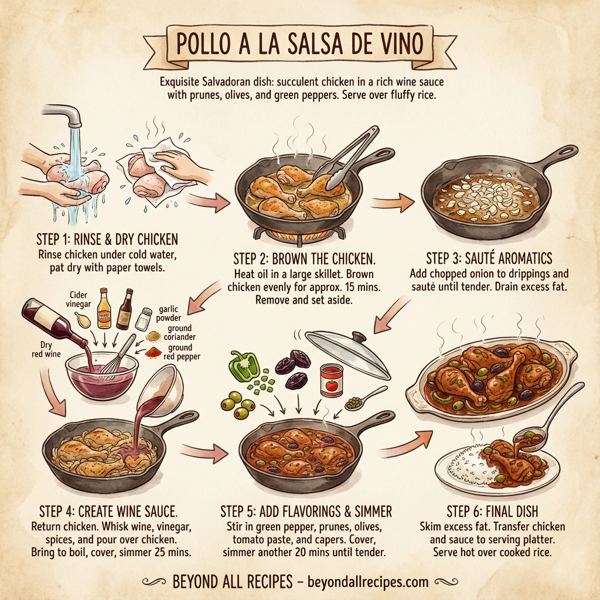
Begin by rinsing the chicken pieces under cold water and patting them dry with paper towels to remove excess moisture.
2
In a large skillet, heat the cooking oil over medium heat. Brown the chicken pieces evenly on all sides, approximately 15 minutes in total. Once browned, remove the chicken from the skillet and set aside.
3
In the same skillet, add the chopped onion to the drippings left behind and sauté until the onion is tender, but not browned. Carefully drain off any excess fat from the skillet.
4
Return the browned chicken to the skillet. In a mixing bowl, whisk together the dry red wine, cider vinegar, Worcestershire sauce, salt, garlic powder, ground coriander, and ground red pepper. Pour this mixture over the chicken in the skillet.
5
Bring the sauce to a boil, then reduce the heat to low. Cover and let simmer for 25 minutes, allowing the flavors to meld.
6
After 25 minutes, gently stir in the chopped green pepper, halved prunes, pimento-stuffed olives, tomato paste, and capers. Cover the skillet again and simmer for an additional 20 minutes, or until the chicken is tender.
7
Skim off any excess fat from the sauce. Transfer the chicken and sauce to a preheated serving platter. Serve hot, ideally over cooked rice to soak up the delicious sauce.
Nutrition Information
4g
Fat
6g
Carbs
5g
Protein
Frequently Asked Questions
Frequently Asked Questions
What is Pollo a la Salsa de Vino?
Pollo a la Salsa de Vino is an exquisite Salvadoran dish featuring succulent chicken pieces simmered in a rich sauce made with dry red wine, prunes, and olives.
From which country does this chicken recipe originate?
This recipe is a traditional dish from El Salvador.
How does Pollo a la Salsa de Vino differ from Arroz con Pollo?
Unlike traditional arroz con pollo where rice is cooked with the chicken, this dish simmers chicken in a wine sauce and is typically served over rice separately.
What amount of chicken is required for this recipe?
You will need approximately 2.5 to 3 lbs of chicken pieces.
How should the chicken be prepared before cooking?
The chicken pieces should be rinsed under cold water and patted dry with paper towels to remove excess moisture.
How long should I brown the chicken pieces?
The chicken should be browned evenly on all sides for approximately 15 minutes.
What type of wine is recommended for the sauce?
The recipe calls for 3/4 cup of dry red wine.
What kind of vinegar is used in the sauce mixture?
One quarter cup of cider vinegar is used to add acidity to the wine sauce.
What spices are needed for the seasoning?
The seasoning consists of salt, garlic powder, ground coriander, and ground red pepper.
How long does the chicken simmer in the wine mixture initially?
The chicken should simmer covered for 25 minutes after the wine mixture is added.
When should the prunes and olives be added?
The prunes and olives are added after the initial 25-minute simmer, along with the green peppers and tomato paste.
How many prunes are used in this recipe?
The recipe requires 12 dried prunes, which should be pitted and halved.
What type of olives are best for this Salvadoran dish?
The recipe specifies using 12 pimento-stuffed olives.
Is tomato paste used in this recipe?
Yes, 1/4 cup of tomato paste is added to help thicken and flavor the sauce.
What is the final simmering time after adding the vegetables and fruit?
After adding the green peppers, prunes, and olives, the dish simmers for an additional 20 minutes.
How many calories are in a serving of this dish?
Each serving contains approximately 75 calories.
What is the fat and protein content per serving?
Each serving has 4g of fat and 5g of protein.
Should the onion be browned when sautéing?
No, the chopped onion should be sautéed until tender but not browned.
What should I do with the excess fat in the skillet?
You should drain off any excess fat after sautéing the onions and skim any remaining fat from the sauce before serving.
Are capers included in this recipe?
Yes, 2 tablespoons of capers are added during the final stage of cooking.
What is the best way to serve Pollo a la Salsa de Vino?
It is best served hot over fluffy rice so the rice can soak up the wine sauce.
What kind of green pepper is needed?
The recipe calls for one large green pepper, chopped.
Is Worcestershire sauce used in this chicken dish?
Yes, 1 tablespoon of Worcestershire sauce is included in the wine mixture.
What is the carbohydrate count for this recipe?
There are 6g of carbohydrates per serving.
Is this dish considered a comfort food?
Yes, it is tagged as a comfort food and a Latin American family meal.
Can I use any cooking oil?
The recipe suggests 2 tablespoons of cooking oil, suitable for browning the chicken.
Does the recipe require ground red pepper?
Yes, 1/8 teaspoon of ground red pepper is used to add a subtle heat.
What provides the unique texture contrast in this dish?
The addition of prunes and olives provides a beautiful contrast in both flavor and texture.
Is the garlic used fresh or powdered?
This specific recipe uses 1/4 teaspoon of garlic powder.
How many total minutes of simmering are required?
The total simmering time is 45 minutes (25 minutes initially plus 20 minutes with the remaining ingredients).