Pineapple-Infused Wild Yeast Sourdough Starter
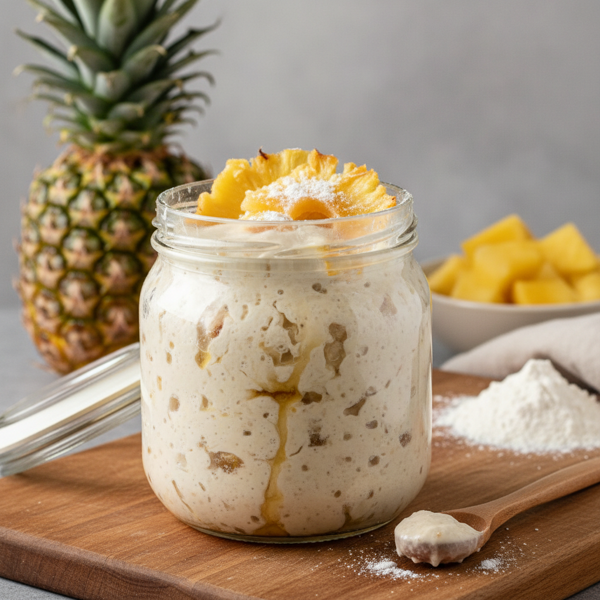
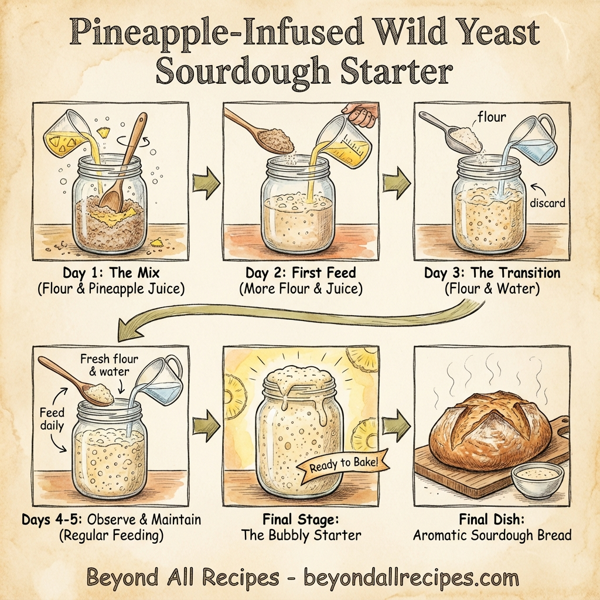
Unlock the art of sourdough baking with your very own wild yeast starter, infused with the tangy goodness of pineapple juice. This starter harnesses naturally occurring yeast from whole grains, creating an ideal environment for fermentation. The inclusion of pineapple juice not only kick-starts the yeast activation process but also provides an acidic environment that safeguards against unwanted bacteria. Over the course of several days, watch as your mixture transforms into a bubbly, aromatic starter ready to elevate your bread-making experience. Perfect for home bakers eager to explore the complexities of sourdough flavors with a personal touch!
N/A
Servings
N/A
Calories
5
Ingredients
Ingredients
unsweetened pineapple juice
1/2 cup (fresh or bottled, no added sugars)
whole grain wheat flour or whole grain rye flour
1/2 cup (finely ground or freshly milled)
unbleached all-purpose flour
1 cup (all-purpose without additives)
water
2 cups (bottled or purified)
cider vinegar
1/4 teaspoon (optional, for reviving starter if needed)
Instructions
Nutrition Information
Frequently Asked Questions
Frequently Asked Questions
What is a Pineapple-Infused Wild Yeast Sourdough Starter?
It is a mixture of flour, water, and unsweetened pineapple juice that captures naturally occurring wild yeast from grains to create a leavening agent for bread.
Why is pineapple juice used in a sourdough starter?
Pineapple juice provides an acidic environment that helps prevent the growth of unwanted bacteria while encouraging the activation of wild yeast.
What type of pineapple juice should I use?
You should use unsweetened pineapple juice, either fresh or bottled, with no added sugars or preservatives.
Can I use fresh pineapple juice?
Yes, as long as it is pure juice without added sugars, fresh pineapple juice is an excellent choice for starting your yeast.
What type of flour is best for the initial stage?
Whole grain wheat flour or whole grain rye flour is recommended because the hulls of whole grains contain more naturally occurring wild yeast.
Why use whole grain flour for starting wild yeast?
Whole grains are less processed and retain the natural microorganisms found on the grain's surface, which are essential for starting fermentation.
What kind of water is recommended for the starter?
Bottled or purified water is recommended to avoid chlorine and other chemicals that might inhibit yeast growth.
Is tap water okay for the sourdough starter?
Tap water can be used if it is filtered or left out overnight to allow chlorine to dissipate, as chlorine can kill the wild yeast.
Why is my starter bubbly?
Bubbles are a sign of active fermentation, indicating that the wild yeast is consuming the sugars in the flour and releasing carbon dioxide.
How long does it take to create a mature starter?
It typically takes several days of regular feeding and monitoring for the mixture to transform into a stable, bubbly, and aromatic starter.
How does pineapple juice affect the acidity of the starter?
The juice lowers the pH of the mixture immediately, creating a safeguard against 'bad' bacteria that cannot survive in acidic conditions.
Can I use rye flour instead of wheat flour?
Yes, rye flour is an excellent alternative and often ferments faster than wheat flour due to its high nutrient content.
What is the role of unbleached all-purpose flour in this recipe?
All-purpose flour is used to provide a consistent food source for the yeast as the starter matures and is prepared for baking.
When should I add cider vinegar?
Cider vinegar is optional and should only be used in very small amounts if the starter needs a boost in acidity or reviving.
Is cider vinegar necessary for a healthy starter?
No, it is not necessary but can be helpful for troubleshooting or adjusting the pH if the starter is struggling.
How do I know if my starter is active and ready to bake?
A ready starter will be very bubbly, have a pleasant tangy aroma, and should double in size within a few hours of feeding.
Why does my sourdough starter smell tangy?
The tangy smell is caused by the production of lactic and acetic acids by the beneficial bacteria living alongside the wild yeast.
What is the ideal temperature for fermentation?
Wild yeast thrives best in a warm environment, ideally between 70°F and 75°F (21°C to 24°C).
How do I prevent bad bacteria from growing in my starter?
Using pineapple juice to lower the initial pH and maintaining a regular feeding schedule will prevent unwanted bacteria from taking hold.
Can I use bleached flour for my starter?
It is best to avoid bleached flour, as the bleaching process can remove the natural nutrients and microbes needed for a healthy starter.
What kind of container should I use for my starter?
A clean glass jar or a food-grade plastic container is ideal, as they allow you to easily see the bubbles and growth levels.
How often should I feed the sourdough starter?
Once established, the starter should be fed daily if kept at room temperature or weekly if stored in the refrigerator.
What is the pineapple juice method for sourdough?
It is a specific technique used to bypass the initial growth of smelly bacteria (like Leuconostoc) by acidifying the mixture from day one.
Is this pineapple sourdough starter gluten-free?
No, this recipe uses wheat or rye flour, both of which contain gluten. You would need gluten-free flours to make a gluten-free starter.
Can I use orange juice instead of pineapple juice?
While orange juice is acidic, pineapple juice is preferred for this method because its specific pH and sugar content are ideal for wild yeast.
What should I do if my starter doesn't show any bubbles?
Check the temperature of your room, ensure you are using unchlorinated water, and give it another day or two to activate.
How do I store the starter when I'm not baking?
You can store the starter in the refrigerator in a covered jar, feeding it at least once a week to keep the yeast alive.
Can I use this starter for any bread recipe?
Yes, once active, this wild yeast starter can replace commercial yeast in almost any bread recipe, though rising times will be longer.
What happens if I use pineapple juice with added sugars?
Added sugars can cause the fermentation to happen too rapidly or attract the wrong types of microbes, potentially ruining the starter.
Is wild yeast different from store-bought yeast?
Yes, wild yeast is a collection of local yeast and bacteria that provides more complex flavors and better digestibility than commercial yeast.