Persian Saffron Jewel Pilaf
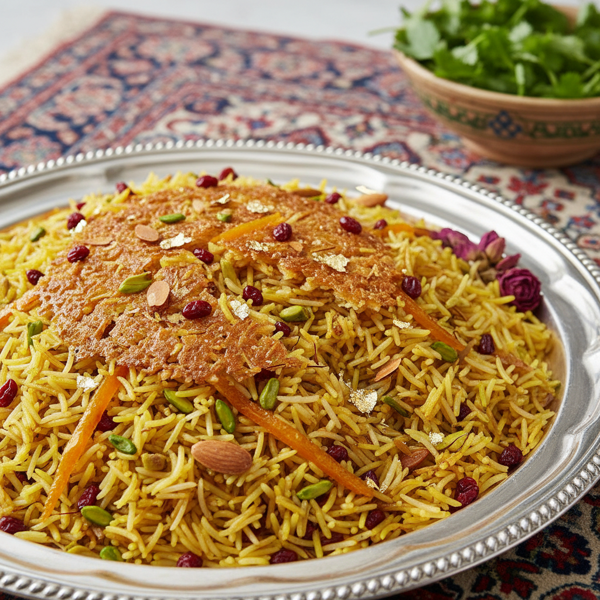
Indulge in the fragrant and exquisite flavors of Persian Saffron Jewel Pilaf, a traditional dish that elevates basmati rice to new heights. This recipe features long-grain basmati rice delicately infused with the essence of saffron and finished with a golden, crispy crust known as 'tadiq'. Perfect for special occasions or a comforting meal, this pilaf is a true reflection of Persian culinary artistry. Share this delightful dish with friends and family, and enjoy the aromatic journey of flavors and textures.
N/A
Servings
N/A
Calories
4
Ingredients
Ingredients
long grain basmati rice
2 1/2 cups (Thoroughly washed and soaked for 2-3 hours)
grapeseed oil
4 tablespoons (Divided - 3 tablespoons for cooking and 1 tablespoon mixed with saffron water)
salt
2 tablespoons (Divided - 1 tablespoon for soaking, 1 tablespoon for boiling)
saffron threads
1/2 teaspoon (Soaked in 4 tablespoons of hot water)
Instructions
1
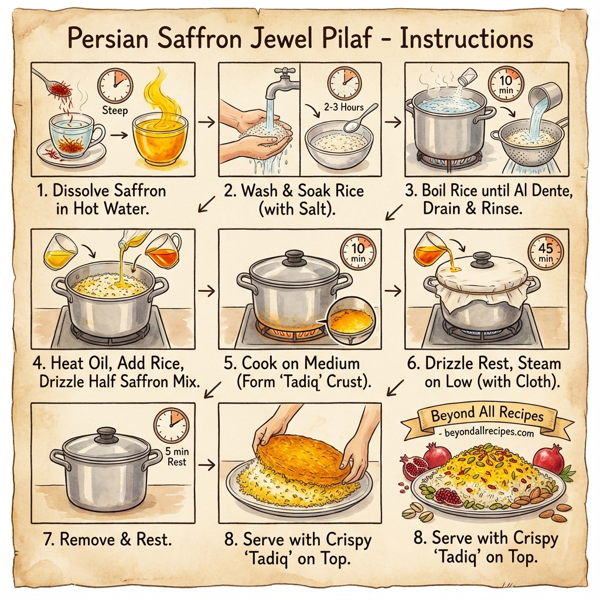
Begin by dissolving the saffron threads in 4 tablespoons of hot water. Allow it to steep and release its vibrant color and aroma while you prepare the rice.
2
Thoroughly wash the basmati rice under cold water until the water runs clear, then soak the rice in warm salted water for 2 to 3 hours to enhance its texture. Make sure to use 1 tablespoon of salt in the soaking water.
3
After soaking, drain the rice and set aside, ensuring to remove any excess moisture.
4
In a large pot, add enough water to fill it halfway and bring it to a rapid boil. Gently add the drained rice along with 1 tablespoon of salt, and continue to boil for about 10 minutes until the rice is al dente and slightly softened. Stir carefully to prevent sticking.
5
Once cooked, drain the rice and rinse it briefly with warm water to remove excess starch. This will help keep the grains separate.
6
In the same large pot, heat 3 tablespoons of grapeseed oil over medium heat. Place the drained rice back into the pot, spreading it evenly across the bottom.
7
Mix the remaining tablespoon of grapeseed oil with the saffron water and drizzle half of this mixture over the rice, ensuring it is evenly coated.
8
Cover the pot with a tightly fitting lid and cook over medium heat for approximately 10 minutes. This initial cooking will create the coveted golden crust on the bottom, known as 'tadiq'.
9
After 10 minutes, sprinkle the remaining saffron and oil mixture over the rice. Reduce the heat to low, then cover the top of the pot with two layers of paper towels or a double layer of muslin cloth to trap steam.
10
Firmly cover the pot with its lid, and let it cook undisturbed for 45 minutes. This slow cooking allows the flavors to meld and the rice to fluff beautifully.
11
After 45 minutes, remove the pot from the heat and let it rest for an additional 5 minutes. This resting period is essential for achieving the perfect texture.
12
To serve, gently turn the rice out onto a large serving platter, ensuring that the crispy golden crust remains on top, showcasing the beauty of this Persian Saffron Jewel Pilaf.
Nutrition Information
Frequently Asked Questions
Frequently Asked Questions
What is Persian Saffron Jewel Pilaf?
It is a traditional Persian dish that elevates long-grain basmati rice with saffron infusion and a crispy bottom crust called tadiq.
What type of rice is required for this recipe?
This recipe requires 2 1/2 cups of long-grain basmati rice.
How long should the rice be soaked?
The basmati rice should be soaked in warm salted water for 2 to 3 hours to enhance its texture.
What is the purpose of washing the rice?
Washing the rice under cold water until it runs clear removes excess starch, helping the grains stay separate after cooking.
How is the saffron prepared for the pilaf?
Dissolve 1/2 teaspoon of saffron threads in 4 tablespoons of hot water and allow it to steep to release its color and aroma.
What is tadiq?
Tadiq is the coveted golden, crispy crust that forms on the bottom of the rice pot during cooking.
Which oil is recommended for this recipe?
Grapeseed oil is recommended, using a total of 4 tablespoons.
How much salt is needed for the soaking phase?
Use 1 tablespoon of salt in the soaking water.
How much salt is added during the boiling phase?
Add 1 tablespoon of salt to the boiling water when cooking the rice.
How long should the rice boil initially?
The rice should be boiled for about 10 minutes until it is al dente and slightly softened.
Why should the rice be rinsed after parboiling?
Rinsing briefly with warm water removes additional excess starch to ensure the grains remain distinct.
How do you start the crust formation?
Heat 3 tablespoons of grapeseed oil in a pot, add the rice, and drizzle half of the saffron-oil mixture over it.
What is the heat setting for the first 10 minutes of cooking?
Cook the rice over medium heat for the initial 10 minutes to develop the golden crust.
Why are paper towels or muslin used during steaming?
They are used to cover the top of the pot to trap steam effectively, which helps the rice fluff up.
How long does the final steaming process take?
The rice should cook undisturbed on low heat for 45 minutes.
Is it necessary to let the rice rest after cooking?
Yes, let the pot rest for 5 minutes after removing it from the heat to achieve the perfect texture.
How should the Persian Saffron Jewel Pilaf be served?
Turn the rice out onto a large serving platter so that the crispy golden tadiq remains on top.
Is this recipe suitable for vegetarians?
Yes, this is a vegetarian side dish consisting of rice, oil, salt, and saffron.
How much hot water is needed for the saffron threads?
Use 4 tablespoons of hot water to steep the 1/2 teaspoon of saffron threads.
What is the total number of ingredients in this recipe?
There are 4 main ingredients: basmati rice, grapeseed oil, salt, and saffron threads.
What tags are associated with this dish?
The tags include persian, rice, saffron, pilaf, tadiq, basmati, side dish, vegetarian, aromatic, and traditional.
Can I use a lid during the steaming phase?
Yes, a tightly fitting lid is essential, placed over the paper towels or muslin cloth.
What should the water look like after washing the rice?
The water should run clear, indicating that the excess surface starch has been removed.
What temperature of water should be used for soaking?
Warm salted water should be used for the 2 to 3 hour soaking period.
How much oil is mixed with the saffron water?
One tablespoon of grapeseed oil is mixed with the prepared saffron water.
When do you add the second half of the saffron mixture?
The remaining saffron and oil mixture is sprinkled over the rice after the initial 10 minutes of cooking.
How full should the pot be with water for boiling?
The pot should be filled halfway with water for the boiling stage.
What is the primary flavor profile of this pilaf?
It is aromatic and fragrant, primarily flavored by high-quality saffron threads.
Does the recipe contain any sugar or cholesterol?
Based on the ingredients listed, the recipe does not contain added sugar or cholesterol.
What is the final texture of the rice grains?
The grains should be long, separate, and beautifully fluffed, contrasting with the crispy tadiq.