Persian Reshteh Polo: Savory Basmati Rice with Noodles and Spiced Fruit
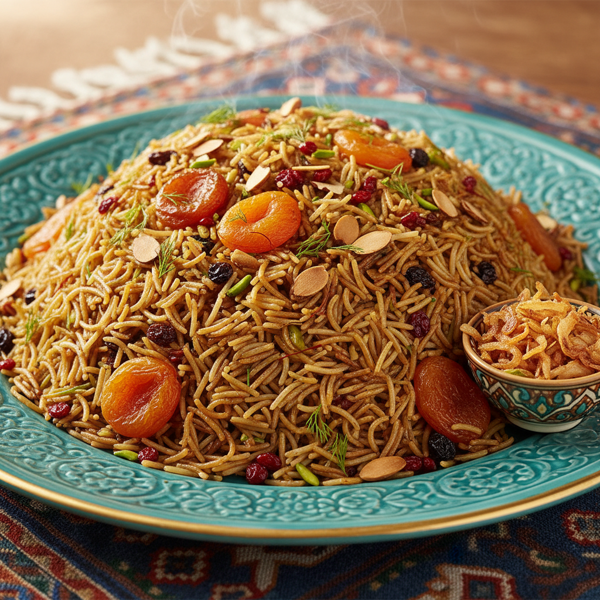
Experience the delightful fusion of flavors in this Persian Reshteh Polo, a traditional rice dish that marries the aromatic essence of basmati rice with the unique texture of reshteh noodles. This recipe elevates simple ingredients with the sweetness of dates, raisins, and the zest of orange peel, harmonized by the warmth of spices such as cinnamon and turmeric. Cooked to perfection with a touch of saffron for color and flavor, and garnished with toasted pistachios and almonds, this dish is sure to impress your family and friends. The addition of the prized Persian rice crust, known as tadigh, adds an extra dimension of texture, making this a must-try dish for any occasion!
4
Servings
300
Calories
14
Ingredients
Ingredients
Basmati Rice
1 1/2 cups (Rinsed and soaked for at least 30 minutes, then drained)
Orange Peel
1/4 cup (Slivered)
Dates
5 (Pitted and diced)
Raisins
1/4 cup (No preparation needed)
Onion
1 (Diced finely)
Reshteh Noodles
4 ounces (Sautéed until golden)
Cinnamon
1 teaspoon (No preparation needed)
Saffron
1 teaspoon (Ground and dissolved in hot water)
Turmeric
1/8 teaspoon (No preparation needed)
Water
1/4 cup (Used for saffron mixture)
Advieh Spice
1 teaspoon (Can also use vegetable or chicken bouillon)
Pistachios and Almonds
1/4 cup (Slivered and toasted)
Butter
3 teaspoons (Used for sautéing and saffron mixture)
Canola Oil
2 tablespoons (Used for sautéing and steaming)
Instructions
1
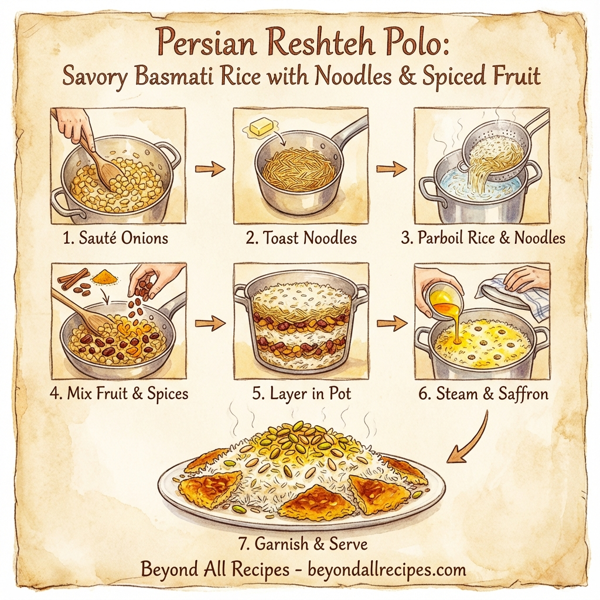
In a large pot, heat 2 tablespoons of canola oil over medium heat. Add the diced onion and sauté until golden brown, about 10-12 minutes.
2
While the onion is cooking, remove the pits from the dates and finely dice them. Set aside.
3
In a separate pot, melt 2 tablespoons of butter over medium heat. Add the reshteh noodles and sauté them until they turn golden brown, being cautious not to burn them, about 4-5 minutes.
4
Rinse the basmati rice under cold water until the water runs clear, then soak it in water for at least 30 minutes. Drain the rice and add it to the pot of boiling salted water, along with the sautéed reshteh noodles. Cook for about 8-10 minutes until the rice is slightly undercooked. Drain the mixture and set aside.
5
Once the onions are golden brown, add 1 tablespoon of butter to the pot. Stir in the turmeric and cinnamon, mixing well to coat the onions.
6
Add the diced dates, raisins, and slivered orange peel to the pan. Stir well and season with salt and pepper to taste. If the mixture looks dry, add an additional tablespoon of butter.
7
In the pot you plan to steam the rice, add 2 tablespoons of canola oil and pour in enough water to cover the bottom of the pot. Add a layer of the rice and noodle mixture, followed by 1/4 teaspoon of advieh spice (or bouillon), and half of the date-raisin-onion mixture. Repeat with another layer of the rice and noodle mixture and the remaining date-raisin-onion mixture. Finish with a final layer of the rice-noodle mixture.
8
Using the end of a spatula, make five holes in the rice to allow steam to escape. Cook the layered rice covered on high heat for 10 minutes.
9
Dissolve the saffron in 1/4 cup of hot water. Stir in 1 tablespoon of butter. Carefully pour the saffron mixture over the surface of the rice.
10
Cover the pot with a kitchen towel and then securely place the lid on top. Reduce the heat to low and steam the rice for one hour.
11
Once cooked, carefully fluff the rice with a fork. Transfer to a serving platter and garnish with toasted pistachios and slivered almonds. This dish is often accompanied by the crispy rice crust (tadigh) found at the bottom of the pot, which can be broken into pieces and served separately.
Nutrition Information
11.25g
Fat
44g
Carbs
5g
Protein
Frequently Asked Questions
Frequently Asked Questions
What is Persian Reshteh Polo?
Reshteh Polo is a traditional Persian savory rice dish that combines aromatic basmati rice with toasted reshteh noodles and a blend of spiced fruits like dates and raisins.
What are the main ingredients in Reshteh Polo?
The primary ingredients include basmati rice, reshteh noodles, dates, raisins, orange peel, onions, and various spices like saffron, cinnamon, and turmeric.
How many servings does this recipe make?
This recipe is designed to serve 4 people.
Is Reshteh Polo a vegetarian dish?
Yes, this specific recipe is vegetarian as it uses butter, oil, and plant-based ingredients like rice, noodles, and dried fruits.
What is Tadigh?
Tadigh is the prized, crispy golden crust that forms at the bottom of the pot during the rice steaming process, adding a crunchy texture to the meal.
How long should I soak the basmati rice?
The basmati rice should be rinsed under cold water and then soaked for at least 30 minutes before cooking.
What kind of noodles are used in this recipe?
The recipe calls for 4 ounces of reshteh noodles, which are thin noodles specifically used in Persian cuisine.
How do you prepare the saffron for this dish?
Dissolve 1 teaspoon of ground saffron in 1/4 cup of hot water and mix it with a tablespoon of butter before pouring it over the rice.
What spices provide the warmth in this dish?
The warmth comes from a combination of 1 teaspoon of cinnamon and 1/8 teaspoon of turmeric, along with advieh spice.
What can I use if I do not have advieh spice?
If you don't have advieh spice, you can substitute it with vegetable or chicken bouillon.
How many calories are in one serving?
There are approximately 300 calories per serving of Reshteh Polo.
Why do you use a kitchen towel under the pot lid?
A kitchen towel is used to cover the pot before placing the lid to absorb excess moisture and ensure the rice steams perfectly without becoming soggy.
What is the total steaming time for the rice?
The rice needs to steam on low heat for exactly one hour after an initial 10 minutes on high heat.
How do you prepare the reshteh noodles?
Sauté the noodles in butter for 4-5 minutes until they turn golden brown, making sure not to burn them.
What garnishes are recommended for Reshteh Polo?
The dish is typically garnished with toasted slivered almonds and pistachios.
How much fat is in this recipe?
Each serving contains approximately 11.25 grams of fat.
What fruit ingredients are included?
The recipe includes 5 pitted and diced dates, 1/4 cup of raisins, and 1/4 cup of slivered orange peel.
How long should you sauté the onions?
The diced onions should be sautéed in canola oil until they are golden brown, which takes about 10-12 minutes.
Do you boil the rice and noodles together?
Yes, once the rice is drained, it is added to boiling salted water along with the sautéed noodles for 8-10 minutes.
How do you create the steam holes in the rice?
Use the end of a spatula to make five holes in the layered rice to allow steam to escape during the cooking process.
What is the protein content per serving?
Each serving provides 5 grams of protein.
How much orange peel is used?
The recipe calls for 1/4 cup of slivered orange peel.
What kind of oil is used for the rice crust?
Two tablespoons of canola oil are added to the bottom of the pot with a little water to help form the tadigh.
What are the carbohydrates per serving?
There are 44 grams of carbohydrates in each serving.
When is Reshteh Polo traditionally served?
While it can be enjoyed anytime, it is often described as a festive dish suitable for special occasions and family gatherings.
How many ingredients are in this recipe in total?
There are 14 unique ingredients used in this Reshteh Polo recipe.
Should the rice be fully cooked before steaming?
No, the rice should be slightly undercooked (parboiled) for about 8-10 minutes before it is drained and layered for steaming.
Is salt and pepper used in this dish?
Yes, salt and pepper are added to the date-raisin-onion mixture to taste.
How do you serve the tadigh?
The tadigh is broken into pieces and can be served on top of the rice or on a separate plate.
What gives the rice its yellow color?
The vibrant yellow color is primarily provided by the saffron mixture poured over the rice before the final steaming.