Persian Pomegranate Duck with Walnut Sauce
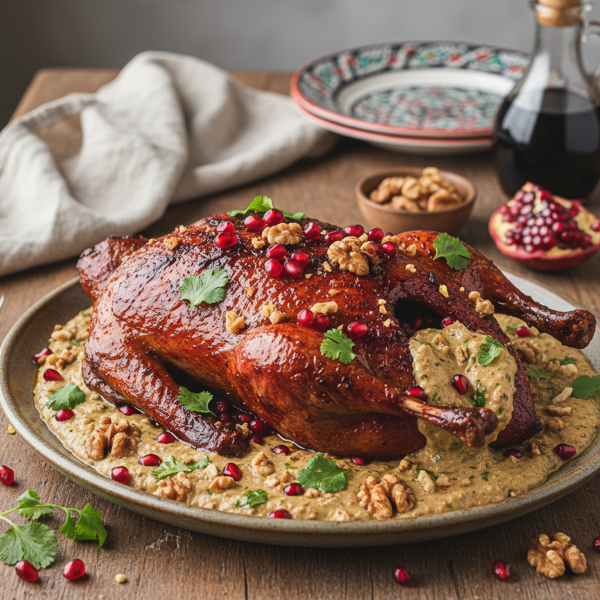
Indulge in the exquisite flavors of this adapted Persian dish, renowned for its rich and tangy pomegranate and walnut sauce. Originating from Claudia Roden's 'The Book of Jewish Food,' this recipe beautifully marries the succulent duck with a fragrant sauce that sings with sweet and sour notes. This comforting dish is perfect for special occasions, family gatherings, or a cozy dinner at home. Serve it over a bed of fluffy rice or alongside warm flatbreads to soak up the delectable sauce. While it draws from both Iranian and Jewish culinary traditions, it stands on its own as a delightful experience that will impress any palate.
N/A
Servings
N/A
Calories
10
Ingredients
Ingredients
sunflower oil
2 tablespoons (for frying)
duck breasts
4 (skinned and scored)
large onion
1 (thinly sliced)
garlic cloves
2 (thinly sliced)
salt
to taste
freshly ground black pepper
to taste
pomegranate molasses
3 tablespoons
chicken stock
150 ml
walnuts
75 g (finely chopped)
sugar
2-3 teaspoons (to taste)
Instructions
1
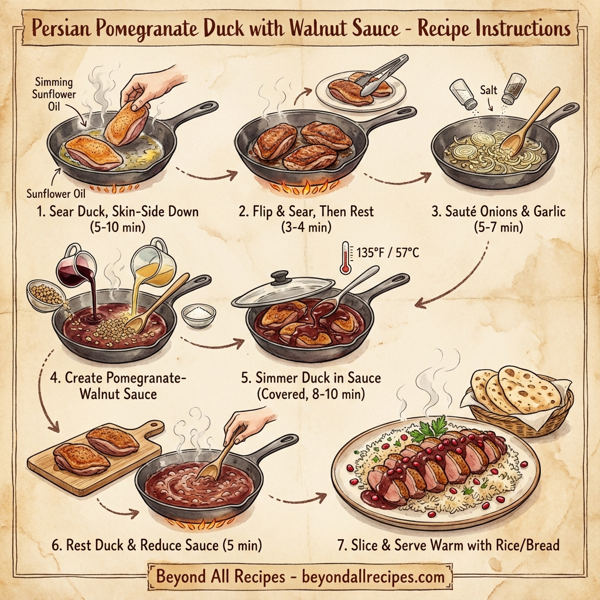
1. Heat the sunflower oil in a large skillet over medium heat. Place the duck breasts skin side down in the pan, allowing them to gently fry for 5-10 minutes until they release their fat and the skin turns crispy and golden brown.
2
2. Once the skin is browned, carefully flip the duck breasts to sear the flesh side. Increase the heat slightly for a better caramelization. Cook for an additional 3-4 minutes, then remove the duck from the pan and set them aside in a warm place to rest.
3
3. In the same skillet, pour out excess duck fat (reserve for future use), leaving about a tablespoon in the pan. Add the sliced onion and garlic, seasoning with salt and freshly ground black pepper. Sauté for about 5-7 minutes until the onions are translucent and soft.
4
4. Stir in the pomegranate molasses and chicken stock, scraping up any flavorful bits stuck to the bottom of the pan. Add the finely chopped walnuts and sugar to taste, mixing well until the sauce begins to simmer.
5
5. Return the duck breasts to the skillet, spooning some sauce over them. Cover and cook for additional 8-10 minutes, or until the duck reaches a medium-rare doneness (an internal temperature of 135°F/57°C).
6
6. Once cooked, remove the duck from the sauce and let it rest for 5 minutes before slicing it. Meanwhile, reduce the sauce further until you achieve the desired thickness.
7
7. Slice the duck breasts, plate, and drizzle with the pomegranate walnut sauce. Serve warm with your choice of rice or bread.
Nutrition Information
Frequently Asked Questions
Frequently Asked Questions
What is Persian Pomegranate Duck with Walnut Sauce?
It is a rich and tangy dish featuring succulent duck in a sauce made from pomegranate molasses and walnuts.
Where does this recipe originate?
This recipe is adapted from Claudia Roden's 'The Book of Jewish Food,' drawing from Iranian and Jewish culinary traditions.
What is the main flavor profile of the sauce?
The sauce is known for its exquisite sweet and sour notes created by pomegranate molasses and walnuts.
What oil is used to fry the duck?
Sunflower oil is used to fry the duck breasts.
How should the duck breasts be prepared before cooking?
The duck breasts should be skinned and scored before they are placed in the skillet.
How long do you fry the duck skin-side down?
You should fry the duck breasts skin side down for 5-10 minutes until the skin is crispy and golden brown.
Why do you start by frying the duck skin-side down?
This allows the duck to release its fat and ensures the skin becomes crispy.
What should you do with the excess duck fat?
You should pour out the excess fat but reserve it for future use, leaving about a tablespoon in the pan.
How do you cook the onions and garlic?
Sauté the sliced onion and garlic in the duck fat for 5-7 minutes until they are translucent and soft.
How much pomegranate molasses is needed?
The recipe calls for 3 tablespoons of pomegranate molasses.
What liquid is used to scrape up the flavorful bits in the pan?
Chicken stock is added along with the molasses to deglaze the pan.
How many walnuts are required?
You will need 75 grams of walnuts for this dish.
How should the walnuts be prepared?
The walnuts should be finely chopped before being added to the sauce.
Why is sugar included in the recipe?
Sugar is added to taste to balance the acidity and sourness of the pomegranate molasses.
How long does the duck simmer in the sauce?
The duck breasts are returned to the skillet to cook in the sauce for an additional 8-10 minutes.
What is the ideal internal temperature for the duck?
The duck should reach an internal temperature of 135°F (57°C) for medium-rare doneness.
How long must the duck rest before slicing?
The duck should rest for 5 minutes after cooking to ensure it stays succulent.
How do you thicken the sauce?
After removing the duck, continue to reduce the sauce in the pan until it reaches your desired thickness.
What are the best side dishes for this recipe?
It is best served over a bed of fluffy rice or alongside warm flatbreads.
Is this recipe suitable for special occasions?
Yes, its rich flavors and elegant presentation make it perfect for special occasions or family gatherings.
Who wrote the book that inspired this dish?
The recipe is inspired by the work of Claudia Roden.
What color should the duck skin be?
The skin should be a crispy and golden brown color.
How many garlic cloves are used?
The recipe requires 2 thinly sliced garlic cloves.
What type of onion is needed?
One large onion, thinly sliced, is needed for the sauce base.
How much chicken stock is used?
The recipe uses 150 ml of chicken stock.
What seasoning is recommended?
The dish is seasoned with salt and freshly ground black pepper to taste.
What is the final serving suggestion?
Slice the duck breasts, plate them, and drizzle the pomegranate walnut sauce over the top.
Can I use this for a cozy dinner?
Absolutely, it is described as a comforting dish perfect for a cozy dinner at home.
What cultural influences are present in the dish?
It combines Iranian culinary heritage with Jewish culinary traditions.
Does the recipe use whole or chopped walnuts?
The recipe specifically calls for finely chopped walnuts to create the sauce texture.